
66 Critical Jobs in Malaysia (2026): Full MyCOL List by TalentCorp

Are You Hiring?
Find candidates in 72 Hours with 5+ million talents in Maukerja Malaysia & Ricebowl using Job Ads.
Hire Now
Malaysia's workforce is changing, and many employers are finding it harder to hire skilled employees.
To help businesses, job seekers, education providers, and policymakers better understand the country's workforce needs, TalentCorp publishes the MyMahir Malaysia Critical Occupations List (MyCOL).
The latest MyCOL 2024/2025 identifies 66 critical jobs across 18 industries, an increase from 37 jobs in the previous edition. These are jobs that employers consistently struggle to fill because there are not enough qualified candidates to meet current demand.
The report is more than just a list of jobs. It provides evidence-based insights into Malaysia's labour market and helps different stakeholders make better decisions about hiring, workforce planning, education, and talent development.
Whether you're hiring employees, planning your career, or deciding which skills to develop, the MyCOL report provides valuable insights into where Malaysia needs talent the most.
What Is the MyMahir Malaysia Critical Occupations List (MyCOL)?
The MyMahir Malaysia Critical Occupations List (MyCOL) is a report published by TalentCorp that identifies jobs facing long-term talent shortages in Malaysia.
The report is developed using labour market data, employer surveys, industry feedback, and input from government agencies and industry experts.
Its purpose is to identify jobs that are difficult to fill and provide a clearer picture of Malaysia's current and future workforce needs.
MyCOL helps different groups make informed decisions, including:
Employers
Employers can use the report to:
-
Identify jobs that are becoming harder to hire.
-
Plan future recruitment strategies.
-
Improve workforce planning.
-
Invest in employee upskilling and reskilling.
Job Seekers
Job seekers can use the report to:
-
Understand which careers are currently in demand.
-
Explore industries with strong long-term growth.
-
Identify skills that employers are looking for.
-
Make better career and learning decisions.
Universities and Training Providers
Education providers can use MyCOL to align their courses and training programmes with industry needs, helping graduates become more job-ready.
Government and Policymakers
Government agencies can use the report to support workforce planning, improve education policies, and develop programmes that address Malaysia's talent shortages.
What Makes a Job "Critical"?
Not every job is included in the MyCOL report.
TalentCorp only classifies a job as "critical" if it meets three important criteria.
Skilled
The job requires specialised knowledge, technical expertise, or professional qualifications.
These jobs fall under the Malaysian Standard Classification of Occupations (MASCO) and usually require higher-level skills or technical training.
For example, Software Developers, Civil Engineers, and Accountants require specialised knowledge that cannot be easily replaced.
Sought-After
There are more job openings than qualified candidates available.
Even after employers advertise these jobs, many positions remain vacant because there are not enough people with the required skills or experience.
Strategic
The job supports Malaysia's long-term economic growth and national development goals.
Many of these jobs are important for industries such as manufacturing, technology, healthcare, finance, engineering, and the digital economy.
Only jobs that meet all three criteria are included in the MyCOL report.
Why Did the Number of Critical Jobs Increase from 37 to 66?
One of the biggest changes in the latest MyCOL report is the increase from 37 critical jobs to 66 critical jobs.
This does not necessarily mean Malaysia suddenly has more talent shortages.
Instead, TalentCorp expanded the report to provide a more complete picture of Malaysia's labour market.
Compared to previous editions, MyCOL 2024/2025:
-
Covers 18 economic industries.
-
Includes more professional, technical, management, and skilled trade jobs.
-
Analyses hiring demand across six regions in Malaysia instead of focusing only on individual states.
-
Provides better evidence to support workforce planning and talent development.
The expanded report helps employers better understand hiring challenges while giving job seekers clearer information about careers that are expected to remain in demand.
Full List of the 66 Critical Jobs in Malaysia
The MyCOL 2024/2025 covers a wide range of industries, showing that talent shortages are not limited to one sector.
Below is the full list of the 66 critical jobs grouped by industry.
Management & Business
-
Managing Directors and Chief Executives
-
Finance Managers
-
Human Resource Managers
-
Policy and Planning Managers
-
Business Services Managers
-
Quality Managers
-
Sales and Marketing Managers
-
Agricultural, Forestry and Livestock Production Managers
-
Manufacturing Managers
-
Supply, Distribution and Related Managers
-
Information and Communications Technology (ICT) Managers
These leadership roles help businesses manage operations, people, finance, quality, and business growth.
Science & Engineering
-
Chemists
-
Mathematicians, Actuaries and Statisticians
-
Industrial and Production Engineers
-
Civil Engineers
-
Mechanical Engineers
-
Chemical Engineers
-
Mining Engineers, Metallurgists and Related Professionals
-
Engineering Professionals (excluding Electrotechnology)
-
Electrical Engineers
-
Electronic Engineers
-
Ship Engineers
-
Manufacturing Professionals
Engineering continues to be one of Malaysia's most important industries, supporting manufacturing, infrastructure, construction, energy, and industrial development.
Healthcare
-
Specialist Medical Practitioners
-
Nursing Professionals
-
Pharmacists
-
Environmental and Occupational Health and Hygiene Professionals
-
Physiotherapists
-
University and Higher Education Teaching Professionals
For the first time, Pharmacists and Physiotherapists have been included in the MyCOL list, reflecting growing demand for healthcare professionals.
Finance & Professional Services
-
Accountants and Auditors
-
Financial and Investment Advisers
-
Financial Analysts
-
Research and Development Professionals
-
Advertising and Marketing Professionals
As businesses continue to adopt digital technologies and respond to changing regulations, professionals with financial, research, and marketing expertise remain highly sought after.
Technology & Digital
-
Computer Systems Analysts
-
Software Developers
-
Application Programmers
-
Software and Application Developers and Analysts
-
Database Designers and Administrators
-
Information Technology System Administrators
-
Computer Network Professionals
-
Data Professionals
-
Cyber Security Professionals
Digital transformation continues to increase demand for technology professionals across almost every industry in Malaysia.
Creative Industries
Malaysia's creative economy is growing, creating more demand for professionals with digital and creative skills.
The critical jobs in this sector include:
-
Graphic and Multimedia Designers
-
Animation and Visual Effects Professionals
-
Digital Games and E-Sport Professionals
-
Creative Content Designer Professionals
The inclusion of these jobs reflects the continued growth of Malaysia's animation, gaming, digital media, and creative technology industries.
Technical & Skilled Jobs
The MyCOL report also highlights the importance of skilled technical workers who support manufacturing, logistics, construction, engineering, and industrial operations.
These jobs include:
-
Chemical and Physical Science Technicians
-
Civil Engineering Technicians
-
Electrical Engineering Technicians
-
Electronics Engineering Technicians
-
Mechanical Engineering Technicians
-
Draughtspersons and Surveying Technicians
-
Industrial and Production Technicians
-
Manufacturing Supervisors
-
Aircraft Technicians
-
Welders and Flame Cutters
-
Motor Vehicle Mechanics and Repairers
-
Agricultural and Industrial Machinery Mechanics and Repairers
-
Electrical Mechanics and Fitters
-
Rubber Products Machine Operators
-
Steam Engine and Boiler Operators
-
Stationary Plant and Machine Operators
-
Heavy Truck and Lorry Drivers
-
Mobile Farm and Forestry Plant Operators
-
Crane, Hoist and Related Plant Operators
These roles play an important part in keeping Malaysia's industries running efficiently and supporting the country's economic growth.
Which Types of Jobs Are Most in Demand?
The MyCOL report shows that Professional jobs make up the largest group of critical jobs in Malaysia.
They account for 31% of all jobs on the list, followed by:
-
Technicians and Associate Professionals (17%)
-
Managers (14%)
This shows that Malaysia is not only looking for experienced professionals but also skilled technicians, technical specialists, and business leaders who can support the country's growing industries.
In the next section, we'll look at the industries facing the biggest talent shortages, why employers are struggling to hire, and which regions in Malaysia have the highest demand for skilled workers.
Industries Facing the Biggest Talent Shortages in Malaysia
The MyCOL report shows that talent shortages are affecting many industries across Malaysia. While every industry has different hiring needs, several sectors continue to face greater challenges because of changing technology, economic growth, and increasing demand for specialised skills.
Below are the industries with some of the biggest talent shortages and the reasons behind them.
Engineering & Manufacturing
Engineering and manufacturing continue to be among Malaysia's most important industries. As the country invests in infrastructure, advanced manufacturing, automation, and smart factories, employers are looking for more skilled engineers and technical professionals.
Some of the critical jobs in this sector include:
-
Civil Engineers
-
Mechanical Engineers
-
Electrical Engineers
-
Electronic Engineers
-
Chemical Engineers
-
Industrial and Production Engineers
-
Manufacturing Professionals
-
Engineering Technicians
-
Manufacturing Supervisors
-
Draughtspersons and Surveying Technicians
Many employers report that these roles are difficult to fill because they require specialised technical knowledge and practical industry experience.
The demand for engineering talent is expected to remain strong as Malaysia continues to modernise its manufacturing and industrial sectors.
Technology & Digital
Technology is one of the fastest-changing industries in Malaysia, and employers continue to compete for experienced digital talent.
The MyCOL report identifies several technology jobs that remain difficult to hire for, including:
-
Software Developers
-
Application Programmers
-
Computer Systems Analysts
-
Database Designers and Administrators
-
Information Technology System Administrators
-
Computer Network Professionals
-
Data Professionals
-
Cyber Security Professionals
-
ICT Managers
As more businesses adopt artificial intelligence (AI), cloud computing, cybersecurity solutions, automation, and data analytics, the demand for skilled technology professionals continues to grow.
At the same time, experienced digital talent is highly competitive, making recruitment more challenging for many employers.
Healthcare
Healthcare remains one of the sectors facing long-term talent shortages.
Malaysia's ageing population, growing healthcare needs, and increased awareness of health and wellness continue to drive demand for qualified healthcare professionals.
Some of the critical healthcare jobs include:
-
Specialist Medical Practitioners
-
Nursing Professionals
-
Pharmacists
-
Physiotherapists
-
Environmental and Occupational Health and Hygiene Professionals
The latest MyCOL report also includes Pharmacists and Physiotherapists for the first time, reflecting the increasing need for these professionals.
Finance & Professional Services
Financial professionals continue to play an important role in supporting business growth and economic development.
Some of the critical jobs in this sector include:
-
Finance Managers
-
Accountants and Auditors
-
Financial Analysts
-
Financial and Investment Advisers
-
Mathematicians, Actuaries and Statisticians
As businesses adapt to changing regulations, digital finance, sustainability reporting, and data-driven decision-making, employers continue to look for professionals with specialised knowledge and relevant industry experience.
Creative Industries
Malaysia's creative economy is expanding, creating more opportunities for professionals with digital and creative skills.
The MyCOL report identifies several creative jobs that are becoming increasingly important, including:
-
Graphic and Multimedia Designers
-
Animation and Visual Effects Professionals
-
Digital Games and E-Sport Professionals
-
Creative Content Designer Professionals
These roles support Malaysia's growing animation, gaming, digital media, and creative technology industries.
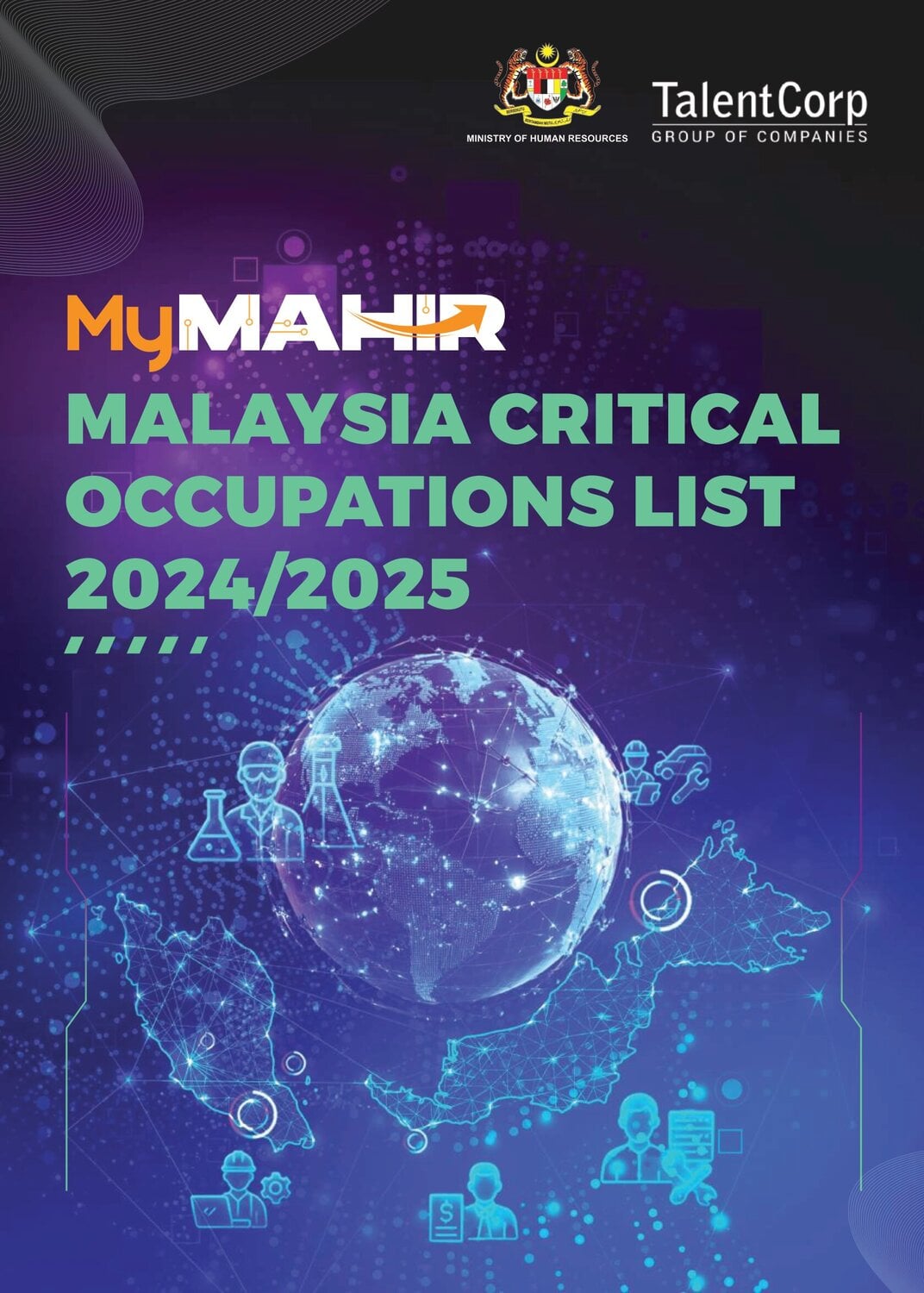
Download the full MyMahir Malaysia Critical Occupations List (MyCOL) 2024/2025 report.
Why Are Employers Still Struggling to Hire?
Although many Malaysians are actively looking for jobs, employers still face difficulties hiring qualified candidates for many of the jobs listed in MyCOL.
According to the report, some of the common challenges include:
Skills Mismatch
Some candidates have qualifications, but their skills do not match what employers need.
As industries continue to adopt new technologies and digital tools, employers are looking for candidates with practical skills that can be applied immediately in the workplace.
Limited Relevant Experience
Many employers report that candidates do not have enough industry experience for specialised or senior-level positions.
For technical and professional jobs, employers often require hands-on experience in addition to academic qualifications.
Not Enough Qualified Candidates
For certain industries, there are simply not enough qualified professionals available to meet hiring demand.
This is especially common in highly specialised fields such as engineering, healthcare, cybersecurity, actuarial science, and advanced manufacturing.
Salary Expectations
Some employers also report that candidates expect salaries that are higher than what businesses are able to offer, making recruitment more challenging.
Competition for Talent
Many experienced professionals receive multiple job offers or choose to work overseas, creating additional competition for employers hiring in Malaysia.
Hiring Trends Across Malaysia
To better understand workforce demand, TalentCorp grouped Malaysia into six regions instead of analysing each state individually.
This approach provides a clearer picture of hiring trends because some states have smaller sample sizes, making regional analysis more reliable.
Northern Region
States: Perlis, Kedah, Pulau Pinang and Perak
Manufacturing is the largest industry in this region.
Employers are mainly looking for:
-
Engineers
-
Technicians
-
Plant and Machine Operators
-
Manufacturing professionals
Central Region
States: Selangor, W.P. Kuala Lumpur, W.P. Putrajaya, Negeri Sembilan and Melaka
The Central Region records the highest demand for professionals among all regions.
Besides manufacturing, wholesale and retail trade also contribute significantly to hiring demand.
Employers are actively hiring:
-
Managers
-
Engineers
-
ICT professionals
-
Finance professionals
-
Technical specialists
Eastern Region
States: Kelantan, Terengganu and Pahang
Manufacturing remains the largest industry, followed by agriculture, forestry, and fishing.
Besides technical professionals, employers are also looking for candidates with leadership and operational management skills.
Southern Region
State: Johor
Johor continues to be one of Malaysia's strongest manufacturing hubs.
Besides engineers and managers, employers are actively hiring:
-
Skilled trades workers
-
Manufacturing technicians
-
Machine operators
-
Logistics professionals
Sabah Region
States: Sabah and Labuan
Manufacturing and agriculture remain important industries in Sabah.
The report also highlights demand for:
-
Managers
-
Manufacturing professionals
-
Operational leaders
-
Technical professionals
Sarawak Region
Manufacturing and agriculture continue to support Sarawak's economy.
Employers are looking for professionals with specialised technical expertise, leadership experience, and engineering knowledge to support industrial growth.
What These Hiring Trends Mean for Employers
The MyCOL report provides useful insights that employers can use to strengthen their hiring strategy.
If your business is recruiting for one of the critical jobs listed in the report, you may face stronger competition when attracting qualified candidates.
To stay competitive, employers should consider:
-
Planning recruitment earlier.
-
Offering competitive salaries and employee benefits.
-
Investing in employee training and upskilling.
-
Building internship and graduate programmes.
-
Working with universities and training providers to develop future talent.
Taking a proactive approach can help businesses reduce hiring delays and build a stronger workforce for the future.
What Does the MyCOL Report Mean for Employers?
Hiring the right employees has become more challenging, especially for jobs that require specialised skills and experience.
The MyCOL report gives employers a clearer picture of Malaysia's current labour market, helping them make better hiring and workforce planning decisions.
If your business is hiring for one of the 66 critical jobs, you may need to adjust your recruitment strategy to stay competitive.
Here are some ways employers can use the report.
Plan Your Hiring Earlier
Many of the jobs listed in MyCOL are in high demand, which means qualified candidates may receive multiple job offers.
Instead of waiting until a position becomes vacant, employers should plan recruitment earlier and build a pipeline of potential candidates.
Review Your Salary and Benefits
When competition for talent increases, salary is no longer the only deciding factor.
Many candidates also look at:
-
Career development opportunities
-
Company culture
-
Learning and training opportunities
Reviewing your overall employee value proposition (EVP) can help your business attract and retain skilled employees.
Invest in Upskilling and Reskilling
Not every candidate will have every skill you need.
Providing training programmes, professional certifications, and career development opportunities can help employees build the skills needed for future business growth.
This approach can also reduce long-term hiring costs.
Build Stronger Talent Pipelines
Working closely with universities, TVET institutions, and training providers allows employers to identify future talent earlier.
Internships, graduate programmes, apprenticeships, and industrial training can also help businesses develop skilled employees before they enter the workforce.
Improve Employee Retention
Finding skilled employees is only part of the challenge.
Keeping experienced employees is just as important.
Employers should regularly review employee engagement, career progression, learning opportunities, and workplace culture to reduce turnover and retain valuable talent.
What Does the MyCOL Report Mean for Job Seekers?
The MyCOL report is also useful for anyone planning their career.
If your job appears on the list, it suggests that employers continue to need people with your skills.
While this does not guarantee employment, it may indicate stronger career opportunities and long-term demand.
Here are some ways job seekers can use the report.
Choose Careers with Strong Demand
Students, fresh graduates, and professionals can use the report to identify industries where employers continue to hire.
This can help when deciding what to study, which career path to choose, or whether to switch industries.
Continue Learning New Skills
Many of the critical jobs require specialised knowledge and technical skills.
Developing new skills through training, certifications, or professional courses can improve employability and career growth.
Build Practical Experience
Besides academic qualifications, many employers also value practical experience.
Internships, industrial training, freelance work, and professional projects can help job seekers become more competitive.
Explore TalentCorp Career Platforms
TalentCorp also provides MyNext, a career platform that helps Malaysians explore career opportunities based on their interests, education, and skills.
Malaysian professionals working overseas may also explore programmes such as the Returning Expert Programme (REP) if they are considering returning to work in Malaysia.
FAQs
What is the MyMahir Malaysia Critical Occupations List (MyCOL)?
MyCOL is a report published by TalentCorp that identifies jobs facing long-term talent shortages in Malaysia. It helps employers, job seekers, education providers, and policymakers better understand the country's workforce needs.
How many critical jobs are listed in MyCOL?
The latest MyCOL 2024/2025 identifies 66 critical jobs across 18 industries, compared to 37 jobs in the previous edition.
How are critical jobs selected?
TalentCorp evaluates jobs based on three criteria:
-
Skilled
-
Sought-after
-
Strategic
Only jobs that meet all three criteria are included in the report.
Which industries have the biggest talent shortages?
Some of the industries with the highest demand include:
-
Engineering
-
Manufacturing
-
Technology
-
Healthcare
-
Finance
-
Business Management
-
Creative Industries
Why are employers struggling to hire?
Some of the common reasons include:
-
Skills mismatch
-
Lack of relevant work experience
-
Too few qualified candidates
-
Higher salary expectations
-
Growing demand for specialised skills
Is MyCOL only for employers?
No.
The report is useful for employers, job seekers, universities, training providers, and government agencies involved in workforce planning.
How often is MyCOL updated?
TalentCorp updates the report periodically to reflect changes in Malaysia's labour market and workforce demand.
Where can I read the full MyCOL report?
You can download the latest MyCOL report from TalentCorp's official website.
Looking to Hire Skilled Talent in Malaysia?
%20copy.jpg)
Hiring the right talent starts with reaching the right candidates.
With AJobThing, employers can attract qualified candidates and hire faster across Malaysia.
Post your job with AJobThing today and build a stronger team.
Read more:
-
Cost Per Hire Malaysia: Formula, Examples & How Employers Can Reduce Hiring Costs
-
Letter of Extension of Contract Malaysia: Free Template, Format & Sample
-
Promotion Letter in Malaysia: How to Write One (+ Free Template & Sample)
-
Probation Extension Letter Malaysia: Template, Sample, and What Employers Need to Know
-
Talent Pool: Benefits, Examples & How to Build One for Better Hiring
-
Sales Turnover: What It Is, Formula, Examples & Tips to Increase It
-
Overtime Rates in Malaysia: When Do 1.5x, 2x and 3x Pay Apply?
-
Prorated Salary in Malaysia: How to Calculate an Employee's First Salary
-
Remote Jobs in Malaysia: Most In-Demand Roles, Salaries & Hiring Guide (2026)
-
Effective Ways to Reduce Absenteeism in the Workplace for HR & Employers
-
Medical Benefits for Employees in Malaysia: Types, Legal Requirements & Best Practices
-
Fresh Graduate Salary in Malaysia (2026): How Much Should Employers Pay?
-
Salary Benchmarking in Malaysia: Are You Paying Enough to Attract Candidates?
-
e-Invoicing Malaysia Explained: What Every Employer and Business Needs to Know
-
EOR vs PEO: What's the Difference and Which Is Right for Your Business?
-
Remote Job Offer Letter: What Employers Should Include (+ Example)
-
Job Offer Letter vs. Employment Contract: What's the Difference? (+ Free Templates)
-
Constructive Dismissal Malaysia: Meaning, Examples & What To Do
-
Contract of Service vs Contract for Service Malaysia: How to Classify Workers Correctly
-
Job Offer Letter Templates: Examples, Formats & Best Practices for HR
-
Employee Retention in Malaysia: Meaning, Importance & How to Improve It
-
Employee Turnover in Malaysia: Causes, Warning Signs & How to Reduce It
-
Retrenchment in Malaysia: Meaning, Process & Employee Rights
-
Gmail Templates for HR: Faster Replies for Interviews, Offers & Rejections
-
7 Key Contract Employee Rights in Malaysia Every HR Should Know
-
GLC vs Private Company Malaysia: Salary, Culture & Hiring Differences
-
Types of Payroll Calculation in Malaysia: Adhoc, Prorated Salary & Final Settlement Explained
-
Types of Payroll Cycle in Malaysia: Which One Is Best for Your Business?
-
Types of Insurance in Malaysia and Their Impact on Employee Benefits
-
How to Create a Strong Candidate Shortlist for Better Hiring Decisions
-
How HR in Malaysia Can Offer a Job Over the Phone (with Script)
-
How Notice Period Really Works in Malaysia for Employers and HR
-
How to Create a Job Posting That Attracts the Right Candidates
-
How HR in Malaysia Can Improve Resume Screening and Candidate Shortlisting
-
How HR Can Reject a Candidate the Right Way (with Templates)
-
How to Conduct a Background Check for Employment in Malaysia
-
Onboarding Process Tips: What HR Needs to Know for Better Retention
-
Onboarding Checklist for New Hires (Free Downloadable Template)
-
Performance Evaluation: Description, Types, and How to Conduct
-
Cover Letter Examples Employers Should Know (With Tips to Spot the Best Ones)
-
Step-by-Step Guide to Writing a Great Job Description (Free Templates)