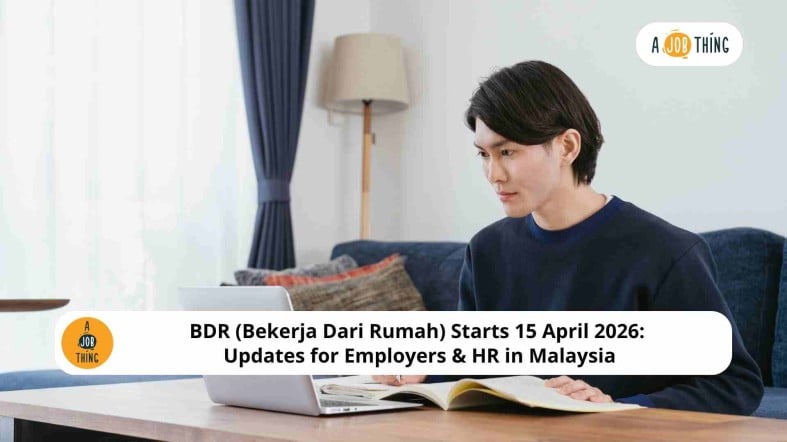
BDR (Bekerja Dari Rumah) Starts 15 April 2026: Updates for Employers & HR in Malaysia

Are You Hiring?
Find candidates in 72 Hours with 5+ million talents in Maukerja Malaysia & Ricebowl using Job Ads.
Hire Now
BDR (Bekerja Dari Rumah) will officially start on 15 April 2026 for Malaysia’s public sector and GLC. While this policy does not directly apply to private companies, it signals a clear shift in how work is being structured in Malaysia.
For employers and HR, this is the right time to understand the impact and start preparing for changing employee expectations, especially around WFH and hybrid work.
Starting 15 April 2026, the Malaysian government will implement Bekerja Dari Rumah (BDR) for the public sector and GLC (Syarikat Berkaitan Kerajaan).
This move is part of a national effort to reduce fuel usage and manage energy supply following global supply chain challenges.
Key Highlights of BDR 2026
-
Start Date: 15 April 2026
-
Who is involved: Ministries, government agencies, badan berkanun, and GLC
-
Main purpose: Manage energy costs and reduce fuel subsidy burden (up to RM4 billion/month)
Why This Matters to Employers & HR
Even though this policy is for the public sector, it may influence how employees view work in the private sector.
We may start to see:
-
Higher demand for WFH or hybrid roles
-
Candidates comparing companies based on flexibility
-
Increased focus on work-life balance
In short, flexibility is becoming a competitive advantage in hiring.
What HR Should Do Now
Instead of waiting, HR teams can start preparing early:
Review Your WFH / Hybrid Policy
-
Define who is eligible for WFH
-
Set number of WFH days allowed
-
Decide if it is role-based or company-wide
Set Clear KPI & Performance Tracking
-
Focus on output-based KPIs
-
Use simple tracking methods such as weekly reports or dashboards
Strengthen Communication Tools
-
Ensure teams can collaborate remotely (e.g. Slack, Microsoft Teams)
-
Set clear response time expectations
Update Job Descriptions
-
Include terms like “hybrid working” or “flexible hours”
-
Make roles more attractive to candidates
Possible Working Arrangement
Although full details are not announced yet, expected models include:
-
Hybrid working (office + home)
-
Rotation system
-
Flexible working hours
This allows employees to:
-
Reduce transport cost
-
Manage time better
-
Improve work-life balance
Impact to Business & Workforce
Positive Impact
-
Reduced traffic congestion
-
Lower operational costs
-
Better employee satisfaction
Challenges
-
Monitoring productivity
-
Ensuring stable digital infrastructure
-
Maintaining team discipline
Strong HR policies and clear communication will be important to manage these changes.
Government Support Measures
To support rakyat, several initiatives are introduced:
BUDI MADANI Diesel Quota
-
Increased from 95 litres to 200 litres/month (temporary)
Subsidised Diesel (Sabah, Sarawak, Labuan)
-
To reduce cost burden in selected regions
What This Means for Private Companies
For now, BDR is not mandatory for private companies.
However, companies may review and consider flexible work arrangements based on their business needs and operations.
This reflects a broader shift in workplace expectations in Malaysia.
Simple Scenario (What This Looks Like)
Consider two companies hiring for the same role:
-
Company A: Fully office-based
-
Company B: Hybrid (3 days office, 2 days WFH)
With similar salary, many candidates may prefer Company B.
This shows how flexibility can directly impact hiring outcomes.
Conclusion
The BDR 2026 policy reflects a shift towards flexible and digital working environments.
For employers and HR, this is a good time to:
-
Revisit internal policies
-
Improve employee experience
-
Stay competitive in hiring
FAQ
When does BDR start?
15 April 2026
Who is involved?
Public sector, agencies, badan berkanun, and GLC (excluding frontliners and critical services)
Is it fully WFH?
No, it is likely a hybrid model
Is private sector required to follow?
No, but companies may review and consider based on their needs
Why is this implemented?
-
Energy cost control
-
Reduce subsidy burden
-
Support rakyat during economic pressure
Hire Better Candidates with AJobThing
%20copy.jpg)
As job expectations change, hiring strategies also need to evolve.
If your company wants to attract better candidates, especially those looking for flexibility, it is important to reach the right audience quickly.
With AJobThing, you can:
-
Post job ads across multiple platforms
-
Reach active job seekers faster
-
Receive more relevant applications
Start posting your job ads today and find the right staff for your business.
Read More:
- Aturan Kerja Fleksibel (AKF) Malaysia: How to Apply & Employer Guide
-
EPF Dividends Remain Tax-Free, Says LHDN Amid 2% Dividend Tax Confusion
-
EPF SOCSO EIS Contribution 2026: Latest Rates, Rules & Employer Guide in Malaysia
-
PM Anwar Announces WFH Policy for Penjawat Awam as Oil Supply Disruptions Continue
-
Rising Oil Prices Issue: Which Industries and Jobs Are at Risk?
-
Jadual Bayaran Pencen 2026 (JPA): Full Payment Schedule & Key Information
-
Pengeluaran KWSP Untuk Haji 2026: How to Apply & Who Is Eligible
-
Cuti Sarawak 2026: Official Holiday List & HR Planning Guide
-
Cuti Umum Johor 2026: Full Holiday List & HR Manpower Planning Guide
-
Zakat Pendapatan in Malaysia: Who Must Pay, How to Calculate, and How to Claim 100% Tax Rebate