
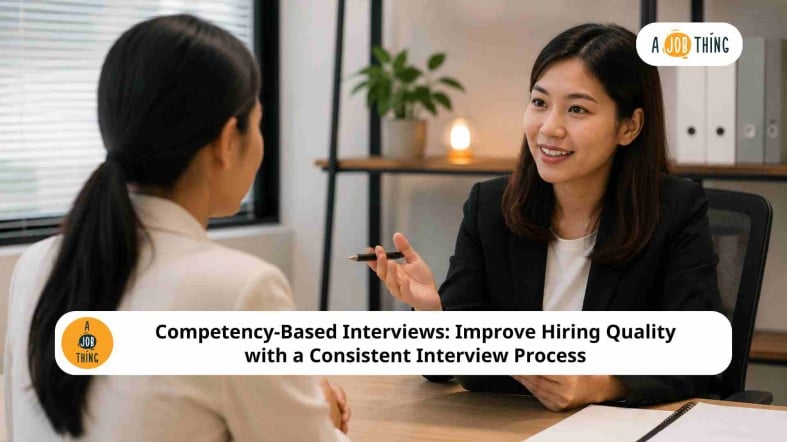
Competency-Based Interviews: Improve Hiring Quality with a Consistent Interview Process

Are You Hiring?
Find candidates in 72 Hours with 5+ million talents in Maukerja Malaysia & Ricebowl using Job Ads.
Hire Now
Hiring the right employee isn't just about finding someone with the right qualifications. It's also about evaluating every candidate fairly and consistently.
In many organisations, interviews are conducted differently depending on the hiring manager. One interviewer may focus on technical expertise, while another prioritises communication skills or personality. When candidates are assessed using different criteria, hiring decisions can become inconsistent and it becomes more difficult to identify the best fit for the role.
A competency-based interview helps solve this challenge by using a structured approach to assess candidates against the same competencies. By asking consistent questions and using standardised evaluation criteria, HR teams can improve hiring quality, reduce bias, and make more objective hiring decisions.
What Is a Competency-Based Interview?
A competency-based interview is a structured interview method that evaluates whether a candidate has the skills, behaviours, and attributes required to perform a specific role successfully.
Instead of relying on general conversations or first impressions, interviewers ask candidates to share real examples from their previous work experience that demonstrate a particular competency.
For example, instead of asking:
Are you good at solving problems?
An interviewer might ask:
Tell me about a time you faced a challenging problem at work. What steps did you take to resolve it?
By exploring real experiences, interviewers can better understand how candidates think, make decisions, communicate, and respond to workplace challenges.
Build a Competency Framework Before the Interview
Before preparing interview questions, HR should identify the competencies that are most important for success in the role.
A competency framework defines the knowledge, skills, and behaviours expected for a position. It provides a consistent benchmark for evaluating candidates and helps ensure every interviewer assesses the same competencies.
The competencies will vary depending on the role. For example:
|
Role |
Core Competencies |
|
Sales Executive |
Communication, negotiation, resilience |
|
Customer Service Executive |
Communication, empathy, problem-solving |
|
HR Executive |
Communication, organisation, confidentiality |
|
Marketing Executive |
Creativity, analytical thinking, collaboration |
|
Software Developer |
Analytical thinking, problem-solving, teamwork |
|
Team Leader |
Leadership, decision-making, communication |
Defining competencies before recruitment begins also makes it easier to prepare interview questions, evaluate candidates consistently, and align hiring decisions with the requirements of the role.
Why Competency-Based Interviews Matter
A competency-based interview is more than a different way of asking questions. It creates a structured interview process that helps HR teams evaluate candidates more consistently and make evidence-based hiring decisions.
Improve Hiring Consistency
Every candidate applying for the same role is assessed using the same competencies, interview questions, and evaluation criteria.
This makes it easier to compare interview feedback when multiple hiring managers or interviewers are involved in the recruitment process.
Improve Hiring Quality
Instead of relying on intuition or first impressions, competency-based interviews focus on evidence from a candidate's previous experience.
This allows employers to identify candidates who have already demonstrated the skills and behaviours required to succeed in the role.
Reduce Interview Bias
Unstructured interviews can lead to different interviewers evaluating candidates based on different expectations or personal preferences.
Using predefined competencies and structured questions helps create a more objective and consistent interview process.
Support Hiring at Scale
As organisations grow, maintaining consistent hiring standards becomes more challenging.
A competency-based interview framework enables HR teams to apply the same hiring standards across departments, business units, or hiring locations, helping ensure every candidate is evaluated fairly regardless of who conducts the interview.
Competency-Based Interview vs Traditional Interview
Although both interview methods aim to identify the right candidate, they differ in how candidates are evaluated.
|
Traditional Interview |
Competency-Based Interview |
|
Questions may vary between interviewers. |
Uses structured questions based on predefined competencies. |
|
Decisions may rely on first impressions or personal opinions. |
Decisions are based on demonstrated skills, behaviours, and experience. |
|
Candidates may be assessed using different criteria. |
Every candidate is evaluated using the same competencies and standards. |
|
Harder to compare candidates fairly. |
Makes it easier to compare candidates objectively. |
|
Interview quality depends on the individual interviewer. |
Supports consistent hiring standards across interviewers and hiring teams. |
For organisations hiring across multiple teams or locations, competency-based interviews provide a scalable approach that helps improve consistency and hiring quality.
How to Conduct a Competency-Based Interview
A competency-based interview is most effective when every interviewer follows the same process. This helps ensure candidates are assessed consistently, regardless of who conducts the interview.
1. Identify the Key Competencies
Start by selecting the competencies that are essential for success in the role.
These should be based on the job responsibilities and not a generic list used across every position.
Some common competencies include:
-
Communication
-
Problem-solving
-
Teamwork
-
Leadership
-
Adaptability
-
Customer service
-
Time management
-
Decision-making
For example, a Customer Service Executive may require strong communication, empathy, and problem-solving skills, while a Finance Executive may require analytical thinking, attention to detail, and decision-making.
2. Prepare Structured Interview Questions
Develop interview questions that assess each competency.
To ensure consistency, every candidate applying for the same role should be asked the same core questions. Interviewers can then ask follow-up questions to better understand the candidate's experience.
Here are some examples:
|
Competency |
Example Interview Question |
|
Communication |
Tell me about a time you had to explain a complex idea to someone with little knowledge of the topic. |
|
Teamwork |
Describe a project where you worked with others to achieve a common goal. What was your role? |
|
Problem-solving |
Tell me about a challenging problem you faced at work. How did you solve it? |
|
Leadership |
Describe a situation where you took the lead to achieve a positive outcome. |
|
Adaptability |
Tell me about a time you had to adapt to unexpected changes at work. |
These questions encourage candidates to provide examples from their previous experience, giving interviewers better insight into how they perform in real workplace situations.
3. Use a Standardised Interview Scorecard
A scorecard helps interviewers evaluate candidates using the same criteria instead of relying on memory or personal impressions.
For example:
|
Competency |
Rating (1–5) |
Evidence from Candidate |
|
Communication |
||
|
Problem-solving |
||
|
Teamwork |
||
|
Leadership |
||
|
Adaptability |
||
|
Overall Recommendation |
Hire / Consider / No Hire |
Using a standardised scorecard makes it easier to compare candidates fairly and supports more objective hiring decisions.
4. Train Hiring Managers
Even with structured questions and scorecards, interview quality depends on how consistently interviewers apply them.
HR should ensure hiring managers understand:
-
The competencies being assessed.
-
How to ask effective follow-up questions.
-
How to evaluate answers objectively.
-
How to use the interview scorecard consistently.
Regular calibration sessions can also help interviewers align their expectations and maintain consistent hiring standards across teams.
Sample Competency-Based Interview Questions
The questions below can be adapted based on the role you're hiring for.
|
Competency |
Example Question |
|
Communication |
Tell me about a time you had to communicate difficult information to a customer, colleague, or stakeholder. |
|
Problem-solving |
Describe a challenging problem you encountered at work. What steps did you take to resolve it? |
|
Teamwork |
Tell me about a time you worked with a team to achieve a shared goal. |
|
Leadership |
Describe a situation where you motivated or guided others to complete a project successfully. |
|
Adaptability |
Tell me about a time your priorities changed unexpectedly. How did you respond? |
|
Time Management |
How do you manage multiple tasks or deadlines at the same time? |
|
Customer Service |
Tell me about a time you handled a difficult customer. What was the outcome? |
|
Decision-making |
Describe an important decision you made under pressure. How did you reach your decision? |
Follow-up questions are equally important. If a candidate provides a vague answer, ask them to explain their role, the actions they took, or the outcome they achieved.
How to Evaluate Candidate Answers Using the STAR Method
Asking structured questions is only part of the interview process. Interviewers also need a consistent way to evaluate the quality of each response.
One of the most widely used techniques is the STAR method, which helps interviewers assess whether a candidate has demonstrated a competency through real workplace experience.
STAR stands for:
-
Situation – What was the situation or challenge?
-
Task – What responsibility did the candidate have?
-
Action – What actions did the candidate personally take?
-
Result – What was the outcome of those actions?
What HR Should Look For
|
STAR Element |
What to Assess |
|
Situation |
Does the candidate clearly explain the context? |
|
Task |
Is their role and responsibility clearly defined? |
|
Action |
Do they explain what they personally did instead of what the team did? |
|
Result |
Can they describe the outcome or what they learned? |
Example
Interview Question
Tell me about a time you resolved a conflict within your team.
Strong Answer
The candidate explains the situation, their specific role, the actions they took to resolve the conflict, and the outcome of their efforts.
Weak Answer
The candidate gives a general response, talks mostly about what the team did, or cannot explain their personal contribution or the result.
Encourage interviewers to take notes during the interview so each STAR element can be evaluated consistently when comparing candidates. This helps create a more structured and objective interview process.
Best Practices for HR Teams
Implementing competency-based interviews is more than preparing a list of interview questions. To achieve consistent hiring outcomes, HR teams should establish a structured process that every interviewer can follow.
Define Competencies Before Hiring
Before advertising a vacancy, identify the competencies that are critical for success in the role. This ensures interview questions and evaluation criteria are aligned with the job requirements.
Standardise Interview Questions
Prepare a set of core competency-based questions for each role and ask every candidate the same questions. This creates a fair basis for comparison while allowing interviewers to ask follow-up questions when necessary.
Use a Consistent Evaluation Scorecard
Evaluate every candidate using the same scorecard and rating scale. Recording evidence from the interview also makes it easier to compare candidates and justify hiring decisions.
Train Hiring Managers
Not every hiring manager has the same interviewing experience. Providing training on competency-based interviewing helps ensure interviewers understand how to ask questions, probe for more information, and evaluate answers consistently.
Review and Improve the Process
Regularly review interview feedback and hiring outcomes to identify opportunities for improvement. Updating competencies, interview questions, or scorecards helps keep the process relevant as business needs evolve.
Benefits of Competency-Based Interviews for Employers
A well-structured competency-based interview process offers several advantages for employers:
-
Creates a more consistent interview process across hiring managers.
-
Makes it easier to compare candidates objectively.
-
Encourages hiring decisions based on evidence rather than assumptions.
-
Supports fair and structured candidate evaluations.
-
Helps maintain consistent hiring standards as recruitment grows.
By following a structured approach, organisations can build stronger hiring practices that support better recruitment decisions over time.
FAQs
What is a competency-based interview?
A competency-based interview evaluates candidates based on the skills, behaviours, and attributes required for a specific role.
How is a competency-based interview different from a traditional interview?
A competency-based interview uses structured questions and predefined competencies, while traditional interviews are often less structured and may vary between interviewers.
What competencies should employers assess during an interview?
The competencies depend on the role. Common examples include communication, problem-solving, teamwork, leadership, adaptability, customer service, and decision-making.
Are competency-based interviews suitable for all positions?
Yes. Employers can customise the competencies and interview questions based on the responsibilities and requirements of each role.
Should every interviewer use the same interview scorecard?
Yes. Using a standardised scorecard helps ensure candidates are evaluated consistently and makes it easier to compare interview results.
Looking to Hire the Right Talent?
%20copy.jpg)
Hiring the right people starts with attracting qualified candidates and evaluating them consistently.
With AJobThing, employers can reach millions of job seekers across Malaysia, manage applications more efficiently, and build a stronger hiring process from recruitment to interview.
Post your job with AJobThing today and hire with confidence.
Read more:
-
Employer's Role in EPF Withdrawals for Non-Malaysian Employees
-
Leave Encashment Malaysia: How to Calculate Unused Annual Leave
-
Online Seller Requirements in Malaysia: 10 Business Details You Must Display
-
Performance Bonus in Malaysia: How It Works, Calculation & Employer Guide
-
Cost Per Hire Malaysia: Formula, Examples & How Employers Can Reduce Hiring Costs
-
Letter of Extension of Contract Malaysia: Free Template, Format & Sample
-
Promotion Letter in Malaysia: How to Write One (+ Free Template & Sample)
-
Probation Extension Letter Malaysia: Template, Sample, and What Employers Need to Know
-
Talent Pool: Benefits, Examples & How to Build One for Better Hiring
-
Sales Turnover: What It Is, Formula, Examples & Tips to Increase It
-
Overtime Rates in Malaysia: When Do 1.5x, 2x and 3x Pay Apply?
-
Prorated Salary in Malaysia: How to Calculate an Employee's First Salary
-
Remote Jobs in Malaysia: Most In-Demand Roles, Salaries & Hiring Guide (2026)
-
Effective Ways to Reduce Absenteeism in the Workplace for HR & Employers
-
Medical Benefits for Employees in Malaysia: Types, Legal Requirements & Best Practices
-
Fresh Graduate Salary in Malaysia (2026): How Much Should Employers Pay?
-
Salary Benchmarking in Malaysia: Are You Paying Enough to Attract Candidates?
-
e-Invoicing Malaysia Explained: What Every Employer and Business Needs to Know
-
EOR vs PEO: What's the Difference and Which Is Right for Your Business?
-
Remote Job Offer Letter: What Employers Should Include (+ Example)
-
Job Offer Letter vs. Employment Contract: What's the Difference? (+ Free Templates)
-
Constructive Dismissal Malaysia: Meaning, Examples & What To Do
-
Contract of Service vs Contract for Service Malaysia: How to Classify Workers Correctly
-
Job Offer Letter Templates: Examples, Formats & Best Practices for HR
-
Employee Retention in Malaysia: Meaning, Importance & How to Improve It
-
Employee Turnover in Malaysia: Causes, Warning Signs & How to Reduce It
-
Retrenchment in Malaysia: Meaning, Process & Employee Rights
-
Gmail Templates for HR: Faster Replies for Interviews, Offers & Rejections
-
7 Key Contract Employee Rights in Malaysia Every HR Should Know
-
GLC vs Private Company Malaysia: Salary, Culture & Hiring Differences
-
Types of Payroll Calculation in Malaysia: Adhoc, Prorated Salary & Final Settlement Explained
-
Types of Payroll Cycle in Malaysia: Which One Is Best for Your Business?
-
Types of Insurance in Malaysia and Their Impact on Employee Benefits
-
How to Create a Strong Candidate Shortlist for Better Hiring Decisions
-
How HR in Malaysia Can Offer a Job Over the Phone (with Script)
-
How Notice Period Really Works in Malaysia for Employers and HR
-
How to Create a Job Posting That Attracts the Right Candidates
-
How HR in Malaysia Can Improve Resume Screening and Candidate Shortlisting
-
How HR Can Reject a Candidate the Right Way (with Templates)
-
How to Conduct a Background Check for Employment in Malaysia
-
Onboarding Process Tips: What HR Needs to Know for Better Retention
-
Onboarding Checklist for New Hires (Free Downloadable Template)
-
Performance Evaluation: Description, Types, and How to Conduct
-
Cover Letter Examples Employers Should Know (With Tips to Spot the Best Ones)
-
Step-by-Step Guide to Writing a Great Job Description (Free Templates)