
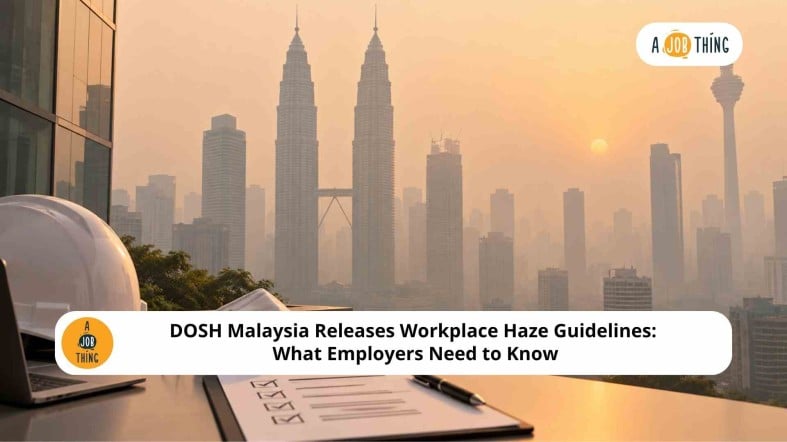
DOSH Malaysia Releases Workplace Haze Guidelines: What Employers Need to Know

Are You Hiring?
Find candidates in 72 Hours with 5+ million talents in Maukerja Malaysia & Ricebowl using Job Ads.
Hire Now
Malaysia's Department of Occupational Safety and Health (DOSH) released its second-edition workplace haze guidelines on 15 October 2026, outlining measures employers should take to protect employees when air quality deteriorates.
The guidelines explain how employers should prepare for haze, identify employees who may be more vulnerable to its effects, manage outdoor work and provide suitable respiratory protection.
The recommended precautions vary according to the Air Pollutant Index (API), with more stringent measures as pollution levels rise.
For HR teams and business owners, the update is a reminder to review workplace safety procedures before haze conditions affect employees' health, visibility and daily operations.
Read the Official DOSH Workplace Haze Guidelines (2026 Edition).
What Is the Air Pollutant Index (API)?
The Air Pollutant Index (API) indicates the level of air pollution and its potential effects on health. DOSH's workplace haze guidelines use the 24-hour running average for PM10, which refers to airborne particles measuring 10 micrometres or smaller.
The guidelines classify API readings into different levels, from moderate to very hazardous. Each level has corresponding recommendations for managing employee exposure.
Employers should monitor official air-quality updates and use the applicable API readings when reviewing workplace risks.
What Should Employers Do Before Haze Conditions Worsen?
DOSH recommends that employers prepare when the relevant government agency announces an increased risk of haze, rather than waiting until conditions become severe.
HR teams should work with management and workplace safety personnel to review existing procedures and prepare suitable control measures.
Identify Employees Who May Be More Vulnerable
Employees with existing heart or respiratory illnesses may face greater risks from haze exposure. Employers should establish appropriate arrangements to manage their exposure while protecting confidential medical information.
HR should also provide a way for employees to report haze-related symptoms and advise those experiencing symptoms to seek medical attention.
Symptoms identified in the guidelines include:
-
Throat irritation and coughing.
-
Irritated or watery eyes.
-
Runny nose and sneezing.
-
Itchy skin.
-
Difficulty breathing or breathlessness.
HR should ensure employees know how to report symptoms and where to seek medical attention when necessary.
Review Outdoor Work Activities
Identify jobs that take place outside buildings regularly or for most of the working time. These may include construction, road maintenance, outdoor loading and unloading, logistics and other physically demanding activities.
Employers should decide in advance which outdoor tasks may need to be reduced or stopped as haze conditions worsen.
Prepare Suitable Respiratory Protection
Employers should maintain sufficient stocks of disposable N95 respirators for employees who need them. Workers required to wear respirators should undergo fit testing, with appropriate instruction and supervision on their use.
Providing respirators alone is not enough; employers should also ensure that the equipment is suitable and that required fit testing and training are arranged.
Review Indoor Air Quality
Check the condition and efficiency of workplace air-cleaning devices and equipment. The guidelines also recommend measures to reduce haze entering indoor workplaces, such as keeping windows and doors closed most of the time.
Communicate Clearly With Employees
Establish a communication system to share air-quality updates, workplace precautions and decisions about outdoor work. Employees should have a channel to report symptoms or concerns related to haze.
Employees should understand the company's haze-response procedures, including when outdoor work may need to stop.
DOSH Workplace Haze Guidelines by API Level
The appropriate response depends on the API reading and the risks associated with the work being carried out. The following table summarises key precautions in DOSH's 2026 guidelines.
| API Level | Classification | Key Measures for Employers |
|---|---|---|
| 51–100 | Moderate | Identify vulnerable employees, prepare N95 respirators, review outdoor tasks, arrange respirator fit testing and communicate protective measures. |
| 101–200 | Unhealthy | Minimise strenuous outdoor work, provide suitable respirators to vulnerable employees working outdoors and consider indoor reassignment where necessary. |
| 201–300 | Very Unhealthy | Avoid strenuous outdoor work, move vulnerable employees indoors, provide suitable respirators to outdoor workers and follow the guidelines for earthworks and earth-movement activities. |
| 301–400 | Hazardous | Avoid strenuous outdoor work, provide suitable respirators to outdoor workers, keep vulnerable employees indoors and assess visibility risks for crane operations. |
| Above 400 | Very Hazardous | Avoid outdoor work. Assess risks affecting employees and ensure essential or emergency work continues only with appropriate risk controls. |
These are key measures, not an exhaustive list of requirements. Employers should refer to the official guidelines for the full recommendations applicable to each API level.
When API Reaches 51–100: Prepare for Higher Pollution Levels
Even when API readings are moderate, employers should prepare for a possible deterioration in air quality.
This includes identifying vulnerable employees, maintaining sufficient N95 respirators, reviewing which outdoor activities may need to be reduced and deciding in advance when outdoor work should stop.
Employees who need to work outdoors should know the stopping criteria and undergo the relevant respirator fit testing.
When API Exceeds 100: Assess Workplace Risks
DOSH considers API readings above 100 unhealthy. At this level, employers should minimise strenuous outdoor activities and provide suitable respiratory protection to vulnerable employees working outdoors.
Where these employees have difficulty working outdoors, including difficulty using a respirator, they should be assigned indoor work where appropriate.
Employers should conduct an appropriate risk assessment and implement measures to address hazards such as poor visibility and haze exposure.
When API Exceeds 200: Reduce Strenuous Outdoor Work
As pollution levels rise further, precautions become more stringent.
DOSH recommends avoiding strenuous outdoor activities, moving vulnerable employees indoors and providing suitable respirators to employees who continue working outdoors.
The guidelines also address precautions for construction activities at this level. Employers should consult the official document to determine the specific measures applicable to their work activities.
When API Exceeds 300: Review Visibility and Lifting Operations
At hazardous API levels, poor visibility may create additional risks for vehicles, machinery and lifting operations.
DOSH recommends risk assessments to determine whether outdoor lifting operations involving tower cranes and mobile cranes should stop.
Such activities should proceed only when appropriate precautions have been taken to reduce the identified risks.
Employers should also provide suitable respirators to outdoor workers and ensure vulnerable employees remain indoors and avoid strenuous work.
When API Exceeds 400: Avoid Outdoor Work
At API readings above 400, the guidelines classify conditions as very hazardous and advise that outdoor work should be avoided.
Employers should avoid outdoor work at this level and ensure essential or emergency operations continue only when appropriate risk controls are in place.
Employers should assess the potential health effects on employees, particularly those working outdoors. If identified risks cannot be adequately controlled, the affected work should stop.
The guidelines also advise employees to remain indoors and avoid strenuous work at this level. Employers should follow any further instructions issued by the relevant authorities.
What Are Employers' Responsibilities Under Occupational Safety and Health Law?
DOSH's guidelines refer to the Occupational Safety and Health Act 1994 (Act 514), which establishes employers' responsibilities to protect employees' safety and health at work.
Under Section 15, employers must, so far as is practicable, provide and maintain a working environment that is safe and without risks to health.
When API readings exceed 100, the guidelines highlight increased risks from haze exposure and poor visibility. Employers should conduct an appropriate risk assessment and implement measures to minimise or mitigate identified risks.
If haze creates an immediate danger to employees and the risks have not been adequately controlled, DOSH may order the affected work to stop.
Employers should not assume that providing masks alone is sufficient. The measures required will depend on the work activity, air-quality conditions and risks identified in the assessment.
Does the Haze Guideline Require Employees to Work From Home?
DOSH's 2026 haze guidelines do not establish a general work-from-home policy.
Instead, they focus on measures to protect employees at work, including reducing outdoor exposure, improving indoor air quality, supplying suitable respirators and stopping activities when risks cannot be adequately controlled.
For employers, decisions about remote work or alternative arrangements should be based on operational needs, the nature of the work and the risks identified. Any additional instructions from the relevant authorities should also be followed.
The guidelines advise employees to consider public transport when API readings are above 400. Employers may communicate this advice to staff as part of their haze response arrangements.
What HR Teams Should Do Now
The new guidelines provide an opportunity for HR teams to review their existing haze-response procedures before air quality deteriorates.
Employers should prioritise five actions:
-
Review Workplace Procedures. Check whether the company has clear instructions for responding to different API levels.
-
Identify Vulnerable Employees. Establish confidential arrangements for managing exposure risks among employees with heart or respiratory illnesses.
-
Prepare Outdoor Work Controls. Decide which tasks should be reduced or stopped and who has the authority to make that decision.
-
Check Respiratory Protection and Indoor Air Quality. Confirm that suitable N95 respirators are available when needed, required fit testing is arranged and air-cleaning equipment is maintained.
-
Keep Employees Informed. Communicate air-quality updates, protective measures and procedures for reporting symptoms or safety concerns.
These steps can help employers respond more quickly when haze affects their workplace and reduce the risk of employees continuing work under unsafe conditions.
For additional guidance, read AJobThing's article on Workplace Safety Policies in Malaysia.
FAQs
What are the new DOSH workplace haze guidelines for 2026?
DOSH's second-edition 2026 guidelines outline preparations and workplace precautions to protect employees from haze. They cover vulnerable employees, outdoor work, respiratory protection, indoor air quality and risk assessments at different API levels.
At what API level should employers start taking precautions?
Employers should prepare when an increased risk of haze is announced. DOSH's guidelines list preparatory measures at API 51–100 and additional precautions when the index exceeds 100.
Must employers provide N95 respirators during haze?
The guidelines call for sufficient disposable N95 respirators to be available and for suitable respiratory protection to be provided when required by the applicable measures. Employees required to wear respirators should be fit-tested, and proper use should be supported by instruction and supervision.
Can employers continue outdoor work when API exceeds 400?
DOSH advises avoiding outdoor work when API exceeds 400. Where emergency or essential services must continue, appropriate measures must be implemented to mitigate the risks. Activities should stop if the risks cannot be adequately controlled.
What should HR do when employees report haze-related symptoms?
HR should have a process for employees to report symptoms such as coughing, irritated eyes or difficulty breathing. Employees experiencing symptoms should be advised to seek medical attention, and employers should review whether their work exposure needs to be reduced.
Want to Grow Your Team?

Looking for the right talent to grow your business? Reach potential candidates and connect with jobseekers through AJobThing.
Post your job ad today and find the right people to help your business grow.
Read More
-
Workplace Hazards: Types, Examples and Prevention Tips for Employers
-
Workplace Safety Policies in Malaysia: Definition and How to Implement
-
Occupational Safety and Health Amendment Act 2022: Latest Workplace Safety Regulations in Malaysia
-
Psychosocial Risk Assessment in Malaysia: A Guide for HR and Employers
-
How Malaysian Employers Support Mental Health at the Workplace
-
Why Employers Should Offer Health Insurance to Employees in Malaysia
-
How to Create an Impactful Employee Handbook: Malaysia Guide