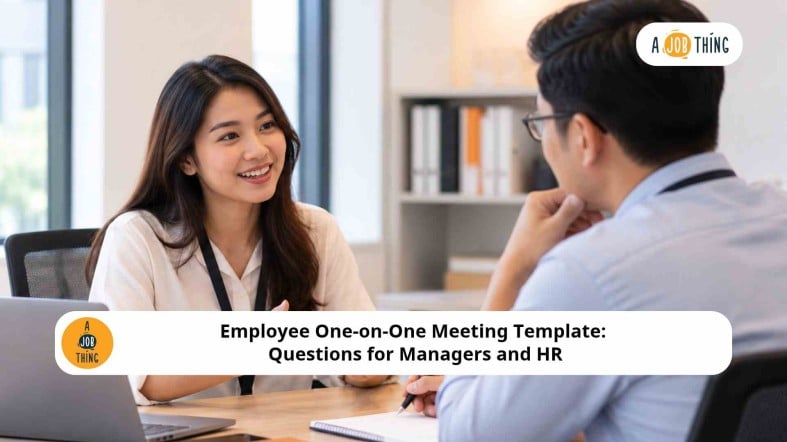
Employee One-on-One Meeting Template: Questions for Managers and HR

Are You Hiring?
Find candidates in 72 Hours with 5+ million talents in Maukerja Malaysia & Ricebowl using Job Ads.
Hire Now
Regular communication between managers and employees is important for building a supportive and productive workplace. However, when daily tasks and deadlines take priority, managers may not always have enough time to discuss employee challenges, feedback or career goals.
A one on one meeting gives managers and employees dedicated time to discuss work progress, challenges, expectations and professional development. Instead of focusing only on tasks, these conversations help managers understand what employees need to perform well and how the company can support their growth.
For HR teams and employers in Malaysia, establishing a consistent meeting structure can also make employee communication more organised across departments.
In this guide, we explain how to conduct effective one-on-one meetings, provide a ready-to-use meeting template and share employee check-in questions that managers can use for regular conversations, performance feedback and career development.
What Is a One-on-One Meeting?
A one-on-one meeting is a private conversation between a manager and an individual employee. It usually takes place regularly and focuses on the employee's work, priorities, challenges, feedback and development.
Unlike a team meeting, which covers shared projects and department updates, a one-on-one meeting focuses on the individual employee.
For example, a manager might use the meeting to understand why an employee is struggling with a project, discuss an upcoming deadline, recognise recent achievements or explore opportunities for skill development.
One-on-one meetings can be conducted in person or online. The important thing is to create a consistent opportunity for both parties to communicate openly and agree on practical next steps.
Why Are One-on-One Meetings Important?
Identify Workplace Challenges Early
Employees may not always raise concerns during team meetings. A private conversation gives them an opportunity to explain workload issues, unclear expectations or problems affecting their work.
Managers can then identify what support or changes may be needed.
Improve Employee Performance
Regular conversations allow managers to provide timely feedback instead of waiting for an annual performance review.
They can recognise good work, clarify expectations and discuss areas where employees may need additional guidance.
Support Employee Development
An employee's current responsibilities may not reflect all their interests or future career goals. One-on-one meetings allow managers to discuss skills employees want to develop, training opportunities and responsibilities they would like to take on.
Strengthen Communication and Trust
Consistent meetings show employees that their concerns and opinions matter. Managers can also receive feedback about their leadership style and identify ways to improve communication within the team.
Support Employee Retention
When employees have opportunities to discuss their challenges, career interests and workplace experience, managers may be better positioned to address concerns before they escalate.
However, meetings should lead to meaningful follow-up. Asking for feedback without taking appropriate action can make employees less willing to share their concerns in the future.
How Often Should Managers Hold One-on-One Meetings?
The ideal meeting frequency depends on the employee's role, workload, experience and support needs. There is no single schedule that works for every team.
| Meeting Frequency | Suitable For | Suggested Duration |
|---|---|---|
| Weekly | New employees, fast-moving teams or employees who need frequent guidance | 20–30 minutes |
| Every two weeks | Employees working on ongoing projects or regular performance goals | 30 minutes |
| Monthly | Experienced employees with stable responsibilities | 30–45 minutes |
| Quarterly development discussion | Longer-term career planning and development goals | 45–60 minutes |
These are suggested starting points rather than fixed rules. Managers can adjust the frequency when an employee joins the company, takes on a new role or faces a significant work challenge.
The most important thing is to maintain a reliable schedule and avoid cancelling meetings repeatedly without rescheduling them.
One-on-One Meeting Agenda: A 30-Minute Template
A clear manager meeting agenda helps both participants prepare and ensures that important topics are not overlooked.
The following example can be used for a regular check-in.
| Agenda Item | Duration | Purpose |
|---|---|---|
| Personal and work check-in | 5 minutes | Understand how the employee is doing |
| Priorities and progress | 5 minutes | Discuss current responsibilities and achievements |
| Challenges and support | 8 minutes | Identify blockers and agree on solutions |
| Feedback and recognition | 5 minutes | Exchange constructive feedback and recognise contributions |
| Career development | 5 minutes | Discuss learning goals and growth opportunities |
| Action items and next steps | 2 minutes | Confirm responsibilities and deadlines |
| Total | 30 minutes |
Not every topic needs to be discussed in every meeting. Managers should prioritise the issues that matter most to the employee and the team.
For more productive conversations, allow the employee to raise their own topics instead of making the entire meeting a manager-led status update.
Free One-on-One Meeting Template for Managers and HR

Download free template here.
Use the following template to organise employee check-ins, document key discussion points and track follow-up actions.
One-on-One Meeting Details
Employee Name: [Employee Name]
Job Title / Department: [Job Title / Department]
Manager Name: [Manager Name]
Meeting Date: [DD/MM/YYYY]
Meeting Type: [Regular Check-In / Performance Discussion / Career Development / New Employee Check-In]
Next Meeting Date: [DD/MM/YYYY]
1. Employee Check-In
Start by understanding how the employee is doing and what has been happening since the previous meeting.
-
How have things been going since our last meeting?
-
What has gone well recently?
-
Is anything causing frustration or making your work more difficult?
-
How are you feeling about your current workload?
Discussion Notes:
[Record the main points shared by the employee.]
2. Work Priorities and Progress
Discuss current responsibilities, important deadlines and progress towards agreed goals.
-
What are your main priorities right now?
-
What progress have you made since our last meeting?
-
Are there any deadlines or responsibilities that need more attention?
-
Do you need clarification on any tasks or expectations?
Discussion Notes:
[Record key updates, achievements and areas requiring attention.]
3. Challenges and Support Required
Identify any obstacles affecting the employee's ability to complete their work.
-
What is the biggest challenge you are facing at the moment?
-
Is anything slowing down your progress?
-
Do you have the tools, information and resources you need?
-
What can I do to help you move forward?
Discussion Notes:
[Record challenges, proposed solutions and support required.]
4. Feedback and Recognition
Encourage two-way feedback. Managers should recognise good work while discussing improvements in a specific and constructive way.
-
What work are you most proud of recently?
-
Is there anything you think could be improved in the team?
-
What feedback would help you perform better?
-
Is there anything I could do differently to support you?
Discussion Notes:
[Record recognition, feedback shared and agreed improvements.]
5. Employee Development
Discuss the employee's interests, professional goals and opportunities to develop relevant skills.
-
What skills would you like to improve?
-
Is there any training or guidance that would help you?
-
Are there projects or responsibilities you would like to explore?
-
What is one development goal we can work towards before our next meeting?
Discussion Notes:
[Record development goals, training needs and possible opportunities.]
6. Action Items and Follow-Up
Finish the meeting by turning important discussion points into clear actions.
| Action Item | Responsible Person | Due Date | Status |
|---|---|---|---|
| [Action 1] | [Name] | [Date] | Not Started |
| [Action 2] | [Name] | [Date] | In Progress |
| [Action 3] | [Name] | [Date] | Not Started |
Next Meeting: [Date]
Additional Notes: [Any follow-up points]
This template can be copied into a document or adapted to the company's HR system. Keep notes factual and relevant, and limit access to people who need the information for legitimate work purposes.
Employee Check-In Questions for Managers
Managers do not need to ask every question in every meeting. Choose a few that match the employee's situation and allow the conversation to develop naturally.
General Check-In Questions
Use these questions to begin a regular one-on-one meeting.
-
How have things been going at work lately?
-
What has gone well since our last meeting?
-
What has been your biggest challenge recently?
-
What are you most proud of accomplishing?
-
Is there anything you would like to discuss today?
Workload and Priority Questions
These questions help managers understand whether employees have clear priorities and manageable workloads.
-
Are your current priorities clear?
-
How are you progressing towards your main goals?
-
Is your workload manageable?
-
Are any deadlines or responsibilities becoming difficult to manage?
-
Do you need additional resources or support to complete your work?
Feedback Questions
Use these questions to understand how employees view their work and their manager's support.
-
What feedback would help you improve your work?
-
Do you feel that your recent contributions have been recognised?
-
What is one thing our team could do better?
-
Is there anything I could change to help you work more effectively?
-
How can we make our communication more effective?
Employee Development Questions
These questions are useful for an employee development meeting or a discussion about future career goals.
-
What skills would you like to develop over the next few months?
-
Are there tasks or projects you would like more exposure to?
-
What type of training would help you in your current role?
-
What career goals would you like to work towards?
-
What is one practical step we can take to support your development?
Questions for New Employees
New hires may need different support while learning about their responsibilities, colleagues and company processes.
-
How are you adjusting to your new role?
-
Are your responsibilities and expectations clear?
-
What has been the most challenging part of starting this job?
-
Do you have access to the tools, information and training you need?
-
What could we improve to make onboarding easier?
Questions Employees Can Ask Their Managers
One-on-one meetings should be a two-way conversation. Employees should also have the opportunity to raise concerns, clarify expectations and ask for support.
Managers can encourage employees to prepare questions such as:
-
What should I prioritise before our next meeting?
-
How does my work contribute to the team's objectives?
-
What am I doing well, and where could I improve?
-
Are there upcoming projects or opportunities I could contribute to?
-
What skills would help me progress in my role?
-
Is there any feedback you would like me to act on?
-
What should success look like over the next month or quarter?
Giving employees room to ask their own questions helps make the meeting more collaborative and useful.
How HR Can Help Managers Conduct Better One-on-One Meetings
HR teams do not necessarily need to attend every routine one-on-one meeting. Their role is often to give managers the guidance, tools and processes needed to conduct effective conversations.
Provide a Standard Meeting Template
Give managers a consistent starting point for check-ins, feedback and development discussions. A shared template can help teams cover important topics without making every conversation identical.
Train Managers to Give Constructive Feedback
Managers should know how to discuss performance concerns clearly, listen to different perspectives and focus on specific behaviours or outcomes rather than personal criticism.
Encourage Consistent Follow-Up
HR can encourage managers to document agreed actions, monitor development goals and revisit unresolved issues during subsequent meetings.
Identify Recurring Employee Concerns
When appropriate and with proper confidentiality safeguards, HR can review recurring themes such as unclear responsibilities, training needs or workload challenges. These patterns may help identify broader organisational issues.
Separate Routine Check-Ins from Formal HR Processes
A regular one-on-one meeting is not a substitute for a formal investigation, grievance procedure or disciplinary process when one is required. Serious concerns should be handled through the company's appropriate procedures, with HR guidance where necessary.
Best Practices for Effective One-on-One Meetings
A template provides structure, but the way a manager conducts the conversation determines whether it is useful.
Prepare Before the Meeting
Review previous action items, achievements and any topics that need attention. Invite the employee to add their own discussion points.
Listen More Than You Speak
Give employees time to explain their concerns without rushing to offer solutions or interrupting them.
Avoid Turning the Meeting into a Status Report
Routine project updates can be handled elsewhere when appropriate. Use meeting time for challenges, feedback, decisions and development.
Be Specific with Feedback
Explain what went well, what needs to improve and what support is available. Avoid vague comments that leave the employee unsure about expectations.
Create a Comfortable Environment
Explain the meeting's purpose and encourage honest discussion. Employees should not feel that every check-in means something is wrong.
Follow Through on Commitments
Review the action items at the next meeting and explain any delays. This shows employees that their concerns are taken seriously.
FAQs
How long should a one-on-one meeting last?
A regular meeting often takes around 20 to 30 minutes. Longer sessions may be appropriate for career development, complex work challenges or more detailed discussions. The duration should match the purpose of the meeting.
How often should a manager meet each employee?
Weekly or fortnightly meetings may be useful for new hires and employees who need frequent guidance. Monthly meetings may suit experienced employees with stable responsibilities. Managers should adjust the schedule to the employee's needs and maintain consistency.
What should be included in a one-on-one meeting agenda?
A practical agenda can include an employee check-in, work priorities, challenges, feedback, support needs, development goals and action items. Employees should also be able to raise topics they want to discuss.
Should HR attend every one-on-one meeting?
Usually, HR does not need to attend every routine meeting between a manager and employee. HR can provide templates and coaching, help managers handle difficult conversations and participate when the situation requires HR involvement.
What is the difference between a one-on-one meeting and a performance review?
A one-on-one meeting is usually a regular conversation about current work, challenges, feedback and support. A performance review is a more formal assessment of an employee's performance against agreed expectations over a defined period.
One-on-one discussions can support ongoing performance management, but they do not replace a formal review where the organisation uses one.
Can one-on-one meetings be conducted online?
Yes. Managers can use video calls or other approved communication platforms for remote and hybrid teams. Both parties should have a private space, a clear agenda and an opportunity to speak without distractions.
Want to Build a Stronger Team?

Getting the right people on board is an important step towards building a productive team. AJobThing helps Malaysian employers connect with candidates and manage their recruitment needs.
Read More
-
Training Needs Analysis (TNA): Your Complete Guide with Template
-
How to Create and Use an Appraisal Form in Malaysia (With Templates)
-
Employee Retention in Malaysia: Meaning, Importance & How to Improve It
-
How to Manage Underperforming Employees in Malaysia: Tips for Employers & HR
-
How to Tell an Employee They Are Underperforming: Tips for HR in Malaysia