
Hiring F&B Staff in Malaysia: Recruitment, Training, and Onboarding

Are You Hiring?
Find candidates in 72 Hours with 5+ million talents in Maukerja Malaysia & Ricebowl using Job Ads.
Hire Now
In the food and beverage (F&B) industry, your people are your brand. The best menu and location won’t mean much if customers are greeted by poor service, slow orders, or a dirty dining area. On the other hand, the right F&B staff can turn first-time visitors into loyal regulars, even in a crowded market.
For HR teams and employers in Malaysia, hiring F&B crew is not easy. The industry is known for high turnover, shift work, and operational pressure.
This article will guide you through what to look for, where to find good candidates, how to screen them, and how to train and retain them, so your food and beverage business can grow with a strong team.
Why Hiring the Right F&B Staff Matters
Every plate, every drink, and every smile to a customer depends on the people you hire. In the F&B industry, staff directly affect:
Customer Experience
They are the first and last touchpoints for your guests. One rude interaction can undo years of branding work.
Speed and Efficiency
Slow service means fewer table turns, long queues, and negative reviews.
Food Quality, Cleanliness, and Hygiene
Poor kitchen practices and weak hygiene can lead to food complaints or, worse, health issues.
Some short examples:
-
Bad customer service → low repeat customers
A cashier who looks annoyed or a waiter who ignores feedback can push customers to the café next door.
-
Slow kitchen output → lower table rotation
If the kitchen is disorganised, orders are delayed, and customers stay longer, reducing how many tables you can serve in a peak period.
Key Qualities to Look For in F&B Staff
In F&B, attitude is often more important than academic qualification. For most roles, focus on behaviour and learning mindset.
General qualities:
Good Communication and Friendliness
Able to greet customers warmly, listen to orders, and respond politely.
Ability to Work Fast
F&B is time-sensitive; staff must handle busy periods without panicking.
Strong Hygiene and Cleanliness
Understands the basics of handwashing, food storage, and clean workstations.
Willingness to Work Shifts and Weekends
Many F&B outlets earn the most during evenings, weekends, and holidays.
Teamwork Attitude
Kitchen, cashier, and servers must coordinate smoothly.
Positive Customer Service Behaviour
Willing to apologise, solve problems, and stay calm with difficult guests.
Basic Food Handling Knowledge
Even front staff should know basic food safety and ingredients (for allergy questions, etc.).
Front-of-House (FOH) Roles
Front-of-house staff shape the first impression of your food and beverage outlet. Look for:
Good Customer Interaction
Comfortable greeting, seating, and checking in with guests.
Order-Taking Accuracy
Listens carefully, repeats orders when needed, and uses POS system correctly.
Cashier Experience
Basic maths, familiarity with POS, handling cash, e-wallets, and cards.
Appearance and Grooming
Clean uniform, neat hair, and presentable overall look.
Back-of-House (BOH) Roles
Back-of-house staff control what actually goes onto the plate. Look for:
Ability to Follow Recipes
Can follow standard recipes and portion sizes to maintain consistency.
Clean Food Handling
Understands cross-contamination risks, storage, and temperature control.
Basic Preparation Skills
Chopping, marinating, and prepping ingredients safely and quickly.
Organised and Calm
Can handle rush orders without losing control of the station.
Where to Find F&B Talent in Malaysia
To find good F&B staff, you must go where F&B workers actually are — both online and on the ground.
Common and effective channels:
Job Portals and Recruitment Platforms
Post on local portals (including in AJobThing) with clear information on pay, shifts, and location to attract suitable F&B candidates.
Posters at Your Outlet
Many F&B businesses still hire through “Walk-in interview” posters on their shopfront. This works well for malls, high-traffic areas, and neighbourhood eateries.
College and Vocational Student Groups
Hospitality, culinary, and tourism students often look for part-time or full-time F&B roles to gain experience.
Social Media Job Postings
Facebook groups, Instagram stories, and WhatsApp broadcasts are popular among younger workers and part-timers.
Walk-in Hires
Accepting walk-in applicants allows you to quickly assess attitude, grooming, and communication on the spot.
Referrals from Existing Staff
Ask your reliable crew to recommend friends or ex-colleagues. This can be one of the fastest ways to find people who fit your outlet’s culture.
Many Malaysian cafés and restaurants successfully hire students from hospitality and culinary colleges. They may lack full experience but often bring strong interest and willingness to learn.
How to Screen F&B Candidates Effectively
Don’t rely only on a short chat; use simple, practical tests to see how they would behave on the floor.
Ways to screen F&B candidates:
Short Trial Shift or Role-Play
Invite candidates for a few trial hours (paid) or a role-play: taking mock orders, carrying trays, or plating simple dishes. This shows their real pace and attitude.
Observe during the Interview
Pay attention to:
-
Personal hygiene and grooming
-
Body language and politeness
-
Willingness to smile and make eye contact
Check Availability Early
Confirm whether they can:
-
Work night shifts
-
Work weekends and public holidays
-
Handle back-to-back shifts during peak seasons (Ramadan evenings, festive weekends, etc.)
Ask Scenario-based Questions
Examples:
-
“What would you do if a customer complains their food is late?”
-
“How do you respond if a customer is unhappy with their order?”
-
“What will you do when there is a long queue and many orders at the same time?”
Look at Behaviour, Not Just Answers
-
Did they arrive on time for the interview?
-
Are they respectful and attentive?
-
Do they seem willing to learn or very defensive?
Check References When Possible
For full-time roles, a short reference check (even informal) with their previous employer can tell you a lot about reliability and attitude.
Compensation Practices That Work
In a high-turnover industry, your pay structure can either keep people or push them to the outlet next door.
Common and effective elements in Malaysian F&B:
Base Salary + Service Point/Tips
Many outlets pool service charges or tips and distribute them, giving staff a sense of shared reward.
Meal Allowance or Staff Meals
Providing one or two staff meals per shift helps with cost of living and boosts morale.
Attendance Bonus
Simple monthly attendance incentives can greatly reduce no-shows and frequent last-minute MCs.
Overtime (OT) Pay
Clear, fair OT rates are important when staff are regularly asked to stay back during peak hours.
Transport Allowance or Late-Night Support
For outlets operating late at night, offering transport allowance or arranging rides home helps with safety and retention.
Competitive salaries, benefits, and recognition are key parts of retaining F&B staff, as highlighted in broader F&B talent retention best practices.
Training & Onboarding
Many F&B staff fail not because they are “bad,” but because they were never properly trained.
Core elements of a good onboarding programme:
Clear SOP Training
-
How to take orders
-
How to key in POS
-
How to handle payments and receipts
-
How to handle delivery orders and platforms
Product and Menu Knowledge
-
Ingredients in key dishes and drinks
-
Cooking or preparation time
-
Bestsellers and seasonal items
Hygiene and Safety
-
Handwashing procedures
-
Cleaning checklists for front and back areas
-
Food storage and labelling practices
Service Etiquette
-
How to greet and seat customers
-
How to handle complaints politely
-
How to upsell or recommend items without being pushy
Shadowing Senior Staff
New hires should be allowed to shadow experienced crew before taking full responsibility on their own.
Simple Training Checklists (PDF/Excel)
HR can use a checklist to track:
-
Training completed (SOP, hygiene, menu, POS)
-
Skills demonstrated (taking orders, serving tables, basic food prep)
-
Behavioural expectations (punctuality, teamwork, attitude)
This structure not only improves performance but also shows employees that the company is serious about helping them grow.
Checklist Onboarding PDF & Excel
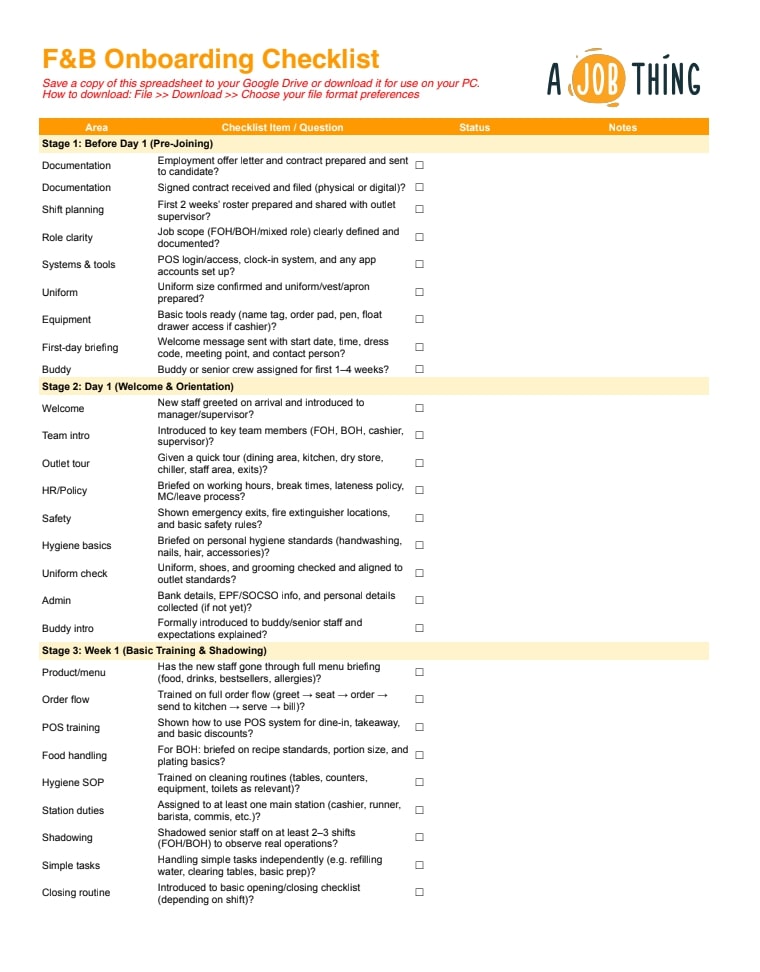
Free Download Food and Beverage Onboarding Checklist Sheet
Free Download Food and Beverage Onboarding Checklist PDF
How to Retain F&B Staff
In F&B, hiring is only half the battle. Retention is where you win or lose. Based on common retention practices in the F&B industry:
Offer Competitive Pay and Benefits
Staff are less likely to leave if they feel fairly paid for the workload and hours.
Provide Fixed Off Days or Balanced Shift Rotation
Allowing predictable rest days helps employees plan their personal life and reduces burnout.
Reward Attendance and Performance
-
Monthly attendance bonuses
-
“Employee of the month” recognition
-
Small rewards like vouchers or bonus meals
Create a Positive Work Environment
Respectful supervisors and supportive teammates matter a lot, especially in stressful kitchens and busy outlets.
Career Development for Senior Staff
Show a path from Crew → Senior Crew → Supervisor → Outlet Manager. Add small leadership responsibilities, training opportunities, and clear promotion criteria.
Flexible Arrangements Where Possible
Part-time shifts, student-friendly hours, or split shifts can help keep good staff who have other commitments.
When employees feel valued, supported, and fairly treated, they are more likely to stay, even in a competitive food and beverage market.
FAQs
1. Do I need to hire an experienced crew or can I train fresh hires?
You can do both. Many successful outlets mix:
-
Experienced staff to handle complex tasks and lead shifts.
-
Fresh hires or students who bring energy and can be trained using clear SOPs and checklists.
The key is to ensure you have enough experienced people to guide the rest.
2. What is the average salary for F&B crew in Malaysia?
Salaries vary by location, type of outlet, and whether the role is full-time or part-time. Many employers combine:
-
Basic salary
-
Service charge/tips
-
Allowances and OT
You should benchmark against other outlets in your area and adjust regularly as cost of living increases.
3. How long is probation for F&B roles?
Commonly 3–6 months. Shorter probation suits simpler roles, while longer probation may be used for supervisory or manager-level positions.
4. Can part-time workers replace full-time F&B staff?
Part-time staff can help cover peak hours, weekends, and events, but you usually still need a core full-time team to maintain consistency, handle opening/closing, stock, and training.
5. How do I reduce turnover in F&B outlets?
Focus on:
-
Fair pay and transparent incentives
-
Predictable schedules and off days
-
Respectful supervisors and clear communication
-
Real training and support, not just “learning by scolding”
Simple practices like consistent feedback, appreciation, and career growth opportunities can significantly improve retention.
6. When should I run background checks?
For F&B roles handling cash, stock, or sensitive areas (e.g. store room, high-value ingredients), it is wise to:
-
Verify identity and past work experience
-
Ask simple integrity questions during the interview
-
Do reference checks for full-time or senior positions
This helps reduce risks related to theft, misconduct, or repeated absenteeism.
Looking to Hire Top Sales Talent?

With AJobThing, reach a wide pool of qualified Malaysian sales candidates and fill your sales roles with confidence.
Post your job on AJobThing today.
Read More:
-
Hiring the Right Salesperson in Malaysia: From Sourcing to Onboarding
-
How HR and Employers Should Handle Salary Expectations in Interviews
-
How HR Can Reject a Candidate the Right Way (with Templates)
-
Skills-Based Interview Questions Every HR Should Use (with Examples)
-
20 Common Interview Questions Candidates Ask and How HR Should Respond
-
10 Interview Invitation Templates to Attract Quality Candidates
-
12 Interview Types that Help HR in Malaysia Hire the Right Talent
-
How to Conduct a Background Check for Employment in Malaysia
-
Onboarding Process Tips: What HR Needs to Know for Better Retention
-
Onboarding Checklist for New Hires (Free Downloadable Template)
-
Performance Evaluation: Description, Types, and How to Conduct
-
Cover Letter Examples Employers Should Know (With Tips to Spot the Best Ones)
-
Step-by-Step Guide to Writing a Great Job Description (Free Templates)