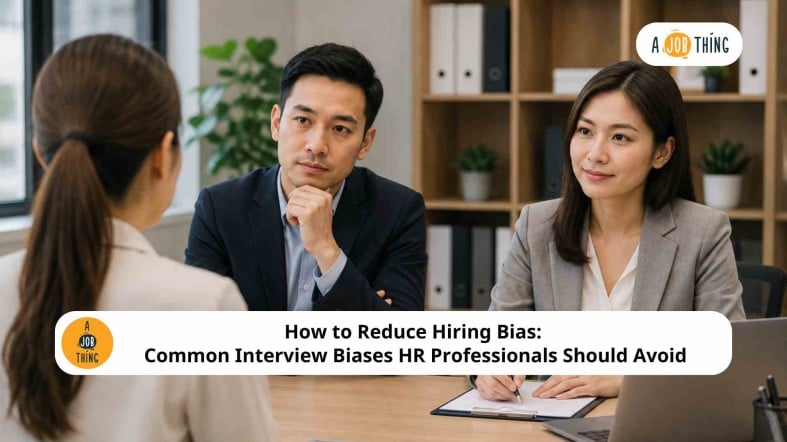
How to Reduce Hiring Bias: Common Interview Biases HR Professionals Should Avoid

Are You Hiring?
Find candidates in 72 Hours with 5+ million talents in Maukerja Malaysia & Ricebowl using Job Ads.
Hire Now
Hiring the right employee isn't only about finding candidates with the right qualifications. HR professionals also need to make sure every candidate is evaluated fairly and consistently.
However, hiring decisions can sometimes be influenced by personal opinions, assumptions or first impressions instead of a candidate's actual skills and experience. This is known as hiring bias.
While some bias is natural, HR professionals can reduce its impact by using a structured and objective hiring process. Doing so not only improves hiring quality but also helps HR teams make fairer and more consistent recruitment decisions.
This guide explains what hiring bias is, why it happens, the most common interview biases HR professionals should know, and how to reduce hiring bias during the recruitment process.
What Is Hiring Bias?
Hiring bias refers to conscious or unconscious preferences that influence how HR professionals evaluate job candidates.
Bias can occur at any stage of the recruitment process, including reviewing resumes, conducting interviews and making the final hiring decision.
Instead of assessing candidates based solely on their qualifications, experience and competencies, interviewers may unknowingly allow personal opinions or assumptions to influence their judgement.
Recognising these biases is the first step towards building a fairer and more effective hiring process.
Why Does Hiring Bias Happen?
Hiring bias often happens unconsciously rather than intentionally. Even experienced interviewers may form opinions based on first impressions, personal experiences or assumptions without realising it.
For example, an interviewer may naturally prefer a candidate with a similar background, focus too much on one positive quality, or allow one negative impression to influence their overall judgement. These biases can affect hiring decisions even when HR professionals are trying to be fair.
Without a structured interview process, candidates may be evaluated using different standards, making it harder to compare them objectively. This is why many HR teams use structured interviews, interview scorecards and clear evaluation criteria to help reduce bias and make more consistent hiring decisions.
Why Is Reducing Hiring Bias Important?
Reducing hiring bias helps HR professionals make better recruitment decisions while creating a fair and consistent hiring process.
When candidates are evaluated using objective criteria instead of personal opinions, HR professionals are more likely to select the best person for the role.
Reducing hiring bias can also help HR teams:
-
Improve hiring consistency across different interviewers.
-
Make decisions based on evidence rather than assumptions.
-
Build stronger and more diverse teams.
-
Increase confidence in hiring decisions.
A structured recruitment process benefits both organisations and job seekers by ensuring every candidate is assessed fairly.
Common Interview Biases HR Professionals Should Know
The table below summarises some of the most common interview biases that can affect hiring decisions.
|
Interview Bias |
What It Means |
|
Halo Effect |
One positive quality creates an overly favourable impression of a candidate. |
|
Horn Effect |
One negative quality leads to an unfair overall judgement. |
|
Confirmation Bias |
Looking for information that supports an early opinion while ignoring conflicting evidence. |
|
Similarity Bias |
Preferring candidates who share similar backgrounds, experiences or interests. |
|
First Impression Bias |
Judging a candidate too quickly based on the first few minutes of the interview. |
Understanding these biases helps HR professionals recognise when personal opinions may be influencing hiring decisions.
1. Halo Effect
The halo effect occurs when one positive characteristic influences an interviewer's overall opinion of a candidate.
For example, a candidate who graduated from a well-known university or previously worked for a reputable company may automatically be viewed as highly capable, even before demonstrating the skills required for the role.
Although these achievements may be relevant, HR professionals should evaluate candidates based on their overall competencies rather than one impressive qualification or experience.
How to Reduce the Halo Effect
-
Evaluate each competency separately.
-
Ask every candidate the same interview questions.
-
Use a standardised interview scorecard.
-
Base hiring decisions on evidence gathered during the interview.
2. Horn Effect
The horn effect is the opposite of the halo effect. Instead of focusing on one positive quality, interviewers allow one negative characteristic or incident to influence their overall judgement.
For example, a candidate may arrive late because of an unexpected traffic accident. Rather than assessing the candidate's overall suitability, the interviewer may focus only on the late arrival and overlook their qualifications, experience and interview performance.
HR professionals should assess the candidate as a whole rather than allowing one mistake to determine the final hiring decision.
How to Reduce the Horn Effect
-
Consider the candidate's overall performance.
-
Focus on job-related competencies and evidence.
-
Avoid making hiring decisions based on a single negative incident.
3. Confirmation Bias
Confirmation bias occurs when interviewers form an early opinion about a candidate and then look for information that supports that opinion.
For example, an interviewer may decide within the first few minutes that a candidate is an excellent fit. During the rest of the interview, they may pay more attention to positive answers while overlooking weaknesses or inconsistent responses.
The opposite can also happen if an interviewer forms a negative opinion early in the interview.
How to Reduce Confirmation Bias
-
Keep an open mind throughout the interview.
-
Ask every planned interview question before making a decision.
-
Record evidence for each competency.
-
Review interview feedback objectively before deciding.
4. Similarity Bias
Similarity bias happens when interviewers favour candidates because they share similar backgrounds, personalities, interests or experiences.
For example, an interviewer may feel a stronger connection with a candidate because they attended the same university, worked in the same industry or have similar hobbies.
While these similarities may help build rapport, they do not necessarily mean the candidate is the best fit for the role.
HR professionals should focus on whether the candidate has the skills, knowledge and behaviours needed to perform the job successfully.
How to Reduce Similarity Bias
-
Evaluate candidates using predefined competencies.
-
Focus on job requirements instead of personal similarities.
-
Involve more than one interviewer where appropriate.
-
Use consistent interview questions for every candidate.
5. First Impression Bias
First impression bias occurs when interviewers make a judgement about a candidate within the first few minutes of the interview.
Factors such as appearance, confidence, body language or communication style may influence the interviewer's opinion before the candidate has fully demonstrated their experience or abilities.
Although first impressions are natural, HR professionals should avoid making hiring decisions too early. Every candidate should have the opportunity to answer interview questions and demonstrate their competencies before being evaluated.
How to Reduce First Impression Bias
-
Complete the full interview before making a judgement.
-
Take notes throughout the interview.
-
Evaluate candidates using a structured scorecard.
-
Focus on evidence rather than first impressions.
How to Reduce Hiring Bias
Although hiring bias cannot always be eliminated completely, HR professionals can take practical steps to make hiring decisions more objective and consistent.
Use Structured Interviews
Prepare a standard set of interview questions for every candidate applying for the same role.
Asking consistent questions makes it easier to compare candidates fairly and ensures hiring decisions are based on the same evaluation criteria.
Define Job Requirements Before Hiring
Before advertising a vacancy, identify the skills, qualifications and competencies required for the role.
Having clear hiring criteria helps HR professionals focus on whether candidates meet the job requirements instead of making decisions based on personal preferences.
Use an Interview Scorecard
An interview scorecard allows interviewers to assess candidates using the same rating scale and evaluation criteria.
Recording evidence from the interview also helps HR professionals compare candidates more objectively and supports fairer hiring decisions.
Train Hiring Managers
Hiring managers should understand the different types of interview bias and how they can influence recruitment decisions.
Regular interview training helps ensure hiring managers ask consistent questions, evaluate answers fairly and apply the same hiring standards across the organisation.
Involve More Than One Interviewer
Where appropriate, involve multiple interviewers when evaluating candidates.
Different perspectives can help reduce individual bias and create a more balanced hiring decision, particularly for senior or specialised roles.
Base Decisions on Evidence
Hiring decisions should be based on what candidates demonstrate during the interview rather than assumptions or first impressions.
Interviewers should evaluate:
-
Relevant skills and experience.
-
Examples provided during the interview.
-
Competencies required for the role.
-
Evidence recorded in the interview scorecard.
Review Your Hiring Process Regularly
Recruitment practices should be reviewed regularly to identify opportunities for improvement.
HR teams can review interview questions, scorecards and hiring outcomes to determine whether candidates are being evaluated consistently across different interviewers and departments.
Continuous improvement helps organisations maintain a fair and effective recruitment process.
Best Practices for HR Professionals
Reducing hiring bias is an ongoing process rather than a one-time initiative.
To improve hiring consistency, HR professionals should:
-
Develop a structured interview process.
-
Use the same interview questions for every candidate applying for the same role.
-
Evaluate candidates against predefined job requirements.
-
Document interview feedback using a standardised interview scorecard.
-
Encourage collaboration between interviewers before making hiring decisions.
-
Provide regular interview training for hiring managers.
-
Review recruitment processes periodically to identify areas for improvement.
A structured recruitment process helps HR professionals make better hiring decisions while creating a fairer experience for every candidate.
FAQs
What is hiring bias?
Hiring bias refers to conscious or unconscious preferences that influence how HR professionals evaluate job candidates during the recruitment process.
What are the most common interview biases?
Some of the most common interview biases include the halo effect, horn effect, confirmation bias, similarity bias and first impression bias.
How can HR professionals reduce hiring bias?
HR professionals can reduce hiring bias by using structured interviews, defining clear job requirements, using interview scorecards, training hiring managers and evaluating candidates based on objective evidence.
Can hiring bias be completely eliminated?
No. Hiring bias cannot always be eliminated completely because unconscious bias is a natural part of human decision-making. However, HR professionals can significantly reduce its impact by implementing a structured and consistent recruitment process.
Why is it important to reduce hiring bias?
Reducing hiring bias helps HR professionals make fairer and more consistent hiring decisions, improves the candidate experience and increases the likelihood of selecting the best person for the role.
Hire Better with a Structured Recruitment Process
%20copy.jpg)
A fair recruitment process begins with qualified candidates and consistent interviews. AJobThing helps HR professionals attract the right talent, streamline recruitment and make better hiring decisions.
Post your job with AJobThing today and start hiring smarter.
Read More:
-
Staff Immediate Resignation in Malaysia: Employer Rights & Responsibilities
-
Late Salary Payment in Malaysia: Can Employers Delay Employee Salaries?
-
Internship vs Apprenticeship in Malaysia: Key Differences for Employers & HR
-
How to Manage Underperforming Employees in Malaysia: Tips for Employers & HR
-
Warning Letter for Poor Performance in Malaysia: How to Write One (With Sample)
-
Can Employers Reject Annual Leave in Malaysia? Rights, Rules & Employee Entitlements
-
Payroll and Attendance Management in Malaysia: Process, Formula & Best Practices for Employers
-
Workplace Conflict Management in Malaysia: Causes, Solutions, and Best Practices
-
Recruitment Process Outsourcing (RPO): What It Is, Benefits & How It Works in Malaysia
-
SME Hiring Guide: How to Plan, Hire, and Grow Your Team Successfully
-
Competency-Based Interviews: Improve Hiring Quality with a Consistent Interview Process
-
Leave Encashment Malaysia: How to Calculate Unused Annual Leave
-
Online Seller Requirements in Malaysia: 10 Business Details You Must Display
-
Performance Bonus in Malaysia: How It Works, Calculation & Employer Guide
-
Cost Per Hire Malaysia: Formula, Examples & How Employers Can Reduce Hiring Costs
-
Letter of Extension of Contract Malaysia: Free Template, Format & Sample
-
Promotion Letter in Malaysia: How to Write One (+ Free Template & Sample)
-
Probation Extension Letter Malaysia: Template, Sample, and What Employers Need to Know
-
Talent Pool: Benefits, Examples & How to Build One for Better Hiring
-
Sales Turnover: What It Is, Formula, Examples & Tips to Increase It
-
Overtime Rates in Malaysia: When Do 1.5x, 2x and 3x Pay Apply?
-
Prorated Salary in Malaysia: How to Calculate an Employee's First Salary
-
Remote Jobs in Malaysia: Most In-Demand Roles, Salaries & Hiring Guide (2026)
-
Effective Ways to Reduce Absenteeism in the Workplace for HR & Employers
-
Medical Benefits for Employees in Malaysia: Types, Legal Requirements & Best Practices
-
Fresh Graduate Salary in Malaysia (2026): How Much Should Employers Pay?
-
Salary Benchmarking in Malaysia: Are You Paying Enough to Attract Candidates?
-
e-Invoicing Malaysia Explained: What Every Employer and Business Needs to Know
-
EOR vs PEO: What's the Difference and Which Is Right for Your Business?
-
Remote Job Offer Letter: What Employers Should Include (+ Example)
-
Job Offer Letter vs. Employment Contract: What's the Difference? (+ Free Templates)
-
Constructive Dismissal Malaysia: Meaning, Examples & What To Do
-
Contract of Service vs Contract for Service Malaysia: How to Classify Workers Correctly
-
Job Offer Letter Templates: Examples, Formats & Best Practices for HR
-
Employee Retention in Malaysia: Meaning, Importance & How to Improve It
-
Employee Turnover in Malaysia: Causes, Warning Signs & How to Reduce It
-
Retrenchment in Malaysia: Meaning, Process & Employee Rights
-
Gmail Templates for HR: Faster Replies for Interviews, Offers & Rejections
-
7 Key Contract Employee Rights in Malaysia Every HR Should Know
-
GLC vs Private Company Malaysia: Salary, Culture & Hiring Differences
-
Types of Payroll Calculation in Malaysia: Adhoc, Prorated Salary & Final Settlement Explained
-
Types of Payroll Cycle in Malaysia: Which One Is Best for Your Business?
-
Types of Insurance in Malaysia and Their Impact on Employee Benefits
-
How to Create a Strong Candidate Shortlist for Better Hiring Decisions
-
How HR in Malaysia Can Offer a Job Over the Phone (with Script)
-
How Notice Period Really Works in Malaysia for Employers and HR
-
How to Create a Job Posting That Attracts the Right Candidates
-
How HR in Malaysia Can Improve Resume Screening and Candidate Shortlisting
-
How HR Can Reject a Candidate the Right Way (with Templates)
-
How to Conduct a Background Check for Employment in Malaysia
-
Onboarding Process Tips: What HR Needs to Know for Better Retention
-
Onboarding Checklist for New Hires (Free Downloadable Template)
-
Performance Evaluation: Description, Types, and How to Conduct
-
Cover Letter Examples Employers Should Know (With Tips to Spot the Best Ones)
-
Step-by-Step Guide to Writing a Great Job Description (Free Templates)