
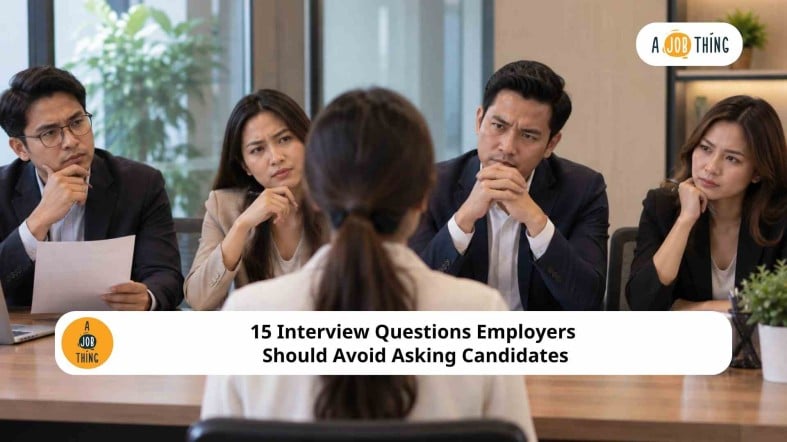
15 Interview Questions Employers Should Avoid Asking Candidates

Are You Hiring?
Find candidates in 72 Hours with 5+ million talents in Maukerja Malaysia & Ricebowl using Job Ads.
Hire Now
A job interview should help employers understand whether a candidate has the skills, experience and attitude needed for the role.
However, some interview questions are too personal or are not related to the job. Asking these questions can make the interview feel uncomfortable and may create concerns about fairness in hiring.
For HR teams and hiring managers, a good rule is simple: focus on questions that are relevant to the job.
Malaysia's Employment Act 1955 includes provisions relating to discrimination in employment, so employers should take care when designing and conducting their recruitment process.
Here are 15 interview questions employers should avoid, together with better questions HR can ask instead.
1. How Old Are You?
A candidate's age does not usually tell you whether they can perform the job.
Instead of asking:
How old are you?
Ask:
Can you tell us about your experience in this type of role?
This keeps the conversation focused on relevant experience.
2. Are You Married?
Marital status is generally not relevant to whether someone can do the job.
Avoid questions such as:
Are you married?
Why are you still single?
Does your spouse support your career?
Ask about actual job requirements instead.
For example:
This position may require occasional travel. Are you able to meet this requirement?
3. Do You Have Children?
Questions about children or family responsibilities can be too personal when they are not related to the role.
Avoid:
Do you have children?
How many children do you have?
Who takes care of your children?
Instead, ask about the work schedule.
For example:
This role follows a rotating schedule. Are you available to work according to this schedule?
4. Are You Planning to Have Children?
This is a personal question and is not normally needed to assess a candidate's ability to perform a job.
Avoid asking:
Are you planning to have children soon?
Focus on the responsibilities of the position instead.
Pregnancy is also an area that employers should handle carefully because the Employment Act 1955 includes specific protection relating to termination of pregnant employees.
5. What Is Your Religion?
A candidate's religion is generally not relevant to their skills or ability to perform a role.
Instead of asking about religion, ask about genuine work requirements.
For example:
This position may require working on weekends. Are you able to meet the required schedule?
6. What Is Your Race?
Avoid questions about race or ethnicity when they are not relevant to the position.
For example, instead of:
What race are you?
Ask:
What experience do you have working with customers from different backgrounds?
This gives you useful information about the candidate's ability without focusing on personal background.
7. Where Were You Born?
A candidate's birthplace is usually not relevant to their ability to perform the job.
Instead, ask about work eligibility when that information is genuinely needed.
For example:
Are you legally authorised to work in Malaysia?
This is more directly related to employment requirements.
8. Do You Have Any Medical Problems?
Avoid broad questions about a candidate's medical history.
For example:
Do you have any health problems?
The better approach is to ask whether the candidate can meet the actual requirements of the role.
For example:
This position requires standing for several hours at a time. Are you able to perform this requirement?
Where medical information is genuinely necessary, HR should handle it carefully and only request information that is relevant to the recruitment process.
9. Do You Have a Disability?
Do not make assumptions about a candidate's ability based on a disability.
Instead, focus on whether the candidate can perform the essential responsibilities of the role.
For example:
This position requires the use of [specific equipment]. Are you able to perform this responsibility?
This keeps the discussion focused on the work itself.
10. Do You Have Family Problems?
Personal family matters should not normally be part of a job interview.
Avoid questions such as:
Do you have family problems?
Do you need to take care of your parents?
Will your family allow you to work here?
Ask about actual job requirements instead.
For example:
This role may require occasional overtime. Are you able to meet this requirement?
11. Why Are You Still Unemployed?
There is nothing wrong with asking about a candidate's employment history, but the question should be handled professionally.
Instead of:
Why are you still unemployed?
Ask:
Can you tell us what you have been doing since your previous role?
This gives the candidate a fair opportunity to explain a career break, job search, further studies or other activities.
12. Why Don't You Have a Degree?
Be careful when judging a candidate based only on educational background.
If a degree is genuinely required for the role, explain the requirement clearly.
If it is not required, focus on the skills and experience needed for the position.
For example:
Tell us about the experience that has prepared you for this role.
13. What Is Your Current Salary?
Salary history may not be the best way to assess what a candidate should earn in a new role.
Instead, employers can ask:
What are your salary expectations for this position?
This keeps the discussion focused on the role and expected compensation.
14. Have You Ever Been Sick a Lot?
Questions about a candidate's health history should not be used casually to judge their suitability.
Instead, ask about genuine attendance or work requirements.
For example:
This position requires regular attendance during business hours. Are you able to meet the required schedule?
This helps HR assess availability without asking unnecessary personal questions.
15. What Is Your Political Belief?
Political beliefs are generally unrelated to a candidate's ability to perform most jobs.
Avoid questions such as:
Which political party do you support?
or:
Who did you vote for?
Keep the interview focused on professional qualifications, skills and work-related experience.
What Should Employers Ask Instead?
A strong interview focuses on questions that help HR understand whether the candidate is suitable for the role.
About Skills
What skills do you have that are most relevant to this position?
About Experience
Can you tell us about your previous experience in this area?
About Problem-Solving
Tell us about a difficult problem you faced at work and how you handled it.
About Teamwork
Tell us about a time you worked with a difficult team member.
About Motivation
What interests you about this position?
About Performance
What achievement are you most proud of in your previous role?
About Job Requirements
This role requires occasional travel. Are you able to meet this requirement?
These questions give employers useful information while keeping the interview focused on the job.
How HR Can Make Interviews More Fair
Avoiding inappropriate questions is only one part of a good recruitment process.
HR can also make interviews more consistent by following a structured approach.
Prepare Questions Before the Interview
Create a set of job-related questions before interviewing candidates.
This reduces the chance of asking unnecessary personal questions.
Ask the Same Core Questions
For candidates applying for the same role, use similar core questions so they can be assessed against the same expectations.
Use Clear Evaluation Criteria
Score candidates based on relevant areas such as:
-
Skills
-
Experience
-
Qualifications
-
Communication
-
Problem-solving
-
Job-specific requirements
Avoid Personal Assumptions
Do not make hiring decisions based on personal opinions about a candidate's age, family situation, religion, appearance or other characteristics that are not relevant to the job.
Keep Interview Notes Professional
Record job-related observations rather than personal comments or assumptions.
For example, write:
Has 3 years of experience using accounting software.
Instead of:
Seems too young for this position.
A Simple Rule for HR
Before asking an interview question, ask:
Does the answer help us decide whether this candidate can perform the job?
If the answer is no, the question may not be necessary.
The goal is not to learn everything about a candidate's personal life. The goal is to understand whether the candidate is suitable for the position.
Final Tips for Employers
A good job interview should be professional, consistent and focused on the role.
Avoid unnecessary personal questions and focus on what actually matters for the hiring decision: skills, experience, qualifications and the ability to perform the job.
Using structured, job-related questions can also help HR create a more consistent interview process and give candidates a better experience.
For Malaysian employers, it is also important to review the latest employment requirements and company recruitment policies when creating interview guidelines. The Employment Act 1955 includes provisions on discrimination in employment and specific protections for pregnant employees.
FAQs
What Interview Questions Should Employers Avoid?
Employers should avoid unnecessary questions about personal matters such as marriage, children, pregnancy, religion, health, family responsibilities and political beliefs.
What Should HR Ask Instead?
Focus on the candidate's skills, experience, qualifications, problem-solving ability, motivation and ability to meet the requirements of the job.
Can Employers Ask About Salary Expectations?
Yes. Employers can ask about a candidate's expected salary for the position. The discussion should focus on the role and the company's compensation package.
Ready to Find Your Next Hire?
%20copy.jpg)
Once you have the right interview process in place, the next step is finding the right candidates. AJobThing helps employers in Malaysia reach jobseekers and find suitable talent for their open positions.
Post your job on AJobThing today.
Read More:
-
LINDUNG 24 Jam Update: 8.5 Million Workers Remain Covered in Malaysia
-
What to Do When a Candidate Reschedules an Interview Multiple Times
-
Malaysia Labour Force Hits 17.37 Million in July 2026 as Unemployment Stays at 3.0%
-
Probation Performance Review in Malaysia: How HR Can Evaluate Employees
-
Final Interview Tips for HR: How to Assess Candidates Effectively
-
Candidate Withdrawal During the Hiring Process: How HR Can Reduce Drop-Off
-
How to Keep Candidates Interested During a Long Hiring Process
-
Candidates Stop Responding After an Interview? What HR Should Do
-
Management Trainee Programme In Malaysia: How Employers Can Build A Graduate Pipeline That Retains
-
Job Requisition: What It Is, What to Include & How HR Can Create One
-
Panel Interviews: How HR Can Plan, Conduct & Evaluate Candidates
-
Interview-to-Hire Ratio: How to Calculate, Benchmark & Improve It
-
Candidate Experience Survey: Questions, Examples & How to Improve Recruitment
-
How to Reduce Hiring Bias: Common Interview Biases HR Professionals Should Avoid
-
Staff Immediate Resignation in Malaysia: Employer Rights & Responsibilities
-
Late Salary Payment in Malaysia: Can Employers Delay Employee Salaries?
-
Internship vs Apprenticeship in Malaysia: Key Differences for Employers & HR
-
How to Manage Underperforming Employees in Malaysia: Tips for Employers & HR
-
Warning Letter for Poor Performance in Malaysia: How to Write One (With Sample)
-
Can Employers Reject Annual Leave in Malaysia? Rights, Rules & Employee Entitlements
-
Payroll and Attendance Management in Malaysia: Process, Formula & Best Practices for Employers
-
Workplace Conflict Management in Malaysia: Causes, Solutions, and Best Practices
-
Recruitment Process Outsourcing (RPO): What It Is, Benefits & How It Works in Malaysia
-
Competency-Based Interviews: Improve Hiring Quality with a Consistent Interview Process
-
Leave Encashment Malaysia: How to Calculate Unused Annual Leave
-
Online Seller Requirements in Malaysia: 10 Business Details You Must Display
-
Performance Bonus in Malaysia: How It Works, Calculation & Employer Guide
-
Cost Per Hire Malaysia: Formula, Examples & How Employers Can Reduce Hiring Costs
-
Letter of Extension of Contract Malaysia: Free Template, Format & Sample
-
Promotion Letter in Malaysia: How to Write One (+ Free Template & Sample)
-
Probation Extension Letter Malaysia: Template, Sample, and What Employers Need to Know
-
Talent Pool: Benefits, Examples & How to Build One for Better Hiring
-
Sales Turnover: What It Is, Formula, Examples & Tips to Increase It
-
Overtime Rates in Malaysia: When Do 1.5x, 2x and 3x Pay Apply?
-
Prorated Salary in Malaysia: How to Calculate an Employee's First Salary
-
Remote Jobs in Malaysia: Most In-Demand Roles, Salaries & Hiring Guide (2026)
-
Effective Ways to Reduce Absenteeism in the Workplace for HR & Employers
-
Medical Benefits for Employees in Malaysia: Types, Legal Requirements & Best Practices
-
Fresh Graduate Salary in Malaysia (2026): How Much Should Employers Pay?
-
Salary Benchmarking in Malaysia: Are You Paying Enough to Attract Candidates?
-
e-Invoicing Malaysia Explained: What Every Employer and Business Needs to Know
-
EOR vs PEO: What's the Difference and Which Is Right for Your Business?
-
Remote Job Offer Letter: What Employers Should Include (+ Example)
-
Job Offer Letter vs. Employment Contract: What's the Difference? (+ Free Templates)
-
Constructive Dismissal Malaysia: Meaning, Examples & What To Do
-
Contract of Service vs Contract for Service Malaysia: How to Classify Workers Correctly
-
Job Offer Letter Templates: Examples, Formats & Best Practices for HR
-
Employee Retention in Malaysia: Meaning, Importance & How to Improve It
-
Employee Turnover in Malaysia: Causes, Warning Signs & How to Reduce It
-
Retrenchment in Malaysia: Meaning, Process & Employee Rights
-
Gmail Templates for HR: Faster Replies for Interviews, Offers & Rejections
-
7 Key Contract Employee Rights in Malaysia Every HR Should Know
-
GLC vs Private Company Malaysia: Salary, Culture & Hiring Differences
-
Types of Payroll Calculation in Malaysia: Adhoc, Prorated Salary & Final Settlement Explained
-
Types of Payroll Cycle in Malaysia: Which One Is Best for Your Business?
-
Types of Insurance in Malaysia and Their Impact on Employee Benefits
-
How to Create a Strong Candidate Shortlist for Better Hiring Decisions
-
How HR in Malaysia Can Offer a Job Over the Phone (with Script)
-
How Notice Period Really Works in Malaysia for Employers and HR
-
How to Create a Job Posting That Attracts the Right Candidates
-
How HR in Malaysia Can Improve Resume Screening and Candidate Shortlisting
-
How HR Can Reject a Candidate the Right Way (with Templates)
-
How to Conduct a Background Check for Employment in Malaysia
-
Onboarding Process Tips: What HR Needs to Know for Better Retention
-
Onboarding Checklist for New Hires (Free Downloadable Template)
-
Performance Evaluation: Description, Types, and How to Conduct
-
Cover Letter Examples Employers Should Know (With Tips to Spot the Best Ones)
-
Step-by-Step Guide to Writing a Great Job Description (Free Templates)