
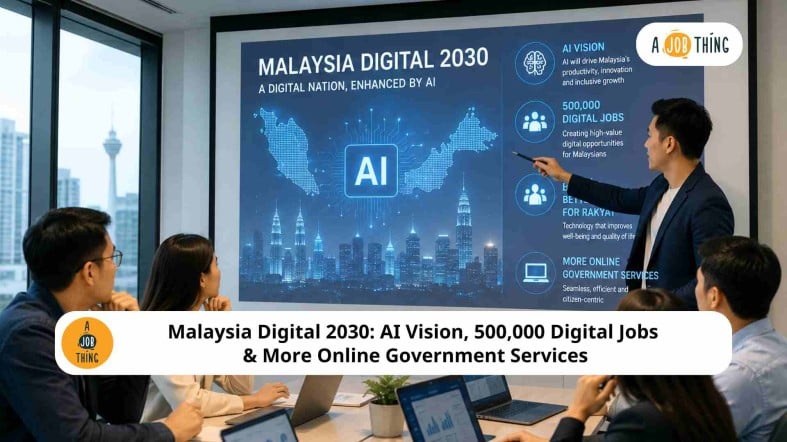
Malaysia Digital 2030: AI Vision, 500,000 Digital Jobs & More Online Government Services

Are You Hiring?
Find candidates in 72 Hours with 5+ million talents in Maukerja Malaysia & Ricebowl using Job Ads.
Hire Now
Malaysia Digital 2030 (MD2030) is Malaysia's national digital roadmap for 2026 to 2030. It was launched by the government to speed up the country's digital transformation and make Malaysia a creator of digital innovation.
The initiative is led by the Kementerian Digital as part of its vision, "Towards an AI Nation 2030."
What is Malaysia Digital 2030 (MD2030)?
Malaysia Digital 2030 (MD2030) is a national roadmap that will guide the country's digital development from 2026 to 2030.
Its main focus is to strengthen the digital economy, increase the use of Artificial Intelligence (AI), develop more digital talent, and ensure technology is developed in a safe, inclusive and sustainable way.
In simple terms, MD2030 aims to help Malaysia move from relying on foreign technology to developing local technologies and innovations that can create new economic value.
Malaysia Digital 2030 Goals
The government has set several key targets to achieve by 2030:
-
Increase the digital economy's contribution to 30% of Malaysia's KDNK (GDP).
-
Create 500,000 high-value digital jobs.
-
Save RM4.5 billion in the public sector through the digitalisation of government services.
-
Make 95% of government services fully available online, from application until completion.
These targets show that digital transformation is not only about technology. It is also about growing the economy, creating more job opportunities and improving the delivery of government services.
Seven Strategic Pillars of Malaysia Digital 2030
To ensure the roadmap is implemented successfully, MD2030 is built around seven strategic pillars involving various ministries and government agencies.
Kerajaan
This pillar focuses on improving public services through the establishment of GovTech Malaysia.
The goal is to make government services easier, faster and more connected through digital platforms.
Economy
Malaysia aims to become a regional hub for digital innovation and digital trade by strengthening "Made by Malaysia" products, encouraging the use of technology in high-value industries, and making better use of data, digital assets and intellectual property as new sources of economic growth.
Infrastructure
A strong digital economy needs reliable infrastructure.
The government will prioritise high-quality internet access across the country while also developing data centres, cloud computing and smart cities.
Talent (Bakat)
Developing digital talent is one of the key priorities under MD2030.
The government plans to introduce digital talent development policies, strengthen training programmes and improve workforce skills so Malaysia has more digital professionals to meet industry needs.
Society (Masyarakat)
Digital transformation should benefit everyone.
To achieve this, the government will expand digital participation by empowering rural communities, introducing the Malaysia Digital Inclusion Index, and developing digital solutions that improve people's daily lives.
Trust and Security
As digital technology becomes more widely used, protecting data and digital systems becomes increasingly important.
Planned initiatives include establishing the National Data Commission and introducing the National Digital Trust and Data Security Strategy 2026–2030 to support innovation in a secure digital environment.
Innovation
The final pillar focuses on strengthening the ecosystem from research to technology commercialisation.
Through the Research, Development, Commercialisation, Innovation and Economy (RDCIE) ecosystem, the government hopes to develop and commercialise more local technologies.
.jpg)
Image source: hmetromy
Agencies Involved in MD2030
Several agencies under the Kementerian Digital will support the implementation of Malaysia Digital 2030, including:
-
National AI Office (NAIO)
-
National Digital Department (GovTech Malaysia)
-
Malaysia Digital Economy Corporation (MDEC)
-
CyberSecurity Malaysia
-
MyDIGITAL Corporation
-
Malaysia Centre for the Fourth Industrial Revolution (MYCentre4IR)
Each agency will play its role based on its expertise to ensure MD2030 is implemented successfully.
Malaysia's Journey Towards an AI Nation by 2030
According to the Kementerian Digital, Malaysia Digital 2030 is more than just a technology roadmap. It is a long-term plan to build a country that uses Artificial Intelligence (AI) across many sectors.
Over the next few years, AI is expected to be used more widely in government services, industry development, education, healthcare and the economy.
At the same time, the government will continue to focus on good governance, data security and inclusive technology so that everyone can benefit from digital transformation.
Why Malaysia Digital 2030 Matters
Malaysia Digital 2030 is expected to play an important role in shaping the country's digital future. By growing the digital economy and expanding the use of AI, the roadmap aims to create more high-value job opportunities while supporting long-term economic growth.
For businesses, MD2030 could encourage greater digital adoption and innovation. Better digital infrastructure and stronger digital talent may also help companies improve productivity and remain competitive in the digital economy.
For Malaysians, the roadmap aims to make government services faster and more convenient. With a target of making 95% of government services fully available online by 2030, more applications and services can be completed digitally from start to finish.
Malaysia Digital 2030 Action Plan Summary
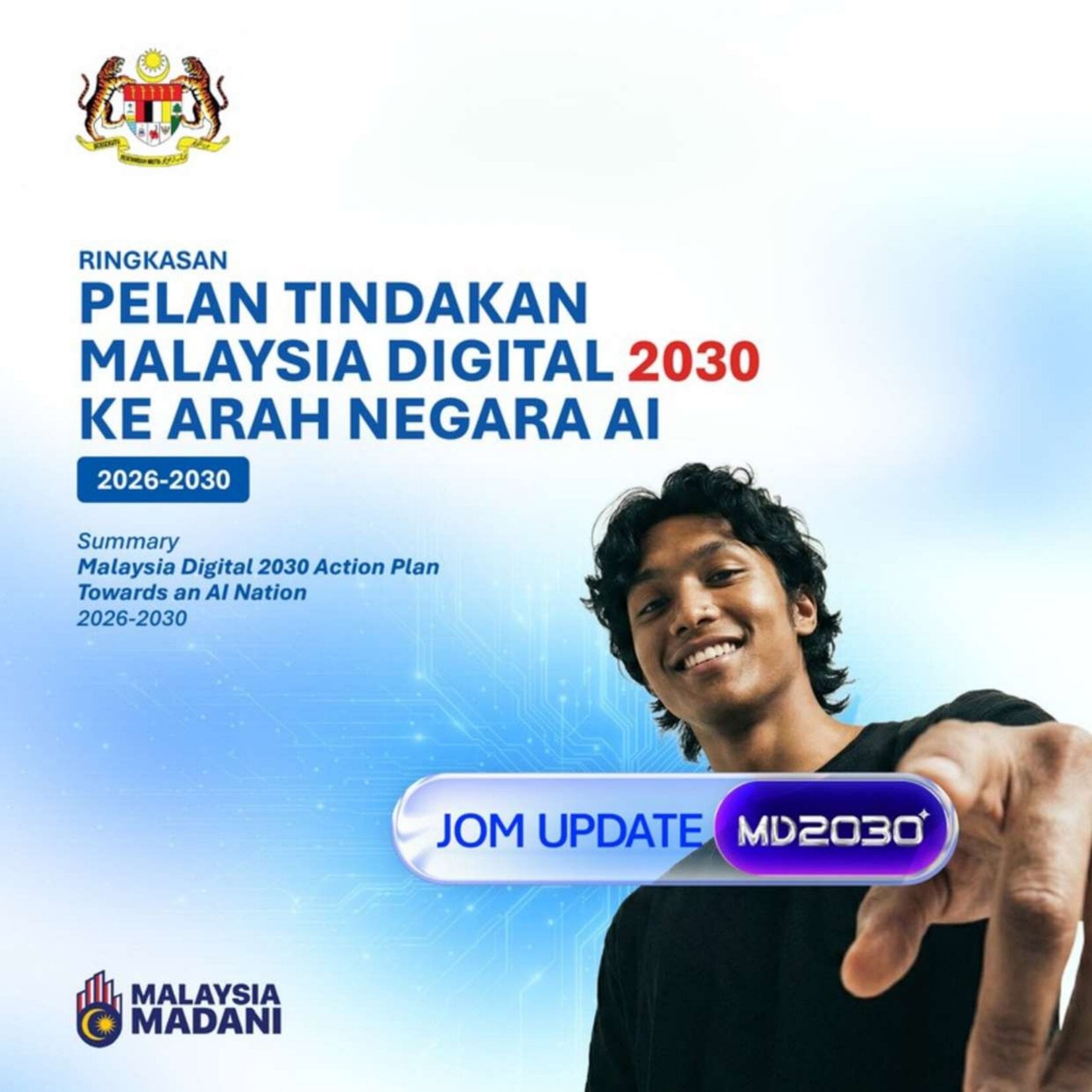
Download the full Malaysia Digital 2030 guide.
FAQs
What is Malaysia Digital 2030?
Malaysia Digital 2030 (MD2030) is Malaysia's national digital roadmap for 2026 to 2030. It aims to strengthen the digital economy, increase AI adoption, develop digital talent and make Malaysia a creator of digital innovation.
When was Malaysia Digital 2030 launched?
Malaysia Digital 2030 was launched on 1 July 2026 by Prime Minister Datuk Seri Anwar Ibrahim.
What are the main targets of Malaysia Digital 2030?
The main targets by 2030 are:
-
Digital economy contributes 30% to Malaysia's KDNK.
-
Create 500,000 high-value digital jobs.
-
Save RM4.5 billion in the public sector through digitalisation.
-
Make 95% of government services fully available online from start to finish.
Who is leading the implementation of MD2030?
The Kementerian Digital is the lead ministry responsible for coordinating the implementation of Malaysia Digital 2030 together with various ministries and government agencies.
What are the seven strategic pillars of MD2030?
The seven strategic pillars are:
-
Kerajaan
-
Economy
-
Infrastructure
-
Talent
-
Society
-
Trust and Security
-
Innovation
What does "Towards an AI Nation 2030" mean?
This agenda aims to make Malaysia a country that widely uses Artificial Intelligence (AI) across government, the economy, education, industry and daily life, while ensuring strong governance, data security and responsible innovation.
Where can I get more information about Malaysia Digital 2030?
You can get the latest information from the official Kementerian Digital website and official government announcements related to Malaysia Digital 2030 (MD2030).
Looking to Hire Digital Talent?
%20copy.jpg)
As Malaysia's digital economy grows, the demand for skilled digital talent will continue to increase.
With AJobThing, you can reach millions of job seekers across Malaysia and hire the right candidates faster.
Post your job with AJobThing today and build your future-ready team.
Read More:
-
Overtime Rates in Malaysia: When Do 1.5x, 2x and 3x Pay Apply?
-
Prorated Salary in Malaysia: How to Calculate an Employee's First Salary
-
Remote Jobs in Malaysia: Most In-Demand Roles, Salaries & Hiring Guide (2026)
-
Fresh Graduate Salary in Malaysia (2026): How Much Should Employers Pay?
-
What Is BAKAT MADANI? Malaysia's New Skills Training Initiative Explained
-
Over 42,000 Malaysians Lost Their Jobs in 2026: Key Insights for Employers
-
Fresh Graduate Salary in Malaysia (2026): How Much Should Employers Pay?
-
Salary Benchmarking in Malaysia: Are You Paying Enough to Attract Candidates?
-
Bangladesh PM Seeks Reopening of Malaysia's Labour Market for Bangladeshi Workers
-
What Is Mutual Separation Scheme (MSS) in Malaysia? Meaning, Compensation & Guide
-
Bantuan Berhenti Kerja Malaysia (2026): Employee Rights & Employer Responsibilities
-
B40, M40 & T20 Malaysia: Latest Household Income Categories and Income Range (2026)
-
MyKad Online: How to Replace Your MyKad Through the JPN Portal
-
Touch n Go MyKad: How to Claim Your Balance After Getting a New MyKad
-
Geran LiKES TalentCorp 2026: RM2,000 Grant & 50% Reimbursement for Intern Hiring
-
Free SSM Registration for B40 & IPT Students Under SPPP 2026
-
Zakat Pendapatan Malaysia: Salary Deduction & Payroll Process for Employers
-
PADURI MADANI Scheme: Financial Assistance for B40 Women Entrepreneurs
-
MyKad Baru June 2026 Released: Do You Need to Change Your IC?
-
Bantuan B40 2026 Ikut Negeri: Full List Malaysia + Eligibility & How to Apply
-
5,900 Workers Affected by March Layoffs, Government Acts to Strengthen Employment Support
-
Malaysia Govt Saves RM678,000 in Fuel in 1 Week After WFH Policy
-
Malaysia Job Loss 2026 Rises 47% to 24,100 Retrenchments in Q1
-
Senarai Barang MyKasih (SARA 2026): What You Can Buy Using Your SARA Credit
-
Senarai Kedai MyKasih 2026: List of Stores That Accept SARA MyKad Assistance
-
Skim Jaminan Kredit Perumahan (SJKP): How Malaysians Can Buy a Home Without a Payslip
-
Semakan SARA 2026: Recipient Categories, Payment Dates and How to Use MyKad
-
SARA 2026 Malaysia Latest Updates and Official Announcements