

Malaysia’s Unemployment Rate 2026: Hiring Trends and Labour Market Insights

In 2026, Malaysia's job market is changing as companies adapt to economic recovery, digital advancements, and new expectations from workers. While conversations about unemployment usually focus on job seekers, it's also important for employers and human resources teams.
Knowing the unemployment rate helps businesses plan their hiring, manage the number of workers available, and make smarter recruitment choices. It gives insight into how many talented people are available, the pressure on wages, and how competitive the job market is.
What Is the Unemployment Rate?
The unemployment rate measures the percentage of people in the labour force who are actively looking for work but are not employed. Simply, it’s about a person being considered unemployed if they:
-
Are not working
-
Are available to work
-
Are actively seeking a job
This rate is calculated by dividing the number of unemployed persons by the total labour force (employed + unemployed), then multiplying by 100.
It does not include:
-
Students who are not seeking work
-
Homemakers
-
Retirees
-
Individuals who have stopped looking for jobs
Malaysia’s Unemployment Rate in 2026
Based on data released by the Department of Statistics Malaysia (DOSM) through the Labour Force Survey, Malaysia’s unemployment rate in 2026 remains relatively stable, continuing the gradual recovery seen after the pandemic years.
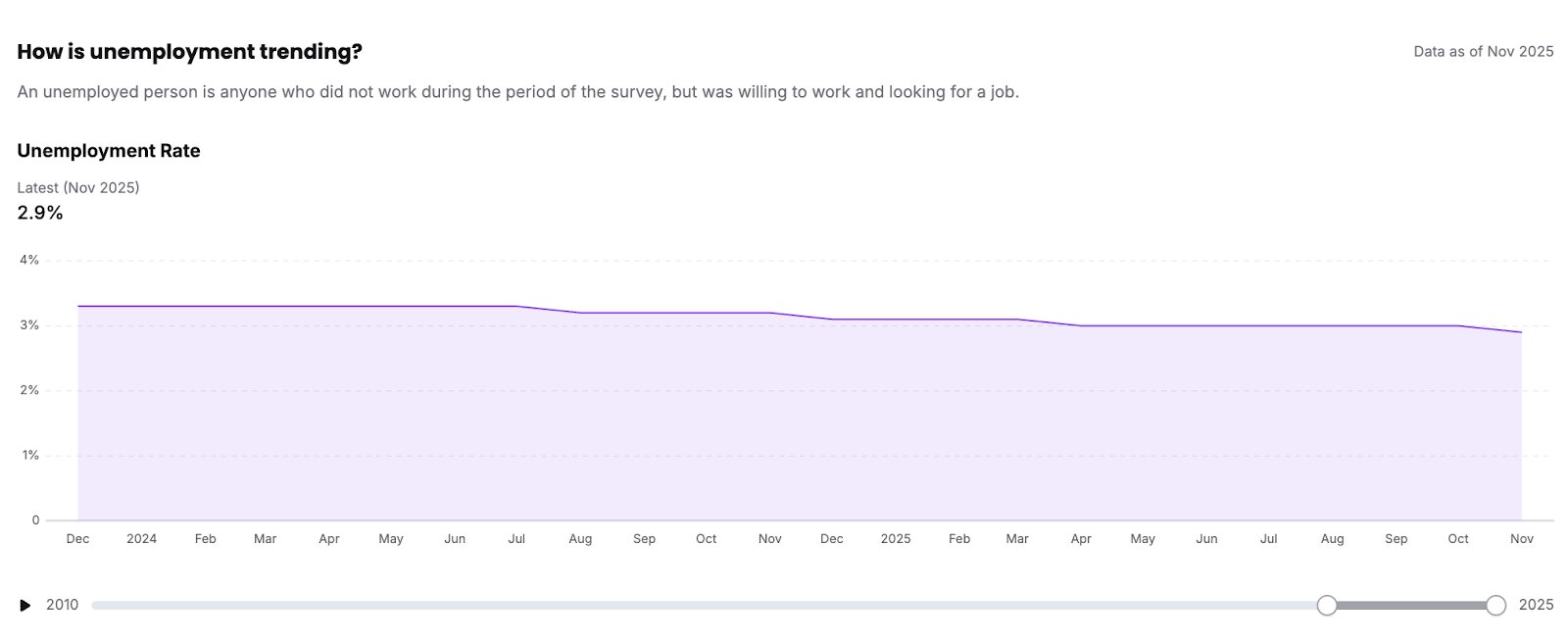
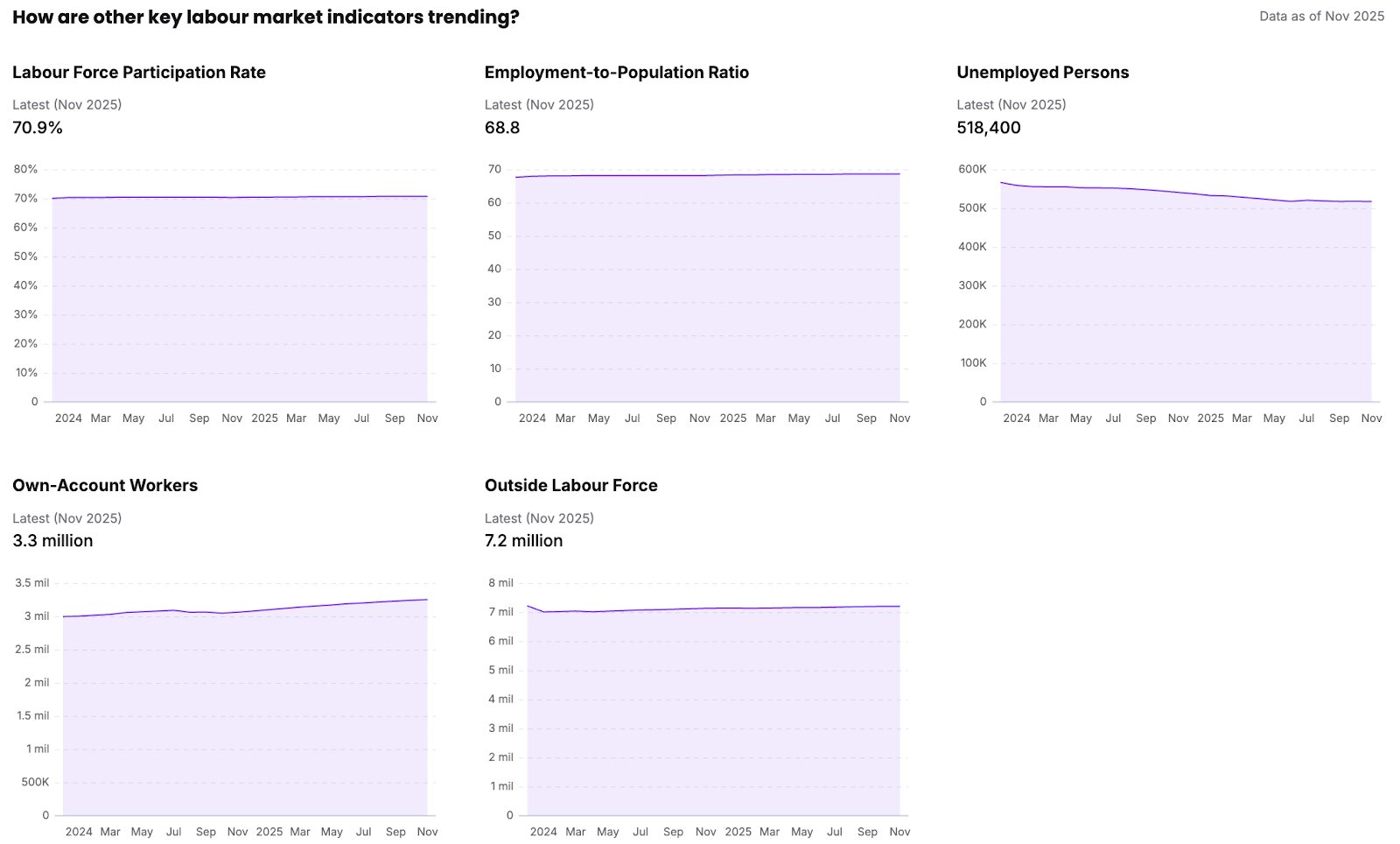
Compared to earlier periods:
-
Unemployment is lower than peak pandemic levels
-
The rate has normalised closer to pre-pandemic figures
-
Month-to-month changes are modest, indicating a more stable labour market
Overall, the trend in 2026 suggests that while more people are employed, talent competition remains strong, especially for skilled roles.
Key Factors Affecting Unemployment in 2026
Several things affect unemployment levels in 2026:
Economic Conditions
The state of the economy, how confident businesses feel, and how much people spend can all impact hiring. When the economy grows, more jobs are created, but slow growth can cause companies to hold off on hiring.
Skills Mismatch
Many job seekers don’t have the right skills that employers need. Even if there are job openings, companies may find it hard to fill positions that require specific or technical skills.
Automation and Digitalisation
Technology is taking over repetitive and low-skill jobs, which means there are fewer of those jobs available. However, it is creating more demand for jobs that need tech skills.
Growth of Contract and Gig Work
More people are opting for freelance work or temporary contracts instead of full-time jobs. This changes how unemployment is calculated and how companies find workers.
Industries With Higher Hiring Demand
Even though overall unemployment is stable, some job sectors are still hiring a lot in 2026:
-
Technology and digital jobs (like software, data, cybersecurity, and AI support)
-
Manufacturing, especially with new and automated ways to produce
-
Healthcare, due to an aging population and the need for more services
-
Logistics and supply chain, boosted by online shopping and local trade
-
Sales and customer support, especially in service-focused industries
These sectors often struggle to find enough qualified workers, even though unemployment is steady.
Industries Facing Hiring Challenges
Some industries are hiring fewer people or cutting jobs because of changes in how they operate. This can be due to:
-
Traditional office jobs are being taken over by machines and software
-
Low-skilled jobs that don't have many training options
-
Jobs that involve a lot of manual work are being replaced by technology
For employers in these fields, helping employees learn new skills and redesigning jobs is becoming more important.
What This Means for Employers & HR Teams
An unemployment rate that stays the same doesn't mean it's easy to find hires. Here are some key points to consider:
-
Having more candidates doesn’t always mean they are all well-qualified.
-
Skilled and experienced workers are still very competitive.
-
How a company presents itself to potential employees is important for attracting good hires.
-
Salaries for in-demand skills will remain high in 2026.
-
Employers who only look at unemployment rates might not see the real challenges in hiring.
How HR Teams Can Use Unemployment Data
Unemployment information can help HR teams make better choices when used properly. HR teams can use this data for:
-
Planning the workforce and understanding available talent
-
Deciding on hiring times, especially for difficult jobs
-
Creating budgets and planning for salaries and staff needs
-
Identifying areas where employees may need new skills if there are talent gaps
When this unemployment data is combined with information about internal hires, it becomes a useful tool for planning.
Labour Market Outlook After 2026
Looking ahead to after 2026, Malaysia's job market is expected to stay steady but will be picky. Here are the main points to keep in mind:
-
Unemployment rates are likely to stay stable.
-
There will be a strong need for skilled and flexible workers.
-
Companies will focus more on training and keeping their employees.
-
Employers will compete more on company culture, job flexibility, and chances for growth.
-
The challenge will be less about finding people and more about finding the right fit.
FAQs
What is Malaysia’s unemployment rate in 2026?
Malaysia’s unemployment rate in 2026 remains stable, based on official data from DOSM, reflecting a steady labour market recovery.
Is unemployment increasing or decreasing in Malaysia?
Overall, unemployment has stabilised compared to previous years, with no sharp increases or declines in 2026.
Why is hiring still difficult despite unemployment?
Because unemployment does not reflect a skills mismatch. Many candidates may not meet the current job requirements.
Which industries are hiring the most in 2026?
Technology, healthcare, manufacturing, logistics, and customer-focused roles show stronger hiring demand.
How does the unemployment rate affect recruitment planning?
It helps HR teams understand talent availability, plan hiring timelines, and anticipate competition for skilled workers.
Finding the Right Hire Shouldn’t be Overwhelming

Let AJobThing take some weight off your shoulders.
Post once, and your job ad appears across top platforms like Maukerja, Ricebowl, and Epicareer — giving you more time to focus on growing your team.
Read More:
-
Employee Emergency Contact Form: Simple Guide with a Ready-to-Use Template
-
How HR in Malaysia Can Offer a Job Over the Phone (with Script)
-
How Notice Period Really Works in Malaysia for Employers and HR
-
Why Employers Should Offer Health Insurance to Employees in Malaysia
-
Salary Increment Letter Malaysia: Samples, Format & HR Guide
-
How to Create a Job Posting That Attracts the Right Candidates
-
How Employers Should Handle Employee Misconduct in Malaysia Fairly
-
How HR in Malaysia Can Improve Resume Screening and Candidate Shortlisting
-
Preboarding in Malaysia: Why Employers Should Start Before Day One (Free Checklist Template)
-
How HR Can Reject a Candidate the Right Way (with Templates)
-
How to Conduct a Background Check for Employment in Malaysia
-
Onboarding Process Tips: What HR Needs to Know for Better Retention
-
Onboarding Checklist for New Hires (Free Downloadable Template)
-
Performance Evaluation: Description, Types, and How to Conduct
-
Cover Letter Examples Employers Should Know (With Tips to Spot the Best Ones)
-
Step-by-Step Guide to Writing a Great Job Description (Free Templates)