New Hire Turnover: Why Employees Leave in the First 90 Days

Are You Hiring?
Find candidates in 72 Hours with 5+ million talents in Maukerja Malaysia & Ricebowl using Job Ads.
Hire Now
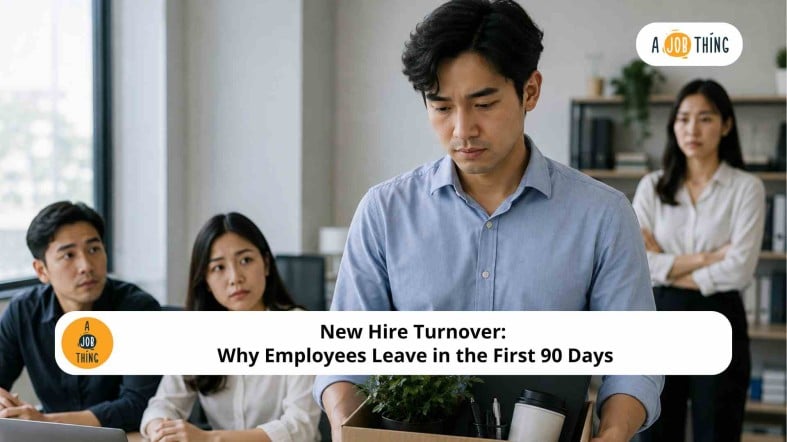
Hiring someone is only the beginning. An employee may accept the job, complete onboarding, and still leave within the first few months.
This is known as new hire turnover or early employee turnover.
When new employees leave within their first 90 days, employers may need to restart the recruitment process, spend more time training another employee, and deal with disruption to the team.
Understanding why new hires leave can help employers improve recruitment, onboarding, management, and employee retention.
What Is New Hire Turnover?
New hire turnover refers to employees leaving an organisation relatively soon after joining.
There is no single universal period used to define new hire turnover. However, employers often pay particular attention to employees who leave during their first few months, including the first 30, 60, or 90 days.
For example, if a company hires 50 employees and 8 leave within their first 90 days, those departures represent an important early turnover issue for the company to investigate.
New hire turnover can include employees who:
-
Resign voluntarily
-
Leave because the job does not meet their expectations
-
Leave for another opportunity
-
Are dismissed during probation
-
Decide the company or role is not suitable for them
Tracking these departures separately from overall employee turnover can help HR identify problems affecting new employees.
Why Do New Employees Leave in the First 90 Days?
There is rarely one reason why a new hire leaves.
The problem can start during recruitment and continue through onboarding and the employee's first few weeks.
The Job Does Not Match Expectations
One of the biggest risks occurs when the job advertised does not match the actual role.
For example, a job description may describe a position as:
"Marketing Executive"
But the employee discovers after joining that most of the work involves sales, customer support, or administrative tasks.
This mismatch can create frustration and cause the employee to reconsider the job.
Employers should make sure job advertisements accurately describe:
-
Main responsibilities
-
Work location or arrangement
-
Required skills
-
Reporting structure
-
Expected targets
-
Travel requirements
-
Salary and benefits, where appropriate
Being clear during recruitment can help candidates make a more informed decision before accepting the role.
The Recruitment Process Created Unrealistic Expectations
The problem may begin before the employee joins.
Recruiters and hiring managers may unintentionally create expectations about:
-
The role
-
Career progression
-
Salary increases
-
Working arrangements
-
Benefits
-
Company culture
-
Training opportunities
If the employee discovers that the reality is very different, disappointment can develop quickly.
A good recruitment process should provide candidates with an accurate picture of the job rather than simply trying to convince them to accept an offer.
Poor Onboarding
Starting a new job can be overwhelming.
New employees need to understand how the company works, what is expected of them, who they should work with, and where they can get help.
Without proper onboarding, employees may feel:
-
Confused
-
Unprepared
-
Isolated
-
Uncertain about their responsibilities
-
Unsure about company expectations
Onboarding should therefore go beyond completing paperwork on the first day.
A structured onboarding process can include:
-
Company introduction
-
Role and responsibility briefing
-
System and tool access
-
Training
-
Team introductions
-
Manager check-ins
-
Clear short-term goals
The Manager Does Not Provide Enough Support
A new employee often relies heavily on their manager during the first few months.
If the manager provides little guidance, unclear instructions, or inconsistent feedback, the employee may struggle to understand whether they are performing well.
Regular check-ins can help managers identify problems early.
For example:
First week: Check that the employee understands the role and has the tools they need.
First month: Discuss progress, challenges, and training needs.
First 60–90 days: Review performance, expectations, and future goals.
These conversations also give employees an opportunity to raise concerns before they become serious problems.
The Employee Does Not Receive Enough Training
A new employee cannot always be expected to perform at full speed immediately.
They may need time to understand:
-
Internal systems
-
Processes
-
Products or services
-
Customers
-
Team responsibilities
-
Company policies
-
Job-specific skills
If an employee is given responsibilities without enough training or support, they may feel that they were not properly prepared for the role.
Employers should identify the skills a new hire needs and create a realistic training plan.
Company Culture Does Not Match Expectations
Candidates may also evaluate the company culture after joining.
During recruitment, an employer may describe the workplace as collaborative, flexible, supportive, or fast-paced.
If the employee experiences something very different after joining, they may question whether the company is right for them.
This is another reason employers should be honest about workplace culture during recruitment.
Instead of presenting only the positive side, explain how the team actually works.
The Employee Does Not See a Future With the Company
Some employees leave because they do not see opportunities to grow.
They may want:
-
Career progression
-
More responsibility
-
Training
-
New skills
-
Leadership opportunities
-
A clearer career path
This does not mean every new employee needs a promotion within 90 days.
However, employees should understand how their role can develop over time.
Managers can discuss career goals early and explain what skills or performance are needed for future opportunities.
Communication Problems
Poor communication can quickly create frustration for a new employee.
Examples include:
-
Unclear instructions
-
Slow responses
-
Conflicting information
-
No regular feedback
-
Not knowing who to approach for help
New employees should know who they report to, where to get support, and how important information is communicated.
Clear communication is especially important during the first few weeks.
The Employee Finds a Better Opportunity
Sometimes the reason is simple: another employer offers something the employee prefers.
This could include:
-
Higher salary
-
Better benefits
-
Better career opportunities
-
Shorter commute
-
More suitable working hours
-
A role that better matches their interests
Employers cannot prevent every employee from leaving for another opportunity.
However, understanding why new hires leave can help identify whether there are recurring issues within the company's recruitment or employment experience.
How to Calculate New Hire Turnover Rate
Employers can create a simple metric to track early employee turnover.
For example:
New Hire Turnover Rate = (Number of New Hires Who Leave Within a Defined Period ÷ Total Number of New Hires) × 100
Suppose a company hires 100 employees during a quarter.
Within their first 90 days, 12 employees leave.
The calculation would be:
(12 ÷ 100) × 100 = 12%
The company's 90-day new hire turnover rate would therefore be 12% for that group.
The important thing is to define the period consistently.
For example, HR could track:
-
30-day turnover
-
60-day turnover
-
90-day turnover
-
6-month turnover
-
12-month turnover
This makes it easier to compare different hiring periods and identify changes over time.
What Does a High New Hire Turnover Rate Mean?
A high new hire turnover rate does not automatically mean that the company has a serious HR problem.
Some employees may leave because the role is not suitable for them, they receive another opportunity, or their circumstances change.
However, consistently high early turnover can be a warning sign.
HR should investigate questions such as:
-
Are employees leaving from the same department?
-
Are they leaving under the same manager?
-
Are they leaving at the same point in the first 90 days?
-
Did they receive enough onboarding?
-
Was the job accurately described during recruitment?
-
Are employees mentioning similar reasons for leaving?
-
Is the turnover higher for certain roles?
Looking for patterns is more useful than focusing on one individual resignation.
How to Reduce New Hire Turnover
Improve Job Descriptions
Make job advertisements accurate and specific.
Clearly explain the responsibilities, requirements, working arrangements, and expectations of the role.
Set Realistic Expectations During Interviews
Recruiters and hiring managers should provide candidates with an honest view of the position.
Explain both the opportunities and the challenges of the role.
Create a Structured Onboarding Process
Prepare a clear onboarding plan covering the employee's first day, first week, first month, and first 90 days.
Give New Employees Clear Goals
Employees should understand what is expected of them.
Instead of giving vague instructions, establish clear priorities and short-term objectives.
Schedule Regular Check-Ins
Do not wait until the end of probation to ask how the employee is doing.
Regular conversations can help identify problems early.
Provide Enough Training
Make sure employees receive the training, resources, and access they need to perform their roles.
Encourage Questions and Feedback
New employees may hesitate to raise concerns because they are still getting comfortable.
Managers should create an environment where asking questions is normal.
Review the Recruitment-to-Onboarding Process
Look at the entire employee journey:
Job Advertisement → Application → Interview → Offer → Onboarding → First 90 Days
If new hires are leaving early, the problem may not start after they join.
It could begin with how the role was advertised, how expectations were communicated, or how candidates were evaluated.
How Recruitment Affects New Hire Turnover
New hire turnover is not only an onboarding issue.
Recruitment decisions can have a major impact on what happens after someone joins.
For example:
Unclear Job Advertisement
↓
Wrong Candidate Expectations
↓
Candidate Accepts the Job
↓
Reality Does Not Match Expectations
↓
Employee Leaves Early
This is why employers should focus on both hiring the right person and providing the right information before the person joins.
A strong recruitment process should help candidates understand the role and help employers evaluate whether the candidate is suitable for it.
How Candidate Feedback Can Help
Employers can also ask new employees about their recruitment and onboarding experience.
Useful questions include:
-
Did the actual role match what was explained during recruitment?
-
Was the job description accurate?
-
Did you receive enough information before joining?
-
Was the onboarding process helpful?
-
Did you understand your responsibilities?
-
Did you receive enough training?
-
Did your manager provide enough support?
-
What could we have done better?
This feedback can help HR identify problems that may otherwise be missed.
For example, if several new employees say that the actual role was different from what they expected, the company may need to review its job descriptions and interview process.
FAQs
What is new hire turnover?
New hire turnover refers to employees leaving an organisation relatively soon after joining, often tracked during periods such as the first 30, 60, or 90 days.
Why do new employees leave within 90 days?
Common reasons include poor onboarding, unclear expectations, insufficient training, lack of manager support, communication problems, poor company culture fit, and the job not matching what was presented during recruitment.
How do you calculate new hire turnover rate?
Divide the number of new hires who leave within a defined period by the total number of new hires in the same group, then multiply by 100.
How can employers reduce new hire turnover?
Employers can reduce early turnover by providing accurate job information, setting realistic expectations, improving onboarding, providing training, giving regular feedback, and supporting new employees.
Is new hire turnover the same as employee turnover?
Not exactly. Employee turnover usually looks at employees leaving across the organisation, while new hire turnover focuses specifically on employees who leave relatively soon after joining.
Build a Better Hiring Process
%20copy.jpg)
Reduce new hire turnover with clear job information, realistic expectations, and a smooth recruitment process.
With AJobThing, post jobs, reach candidates, and manage applications more efficiently.
Read More:
-
Candidate Experience Survey: Questions, Examples & How to Improve Recruitment
-
How to Reduce Hiring Bias: Common Interview Biases HR Professionals Should Avoid
-
Staff Immediate Resignation in Malaysia: Employer Rights & Responsibilities
-
Late Salary Payment in Malaysia: Can Employers Delay Employee Salaries?
-
Internship vs Apprenticeship in Malaysia: Key Differences for Employers & HR
-
How to Manage Underperforming Employees in Malaysia: Tips for Employers & HR
-
Warning Letter for Poor Performance in Malaysia: How to Write One (With Sample)
-
Can Employers Reject Annual Leave in Malaysia? Rights, Rules & Employee Entitlements
-
Payroll and Attendance Management in Malaysia: Process, Formula & Best Practices for Employers
-
Workplace Conflict Management in Malaysia: Causes, Solutions, and Best Practices
-
Recruitment Process Outsourcing (RPO): What It Is, Benefits & How It Works in Malaysia
-
SME Hiring Guide: How to Plan, Hire, and Grow Your Team Successfully
-
Competency-Based Interviews: Improve Hiring Quality with a Consistent Interview Process
-
Leave Encashment Malaysia: How to Calculate Unused Annual Leave
-
Online Seller Requirements in Malaysia: 10 Business Details You Must Display
-
Performance Bonus in Malaysia: How It Works, Calculation & Employer Guide
-
Cost Per Hire Malaysia: Formula, Examples & How Employers Can Reduce Hiring Costs
-
Letter of Extension of Contract Malaysia: Free Template, Format & Sample
-
Promotion Letter in Malaysia: How to Write One (+ Free Template & Sample)
-
Probation Extension Letter Malaysia: Template, Sample, and What Employers Need to Know
-
Talent Pool: Benefits, Examples & How to Build One for Better Hiring
-
Sales Turnover: What It Is, Formula, Examples & Tips to Increase It
-
Overtime Rates in Malaysia: When Do 1.5x, 2x and 3x Pay Apply?
-
Prorated Salary in Malaysia: How to Calculate an Employee's First Salary
-
Remote Jobs in Malaysia: Most In-Demand Roles, Salaries & Hiring Guide (2026)
-
Effective Ways to Reduce Absenteeism in the Workplace for HR & Employers
-
Medical Benefits for Employees in Malaysia: Types, Legal Requirements & Best Practices
-
Fresh Graduate Salary in Malaysia (2026): How Much Should Employers Pay?
-
Salary Benchmarking in Malaysia: Are You Paying Enough to Attract Candidates?
-
e-Invoicing Malaysia Explained: What Every Employer and Business Needs to Know
-
EOR vs PEO: What's the Difference and Which Is Right for Your Business?
-
Remote Job Offer Letter: What Employers Should Include (+ Example)
-
Job Offer Letter vs. Employment Contract: What's the Difference? (+ Free Templates)
-
Constructive Dismissal Malaysia: Meaning, Examples & What To Do
-
Contract of Service vs Contract for Service Malaysia: How to Classify Workers Correctly
-
Job Offer Letter Templates: Examples, Formats & Best Practices for HR
-
Employee Retention in Malaysia: Meaning, Importance & How to Improve It
-
Employee Turnover in Malaysia: Causes, Warning Signs & How to Reduce It
-
Retrenchment in Malaysia: Meaning, Process & Employee Rights
-
Gmail Templates for HR: Faster Replies for Interviews, Offers & Rejections
-
7 Key Contract Employee Rights in Malaysia Every HR Should Know
-
GLC vs Private Company Malaysia: Salary, Culture & Hiring Differences
-
Types of Payroll Calculation in Malaysia: Adhoc, Prorated Salary & Final Settlement Explained
-
Types of Payroll Cycle in Malaysia: Which One Is Best for Your Business?
-
Types of Insurance in Malaysia and Their Impact on Employee Benefits
-
How to Create a Strong Candidate Shortlist for Better Hiring Decisions
-
How HR in Malaysia Can Offer a Job Over the Phone (with Script)
-
How Notice Period Really Works in Malaysia for Employers and HR
-
How to Create a Job Posting That Attracts the Right Candidates
-
How HR in Malaysia Can Improve Resume Screening and Candidate Shortlisting
-
How HR Can Reject a Candidate the Right Way (with Templates)
-
How to Conduct a Background Check for Employment in Malaysia
-
Onboarding Process Tips: What HR Needs to Know for Better Retention
-
Onboarding Checklist for New Hires (Free Downloadable Template)
-
Performance Evaluation: Description, Types, and How to Conduct
-
Cover Letter Examples Employers Should Know (With Tips to Spot the Best Ones)
-
Step-by-Step Guide to Writing a Great Job Description (Free Templates)