Panel Interviews: How HR Can Plan, Conduct & Evaluate Candidates

Are You Hiring?
Find candidates in 72 Hours with 5+ million talents in Maukerja Malaysia & Ricebowl using Job Ads.
Hire Now
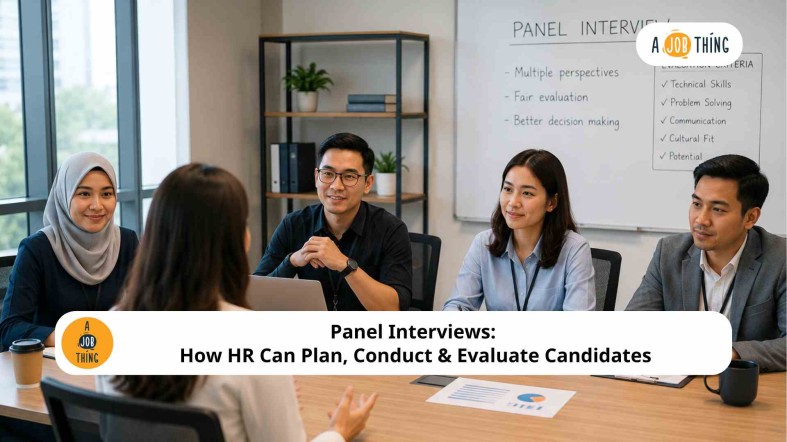
A panel interview is a job interview where two or more interviewers assess one candidate during the same session.
For HR teams, panel interviews can make the hiring process more efficient by bringing different stakeholders into one interview. They can also provide multiple perspectives when evaluating a candidate's skills, experience, and suitability for a role.
However, a panel interview needs proper planning. Without clear roles, structured questions, and consistent evaluation criteria, the process can become confusing for both interviewers and candidates.
What Is a Panel Interview?
A panel interview involves multiple interviewers assessing one candidate at the same time.
The panel may include:
-
HR or recruiter
-
Hiring manager
-
Department manager
-
Team leader
-
Technical or subject-matter expert
-
Potential team member
Each interviewer can assess a different part of the candidate's suitability for the position.
For example, HR may focus on communication and motivation, while the hiring manager assesses relevant experience and a technical interviewer evaluates job-specific skills.
Unlike a group interview, where multiple candidates are interviewed together, a panel interview focuses on one candidate being assessed by multiple interviewers.
How Does a Panel Interview Work?
A panel interview usually follows several steps.
HR Selects the Interview Panel
HR should identify who needs to be involved in the hiring decision.
The panel should include people who can provide relevant insight rather than simply adding more interviewers.
For example:
HR + Hiring Manager + Department Expert
HR Defines the Evaluation Criteria
Before the interview, HR and the hiring team should agree on what the candidate will be assessed on.
This may include:
-
Relevant experience
-
Technical skills
-
Communication
-
Problem-solving
-
Leadership
-
Teamwork
-
Role-specific competencies
Having clear criteria makes it easier to evaluate candidates consistently.
Assign Each Interviewer a Role
HR should coordinate who will ask which questions and what each person will evaluate.
For example:
|
Interviewer |
Main Focus |
|
HR |
Motivation, communication, overall suitability |
|
Hiring Manager |
Experience, responsibilities, career goals |
|
Technical Expert |
Technical knowledge and job-specific skills |
This helps avoid repeated questions and keeps the interview organised.
Conduct the Interview
One interviewer should lead the session.
A typical structure is:
-
Introduction
-
Role-specific questions
-
Competency questions
-
Candidate questions
-
Next steps
Collect Interview Feedback
After the interview, each interviewer should record their assessment against the agreed criteria.
HR can then coordinate the feedback and ensure the final decision is supported by evidence from the interview.
Make the Hiring Decision
The panel should compare the candidate's experience, answers, and skills against the requirements of the role.
The decision should be based on job-related evidence rather than personal preferences.
Who Should Be on a Panel Interview?
There is no fixed number of interviewers required.
HR should choose panel members based on the role and who needs to contribute to the hiring decision.
HR or Recruiter
HR can assess:
-
Motivation
-
Communication
-
Career expectations
-
Recruitment requirements
-
Overall suitability
Hiring Manager
The hiring manager can focus on:
-
Relevant experience
-
Role responsibilities
-
Performance expectations
-
Team requirements
-
Career goals
Technical or Subject-Matter Expert
A specialist can assess:
-
Technical knowledge
-
Job-specific skills
-
Problem-solving
-
Practical experience
Future Team Member
A potential teammate can provide insight into:
-
Collaboration
-
Communication
-
Teamwork
-
Working relationships
Not every panel needs all these roles. HR should keep the panel focused on people who have a meaningful role in the hiring decision.
Benefits of Panel Interviews
Multiple Perspectives
Several interviewers can assess the same candidate from different perspectives.
This can give the hiring team a broader view of the candidate's strengths and areas for development.
More Efficient Hiring
A panel can reduce the need for several separate interviews.
Instead of scheduling separate meetings with HR, the hiring manager, and a technical expert, they can assess the candidate during one session.
Shared Evaluation
Multiple stakeholders hear the candidate's answers directly.
This can reduce the need for HR or recruiters to relay information from one interview to another.
Better Role-Specific Assessment
A subject-matter expert can assess technical or specialised skills that may be difficult for HR or a general interviewer to evaluate.
More Consistent Decision-Making
When the panel uses the same evaluation criteria and scorecard, HR can make candidate comparisons more structured.
Disadvantages of Panel Interviews
Candidates May Feel Intimidated
Being interviewed by several people at once can feel more formal or stressful than a one-to-one interview.
HR should make sure the candidate understands the format before the interview.
Scheduling Can Be Difficult
Coordinating several interviewers can take more time.
If a key panel member has limited availability, this can delay the hiring process.
Too Many Interviewers Can Make the Interview Uncomfortable
A large panel can make the candidate feel overwhelmed.
It can also make the interview harder to manage.
Group Bias Can Affect the Decision
One interviewer's strong opinion can influence the rest of the panel.
HR can reduce this risk by asking interviewers to complete their individual assessments before discussing the candidate as a group.
Different Interviewers May Use Different Standards
If the panel does not agree on what makes a strong candidate, each interviewer may evaluate the candidate differently.
This is why HR should establish clear criteria before the interview.
Panel Interview vs Group Interview
Panel interviews and group interviews are different.
|
Factor |
Panel Interview |
Group Interview |
|
Candidates |
One candidate |
Multiple candidates |
|
Interviewers |
Multiple interviewers |
One or more interviewers |
|
Main purpose |
Assess one candidate from multiple perspectives |
Assess several candidates at the same time |
|
Candidate interaction |
One candidate responds to the panel |
Candidates may respond individually or together |
|
Common use |
Specialist, senior, or final-stage hiring |
High-volume or team-based recruitment |
In simple terms:
Panel interview: Multiple interviewers → One candidate
Group interview: Multiple candidates → One or more interviewers
HR should choose the format based on the role, hiring volume, and type of assessment required.
When Should HR Use a Panel Interview?
A panel interview can be useful when:
Hiring for Senior Positions
Senior roles may involve several decision-makers, making a panel useful for gathering different perspectives.
Hiring for Technical or Specialist Roles
A technical expert can evaluate skills that may be difficult for a general interviewer to assess.
Several Departments Are Involved
If the role works closely with multiple teams, representatives from those teams may provide useful input.
Final-Stage Hiring
A panel can be particularly useful when only a few shortlisted candidates remain and several stakeholders need to participate in the final decision.
When Should HR Avoid a Panel Interview?
A panel may not be necessary when:
-
The role only requires a simple initial screening
-
The panel members do not have clear responsibilities
-
Too many people want to participate
-
Scheduling would significantly delay the process
-
The candidate would benefit more from a conversational first interview
-
The hiring criteria have not been agreed
HR should not use a panel simply because several people want to meet the candidate.
The format should have a clear purpose.
How HR Can Prepare for a Panel Interview
Define the Hiring Criteria
Start by identifying what the successful candidate needs to demonstrate.
For example:
-
Required technical skills
-
Relevant experience
-
Communication
-
Problem-solving
-
Leadership
-
Teamwork
Separate must-have requirements from nice-to-have qualities.
Assign Interviewer Responsibilities
Before the interview, HR should confirm:
-
Who will lead the interview
-
Who will ask each question
-
What each interviewer will assess
-
Who will take notes
-
Who will explain the next steps
Prepare Questions in Advance
Questions should be connected to the job requirements.
Avoid having several interviewers ask similar questions.
A structured interview makes it easier to compare candidates fairly.
Prepare an Interview Scorecard
HR can create a scorecard covering the main competencies required for the role.
For example:
|
Evaluation Area |
Weight |
Score |
|
Relevant Experience |
25% |
/5 |
|
Technical Skills |
25% |
/5 |
|
Problem-Solving |
20% |
/5 |
|
Communication |
15% |
/5 |
|
Teamwork |
15% |
/5 |
|
Total |
100% |
The weighting can be adjusted based on the position.
Brief the Interview Panel
Before the interview, HR should remind panel members about:
-
The role requirements
-
Interview structure
-
Assigned questions
-
Evaluation criteria
-
Scoring method
-
Appropriate interview behaviour
This helps ensure everyone understands their role.
Panel Interview Questions for HR
Panel interview questions should be relevant to the position and linked to the evaluation criteria.
Experience Questions
-
Tell us about your experience that is most relevant to this role.
-
Which part of your previous experience best prepares you for this position?
-
What was your biggest responsibility in your previous role?
Behavioural Questions
-
Tell us about a difficult problem you solved at work.
-
Describe a time you had to work with someone who had a different approach from yours.
-
Tell us about a time you received difficult feedback. How did you respond?
-
Describe a situation where you had to manage competing priorities.
Situational Questions
-
What would you do if you disagreed with your manager about an important decision?
-
How would you handle a tight deadline if your team was already overloaded?
-
What would you do if a project was falling behind schedule?
Role-Specific Questions
These should be customised to the position.
For example, technical roles may require questions about technical knowledge and problem-solving, while management roles may focus more on leadership and decision-making.
HR should work with the hiring manager or subject-matter expert to prepare these questions.
How HR Can Conduct a Panel Interview
Step 1: Introduce the Panel
The lead interviewer should introduce everyone and explain their role.
Step 2: Explain the Format
Tell the candidate how the interview will work and how long it is expected to take.
Step 3: Start With General Questions
Begin with questions about the candidate's background and relevant experience.
Step 4: Move to Role-Specific Questions
The hiring manager or subject expert can then assess the candidate's technical and job-related knowledge.
Step 5: Ask Competency Questions
Assess areas such as:
-
Problem-solving
-
Communication
-
Leadership
-
Teamwork
-
Adaptability
Step 6: Give the Candidate Time to Ask Questions
Candidates should have an opportunity to ask about the role, team, expectations, and next steps.
Step 7: Explain What Happens Next
HR should clearly explain the next stage and, where possible, when the candidate can expect an update.
This helps create a more organised candidate experience.
Tips for HR When Running Panel Interviews
Keep the Panel Focused
Only invite people who have a meaningful role in the hiring decision.
Have One Person Lead
One interviewer should control the flow and timing of the interview.
Avoid Repeating Questions
Coordinate questions before the interview so each panel member has a clear focus.
Use a Consistent Scorecard
Every candidate applying for the same role should be assessed against the same core criteria.
Ask Interviewers to Score Independently
Have panel members complete their initial assessment before group discussion.
This can help reduce the influence of group opinions.
Focus on Job-Related Evidence
Feedback should be based on the candidate's answers, experience, skills, and examples.
Avoid vague comments such as:
-
"I just don't like their personality."
-
"They don't seem like someone who would fit in."
-
"They don't feel like the right type."
Instead, connect feedback to the requirements of the position.
Avoid Subjective "Culture Fit"
HR should define culture-related expectations through specific, job-related behaviours rather than personal preferences.
Give Candidates Enough Time
Do not allow multiple interviewers to ask questions at once.
The candidate should have enough time to understand and answer each question.
Keep the Candidate Informed
Explain the interview process, timeline, and next steps clearly.
A well-organised process can create a better candidate experience.
FAQs
What is a panel interview?
A panel interview is a job interview where two or more interviewers assess one candidate during the same interview session.
How many people should be on a panel interview?
There is no fixed number. HR should keep the panel small enough to remain organised while including the people who can meaningfully contribute to the hiring decision.
What are the benefits of a panel interview?
Panel interviews can provide multiple perspectives, reduce the need for separate interviews, support structured evaluation, and allow relevant stakeholders to assess a candidate together.
What are the disadvantages of a panel interview?
Panel interviews can feel intimidating for candidates, be harder to schedule, and become less effective when interviewers do not have clear roles or evaluation criteria.
What questions should HR ask in a panel interview?
Questions should be based on the job requirements. HR can ask about relevant experience, communication, problem-solving, teamwork, leadership, and other competencies required for the role.
What is the difference between a panel interview and a group interview?
A panel interview involves multiple interviewers assessing one candidate. A group interview involves multiple candidates being assessed at the same time.
Find the Right Candidates
%20copy.jpg)
A structured interview is only one part of a successful hiring process. Reach more qualified candidates and manage your recruitment more efficiently with AJobThing.
Post your job today and start hiring.
Read More:
-
Interview-to-Hire Ratio: How to Calculate, Benchmark & Improve It
-
Candidate Experience Survey: Questions, Examples & How to Improve Recruitment
-
How to Reduce Hiring Bias: Common Interview Biases HR Professionals Should Avoid
-
Staff Immediate Resignation in Malaysia: Employer Rights & Responsibilities
-
Late Salary Payment in Malaysia: Can Employers Delay Employee Salaries?
-
Internship vs Apprenticeship in Malaysia: Key Differences for Employers & HR
-
How to Manage Underperforming Employees in Malaysia: Tips for Employers & HR
-
Warning Letter for Poor Performance in Malaysia: How to Write One (With Sample)
-
Can Employers Reject Annual Leave in Malaysia? Rights, Rules & Employee Entitlements
-
Payroll and Attendance Management in Malaysia: Process, Formula & Best Practices for Employers
-
Workplace Conflict Management in Malaysia: Causes, Solutions, and Best Practices
-
Recruitment Process Outsourcing (RPO): What It Is, Benefits & How It Works in Malaysia
-
SME Hiring Guide: How to Plan, Hire, and Grow Your Team Successfully
-
Competency-Based Interviews: Improve Hiring Quality with a Consistent Interview Process
-
Leave Encashment Malaysia: How to Calculate Unused Annual Leave
-
Online Seller Requirements in Malaysia: 10 Business Details You Must Display
-
Performance Bonus in Malaysia: How It Works, Calculation & Employer Guide
-
Cost Per Hire Malaysia: Formula, Examples & How Employers Can Reduce Hiring Costs
-
Letter of Extension of Contract Malaysia: Free Template, Format & Sample
-
Promotion Letter in Malaysia: How to Write One (+ Free Template & Sample)
-
Probation Extension Letter Malaysia: Template, Sample, and What Employers Need to Know
-
Talent Pool: Benefits, Examples & How to Build One for Better Hiring
-
Sales Turnover: What It Is, Formula, Examples & Tips to Increase It
-
Overtime Rates in Malaysia: When Do 1.5x, 2x and 3x Pay Apply?
-
Prorated Salary in Malaysia: How to Calculate an Employee's First Salary
-
Remote Jobs in Malaysia: Most In-Demand Roles, Salaries & Hiring Guide (2026)
-
Effective Ways to Reduce Absenteeism in the Workplace for HR & Employers
-
Medical Benefits for Employees in Malaysia: Types, Legal Requirements & Best Practices
-
Fresh Graduate Salary in Malaysia (2026): How Much Should Employers Pay?
-
Salary Benchmarking in Malaysia: Are You Paying Enough to Attract Candidates?
-
e-Invoicing Malaysia Explained: What Every Employer and Business Needs to Know
-
EOR vs PEO: What's the Difference and Which Is Right for Your Business?
-
Remote Job Offer Letter: What Employers Should Include (+ Example)
-
Job Offer Letter vs. Employment Contract: What's the Difference? (+ Free Templates)
-
Constructive Dismissal Malaysia: Meaning, Examples & What To Do
-
Contract of Service vs Contract for Service Malaysia: How to Classify Workers Correctly
-
Job Offer Letter Templates: Examples, Formats & Best Practices for HR
-
Employee Retention in Malaysia: Meaning, Importance & How to Improve It
-
Employee Turnover in Malaysia: Causes, Warning Signs & How to Reduce It
-
Retrenchment in Malaysia: Meaning, Process & Employee Rights
-
Gmail Templates for HR: Faster Replies for Interviews, Offers & Rejections
-
7 Key Contract Employee Rights in Malaysia Every HR Should Know
-
GLC vs Private Company Malaysia: Salary, Culture & Hiring Differences
-
Types of Payroll Calculation in Malaysia: Adhoc, Prorated Salary & Final Settlement Explained
-
Types of Payroll Cycle in Malaysia: Which One Is Best for Your Business?
-
Types of Insurance in Malaysia and Their Impact on Employee Benefits
-
How to Create a Strong Candidate Shortlist for Better Hiring Decisions
-
How HR in Malaysia Can Offer a Job Over the Phone (with Script)
-
How Notice Period Really Works in Malaysia for Employers and HR
-
How to Create a Job Posting That Attracts the Right Candidates
-
How HR in Malaysia Can Improve Resume Screening and Candidate Shortlisting
-
How HR Can Reject a Candidate the Right Way (with Templates)
-
How to Conduct a Background Check for Employment in Malaysia
-
Onboarding Process Tips: What HR Needs to Know for Better Retention
-
Onboarding Checklist for New Hires (Free Downloadable Template)
-
Performance Evaluation: Description, Types, and How to Conduct
-
Cover Letter Examples Employers Should Know (With Tips to Spot the Best Ones)
-
Step-by-Step Guide to Writing a Great Job Description (Free Templates)