


Preboarding in Malaysia: Why Employers Should Start Before Day One (Free Checklist Template)

The period between offer acceptance and an employee’s first working day is often overlooked. Yet this is exactly where many hiring risks happen.
In Malaysia, HR teams commonly face new hires going silent, last-minute resignations, or employees arriving on day one feeling lost and unprepared. Preboarding helps close this gap by creating early connection, clarity, and readiness before the employee officially starts work.
What is Preboarding?
Preboarding refers to the period after a candidate accepts a job offer but before their first working day.
It is different from onboarding. Preboarding happens before day one, while onboarding starts on day one and continues for the first few weeks or months. Many employers focus heavily on onboarding but overlook preboarding, even though it plays a key role in shaping first impressions and reducing early attrition.
Why Preboarding is Important for Malaysian Employers & HR
Preboarding directly affects how new hires feel before they even start work.
A structured preboarding process helps reduce anxiety and uncertainty, especially for candidates who may still be considering other offers. It builds early engagement with company culture, creates excitement, and allows employees to feel confident about their decision to join.
From an operational perspective, preboarding also allows HR teams to complete administrative tasks early. This makes day one more productive and helps reduce early resignation, ghosting, or disengagement.
Preboarding Checklist for New Hires (Step-by-Step)
A practical preboarding checklist helps HR teams stay organised while ensuring no critical steps are missed.
Send a Welcome Message
The first communication sets the tone for the employee experience. Send a welcome email or WhatsApp message to confirm the start date, reporting time, dress code, and point of contact. Keep the tone friendly and reassuring to set clear expectations.
Deliver a Welcome Package (Optional but Impactful)
A welcome package helps create a positive emotional connection. This may include a welcome letter, simple company merchandise, or a digital welcome pack. While optional, it can be highly effective for employer branding and early engagement.
Share Important Documents Early
Early access to information helps new hires feel prepared. Share documents such as the employee handbook, company policies, first-day or first-week schedule, and a brief job or team overview. This allows employees to familiarise themselves at their own pace.
Complete Administrative & HR Paperwork
Handling admin tasks early reduces day one overload. This includes personal information forms, tax-related forms where applicable, EPF, SOCSO, and EIS details, as well as company email and system access setup. Some tasks may be completed by the employee, while others are handled internally by HR or IT.
Assign a Buddy or Mentor
A single point of contact makes a big difference. Assign a buddy or mentor whom the new hire can approach with questions before joining. This can be informal, especially for SMEs, but it helps new hires feel supported.
Announce the New Hire Internally
Internal communication builds a sense of belonging early. Announce the new hire through email or team messaging platforms. This helps existing employees prepare to welcome them and creates a warmer day one experience.
Arrange a Casual Meet-and-Greet or Office Visit
Early exposure reduces first-day nerves. This can be a short office tour, a casual team meet-up, or a virtual introduction for remote teams. Keep it informal and low-pressure.
Prepare Workstation & Tools
Practical readiness signals professionalism. Ensure desks, laptops, system access, uniforms (if applicable), and tools are ready before the employee starts. This shows care and helps employees become productive faster.
Create a First-Week Schedule
Clear structure reduces confusion. Outline key training sessions, meetings, and onboarding activities for the first week. Clear expectations help avoid idle time and uncertainty.
Prepare Day-One Materials
Being prepared maximises first-day impact. Gather training documents, job-related tools, and benefits or leave information in advance so day one can focus on orientation and connection.
Best Practices for Effective Preboarding
Effective preboarding focuses on clarity, consistency, and ease for new hires.
Reflect the Company Culture Early
Use tone, messaging, and materials that represent how the company works and communicates, so expectations are set from the start.
Keep Communication Friendly and Responsive
Respond promptly to questions and maintain a welcoming tone to help new hires feel supported before day one.
Provide Clear Contact Details for HR or the Manager
Let new hires know exactly who to contact if they need help, whether it is HR, their manager, or a buddy.
Automate Admin Processes Where Possible
Use digital forms, HR systems, or email workflows to reduce manual work and speed up preboarding tasks.
Keep Preboarding Simple, Not Overwhelming
Share information in stages and avoid overloading new hires with too many documents or instructions at once.
Preboarding vs Onboarding: What HR Should Know
Preboarding and onboarding are two different stages of the employee journey, but they work best when planned together.
|
Aspect |
Preboarding |
Onboarding |
|
Timing |
Before day one |
From day one onwards |
|
Main focus |
Readiness, reassurance, and early engagement |
Training, integration, and performance |
|
Key activities |
Welcome message, document sharing, admin setup, buddy assignment |
Orientation, job training, performance goals, culture integration |
|
Employee experience |
Reduces anxiety and uncertainty before starting |
Builds capability and confidence in the role |
|
Duration |
From offer acceptance to first working day |
Typically 30–90 days |
Onboarding usually lasts 30 to 90 days, depending on the role and organisation. Preboarding prepares employees emotionally and administratively, while onboarding helps them perform and integrate.
When both processes are aligned, new hires feel supported earlier, settle in faster, and are more likely to stay long term.
Preboarding Checklist Template (PDF & Sheets)
Many HR teams benefit from having a ready-to-use preboarding checklist.
Use this simple checklist in PDF or spreadsheet format below to help you standardise the process, especially for growing teams or high-volume hiring.
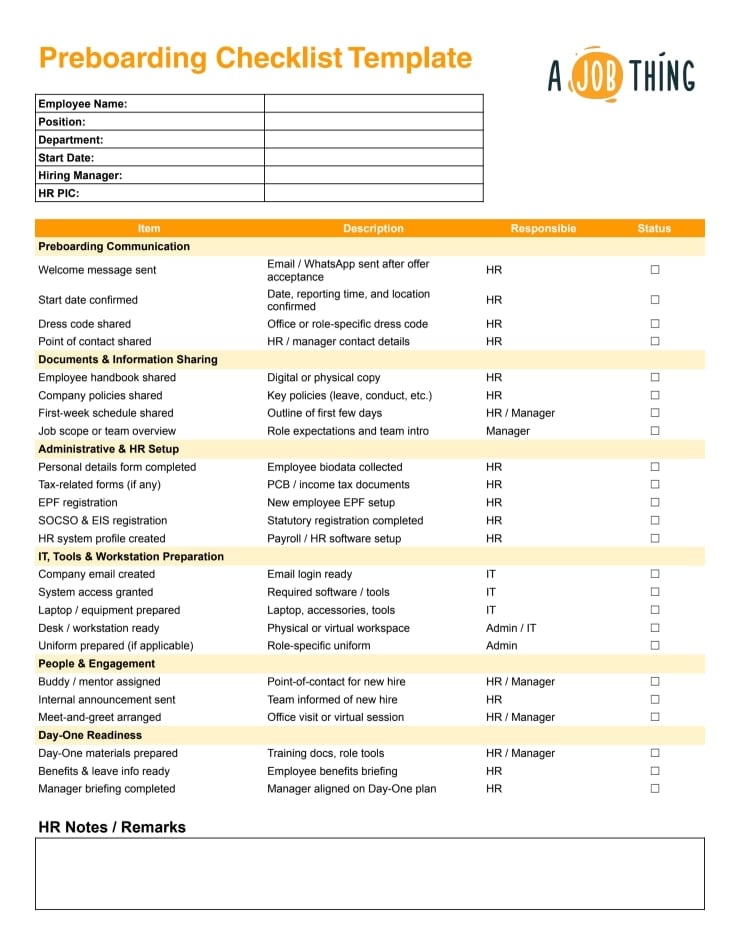
Free Download Preboarding Checklist Template Sheets
Free Download Preboarding Checklist Template PDF
FAQs
What is the difference between preboarding and onboarding?
Preboarding happens before day one, onboarding starts on day one and continues through the adjustment period.
How long should preboarding last in Malaysia?
It usually lasts from a few days to a few weeks, depending on when the offer is accepted and the start date.
Is preboarding necessary for small businesses?
Yes. Even simple steps like a welcome message and early document sharing can make a big difference.
Can preboarding be done remotely?
Yes. Most preboarding activities can be done via email, messaging apps, or virtual meetings.
What happens if preboarding is skipped?
Employees may feel unprepared, disengaged, or uncertain, increasing the risk of early resignation or poor day one experience.
Looking for Qualified Candidates? We’re Here to Help!

With AJobThing, access a massive pool of jobseekers and hire the right talent faster than ever.
Get started today and fill your vacancies with ease!
Read More:
-
How HR and Employers Should Handle Salary Expectations in Interviews
-
How HR Can Reject a Candidate the Right Way (with Templates)
-
Skills-Based Interview Questions Every HR Should Use (with Examples)
-
20 Common Interview Questions Candidates Ask and How HR Should Respond
-
10 Interview Invitation Templates to Attract Quality Candidates
-
12 Interview Types that Help HR in Malaysia Hire the Right Talent
-
How to Conduct a Background Check for Employment in Malaysia
-
Onboarding Process Tips: What HR Needs to Know for Better Retention
-
Onboarding Checklist for New Hires (Free Downloadable Template)
-
Performance Evaluation: Description, Types, and How to Conduct
-
Cover Letter Examples Employers Should Know (With Tips to Spot the Best Ones)
-
Step-by-Step Guide to Writing a Great Job Description (Free Templates)