
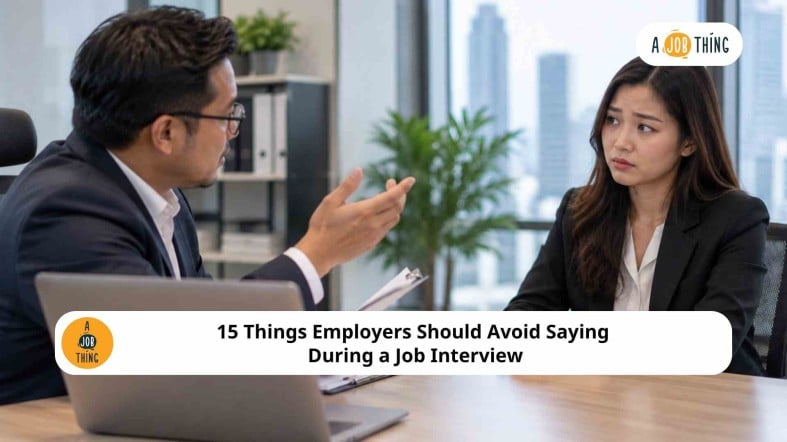
15 Things Employers Should Avoid Saying During a Job Interview

Are You Hiring?
Find candidates in 72 Hours with 5+ million talents in Maukerja Malaysia & Ricebowl using Job Ads.
Hire Now
A job interview is not only about assessing a candidate. It is also an opportunity for the candidate to decide whether they want to work for your company.
The way an interviewer speaks can affect how a candidate sees the company. A careless comment, unrealistic promise or negative statement can create a poor impression and may cause a good candidate to lose interest.
For HR teams and hiring managers, every interview should be professional, respectful, clear and honest.
Here are common things employers should avoid saying during a job interview, together with better ways to communicate.
Things Employers Should Avoid Saying During a Job Interview
"You're Probably Overqualified for This Job."
This can make a candidate feel that the company is not serious about hiring them.
Instead, find out why they are interested in the role.
Better:
What interests you about this position?
This helps you understand their motivation and career goals.
"You Look Very Young."
Comments about a candidate's age or appearance are unnecessary.
Instead, focus on their experience and skills.
Better:
Can you tell us about your experience in this type of role?
"Are You Married?"
Personal questions about marriage are usually not relevant to whether someone can perform the job.
Avoid questions such as:
-
"Are you married?"
-
"Does your spouse support your career?"
-
"Why are you still single?"
Ask about the actual requirements of the position instead.
Better:
This position may require occasional travel. Are you able to meet this requirement?
"Do You Plan to Have Children?"
Questions about pregnancy, children or future family plans are personal and can create concerns about fair hiring.
Instead, focus on the working conditions of the role.
Better:
This role follows a rotating schedule. Are you available to work according to this schedule?
"We Need Someone Young for This Team."
Avoid statements that suggest the company is looking for a particular age group.
Focus on the skills and working style needed for the position.
Better:
We are looking for someone who can work well in a fast-paced team environment.
"You Don't Look Like Someone Who Works in This Industry."
Comments about appearance or stereotypes can make candidates feel judged.
Better:
What interested you in this industry?
This gives the candidate an opportunity to explain their experience and motivation.
"Don't Worry About the Salary. We'll Discuss It Later."
Candidates need clear information about compensation.
Avoid vague statements when salary information is available.
Better:
The salary range for this position is RMX to RMY. Does this range match your expectations?
Clear communication can save time for both the candidate and employer.
"You'll Definitely Get Promoted Quickly."
Do not promise promotions or career progression that the company cannot guarantee.
Better:
Employees who perform well may have opportunities to take on more responsibility and progress within the company.
Be positive, but remain realistic.
"The Previous Person in This Role Was Terrible."
Speaking negatively about a former employee can make candidates wonder how the company talks about employees after they leave.
Focus on what the new hire needs to achieve.
Better:
We are looking for someone who can improve this area and help the team achieve its goals.
"Our Company Is a Family."
This may sound friendly, but it can create unclear expectations about the employer-employee relationship.
Instead, explain the culture using specific examples.
Better:
We value teamwork, open communication and supporting colleagues.
"Everyone Here Works Late."
Be careful about presenting long working hours as normal without explaining the actual expectations of the role.
Better:
The normal working hours are 9am to 6pm. During busy periods, the role may sometimes require additional hours.
Be honest about working hours and business demands.
"We're Very Flexible."
Do not make broad promises about flexible work if there are limitations.
Better:
This role allows employees to work from home on certain days, subject to team and business needs.
Give candidates clear information about what flexibility actually means.
"You Should Be Grateful to Get This Opportunity."
This can make the interviewer sound dismissive or arrogant.
Candidates should be treated with respect throughout the hiring process.
Better:
We think your experience could be a strong match for this role, and we'd like to learn more about your background.
"You Can Just Learn Everything as You Go."
This may give candidates the impression that the company does not provide proper support.
Be honest about the training available.
Better:
You'll receive an onboarding session, and your manager will guide you through the main responsibilities during your first few weeks.
"You Need to Decide Today."
Avoid putting unnecessary pressure on candidates to accept an offer immediately.
Unless there is a genuine deadline, give candidates reasonable time to consider the opportunity.
Better:
We'll provide the offer details in writing. Please take some time to review them and let us know if you have any questions.
A respectful hiring process can help candidates feel more confident about accepting an offer.
Other Comments Employers Should Avoid
Sometimes the problem is not a specific question. A casual comment can also create a negative impression.
Avoid statements such as:
-
"You won't survive here if you're sensitive."
-
"Nobody really takes leave."
-
"The team is difficult to work with."
-
"Management is very demanding."
-
"We already have someone better."
-
"I don't think you'll fit in."
-
"You look nervous."
-
"Everyone is under a lot of pressure here."
-
"You need to work very hard if you want to succeed."
Instead, explain the situation clearly and factually.
For example:
Instead of:
The workload is crazy.
Say:
The role can become busy during peak periods, especially at the end of each month.
This gives the candidate useful information without creating unnecessary negativity.
How HR Can Help Managers Conduct Better Interviews
Hiring managers may understand the technical requirements of a role but may need guidance on how to conduct a professional interview.
HR can help by creating simple interview guidelines.
Prepare Interview Questions
Create job-related questions before the interview instead of asking random questions during the conversation.
Give Managers an Interview Guide
The guide can include:
-
Recommended questions
-
Topics to avoid
-
Salary discussion guidelines
-
Interview scoring criteria
-
Candidate evaluation instructions
Use a Structured Interview
Ask similar core questions to candidates applying for the same role.
This makes it easier to compare candidates using the same criteria.
Explain the Role Clearly
Interviewers should be prepared to explain:
-
Job responsibilities
-
Salary range
-
Reporting structure
-
Performance expectations
-
Career development opportunities
Give Candidates Time to Ask Questions
Leave time at the end of the interview for candidates to ask about the role and company.
Their questions can also help the hiring team understand what matters to them.
FAQs
What should employers avoid saying during a job interview?
Avoid personal comments, negative remarks, pressure tactics and promises the company cannot guarantee.
Why should employers avoid personal questions?
Personal questions may be irrelevant to the job and can create concerns about fair hiring.
Can employers discuss salary during an interview?
Yes. Employers should provide clear salary information when available and avoid vague promises.
How can HR help managers conduct better interviews?
Provide structured interview questions, clear guidelines and consistent evaluation criteria.
Why is good interview communication important?
Candidates are evaluating the company too, so professional communication can improve the candidate experience.
Make Every Interview Count
%20copy.jpg)
A professional interview should give candidates clear and honest information while helping employers assess whether they are suitable for the role.
Looking to hire? Post a job on AJobThing and connect with job seekers in Malaysia.
Read More:
-
Public Holidays in Malaysia 2027: Full List by Date and State for Workplace Planning
-
Interview Debrief: How HR Should Review Candidates After an Interview
-
15 Interview Questions Employers Should Avoid Asking Candidates
-
What to Do When a Candidate Reschedules an Interview Multiple Times
-
Probation Performance Review in Malaysia: How HR Can Evaluate Employees
-
Final Interview Tips for HR: How to Assess Candidates Effectively
-
Candidate Withdrawal During the Hiring Process: How HR Can Reduce Drop-Off
-
How to Keep Candidates Interested During a Long Hiring Process
-
Candidates Stop Responding After an Interview? What HR Should Do
-
Job Requisition: What It Is, What to Include & How HR Can Create One
-
Panel Interviews: How HR Can Plan, Conduct & Evaluate Candidates
-
Interview-to-Hire Ratio: How to Calculate, Benchmark & Improve It
-
Candidate Experience Survey: Questions, Examples & How to Improve Recruitment
-
How to Reduce Hiring Bias: Common Interview Biases HR Professionals Should Avoid
-
Staff Immediate Resignation in Malaysia: Employer Rights & Responsibilities
-
Late Salary Payment in Malaysia: Can Employers Delay Employee Salaries?
-
Internship vs Apprenticeship in Malaysia: Key Differences for Employers & HR
-
How to Manage Underperforming Employees in Malaysia: Tips for Employers & HR
-
Warning Letter for Poor Performance in Malaysia: How to Write One (With Sample)
-
Can Employers Reject Annual Leave in Malaysia? Rights, Rules & Employee Entitlements
-
Payroll and Attendance Management in Malaysia: Process, Formula & Best Practices for Employers
-
Workplace Conflict Management in Malaysia: Causes, Solutions, and Best Practices
-
Recruitment Process Outsourcing (RPO): What It Is, Benefits & How It Works in Malaysia
-
Competency-Based Interviews: Improve Hiring Quality with a Consistent Interview Process
-
Leave Encashment Malaysia: How to Calculate Unused Annual Leave
-
Online Seller Requirements in Malaysia: 10 Business Details You Must Display
-
Performance Bonus in Malaysia: How It Works, Calculation & Employer Guide
-
Cost Per Hire Malaysia: Formula, Examples & How Employers Can Reduce Hiring Costs
-
Letter of Extension of Contract Malaysia: Free Template, Format & Sample
-
Promotion Letter in Malaysia: How to Write One (+ Free Template & Sample)
-
Probation Extension Letter Malaysia: Template, Sample, and What Employers Need to Know
-
Talent Pool: Benefits, Examples & How to Build One for Better Hiring
-
Sales Turnover: What It Is, Formula, Examples & Tips to Increase It
-
Overtime Rates in Malaysia: When Do 1.5x, 2x and 3x Pay Apply?
-
Prorated Salary in Malaysia: How to Calculate an Employee's First Salary
-
Remote Jobs in Malaysia: Most In-Demand Roles, Salaries & Hiring Guide (2026)
-
Effective Ways to Reduce Absenteeism in the Workplace for HR & Employers
-
Medical Benefits for Employees in Malaysia: Types, Legal Requirements & Best Practices
-
Fresh Graduate Salary in Malaysia (2026): How Much Should Employers Pay?
-
Salary Benchmarking in Malaysia: Are You Paying Enough to Attract Candidates?
-
e-Invoicing Malaysia Explained: What Every Employer and Business Needs to Know
-
EOR vs PEO: What's the Difference and Which Is Right for Your Business?
-
Remote Job Offer Letter: What Employers Should Include (+ Example)
-
Job Offer Letter vs. Employment Contract: What's the Difference? (+ Free Templates)
-
Constructive Dismissal Malaysia: Meaning, Examples & What To Do
-
Contract of Service vs Contract for Service Malaysia: How to Classify Workers Correctly
-
Job Offer Letter Templates: Examples, Formats & Best Practices for HR
-
Employee Retention in Malaysia: Meaning, Importance & How to Improve It
-
Employee Turnover in Malaysia: Causes, Warning Signs & How to Reduce It
-
Retrenchment in Malaysia: Meaning, Process & Employee Rights
-
Gmail Templates for HR: Faster Replies for Interviews, Offers & Rejections
-
7 Key Contract Employee Rights in Malaysia Every HR Should Know
-
GLC vs Private Company Malaysia: Salary, Culture & Hiring Differences
-
Types of Payroll Calculation in Malaysia: Adhoc, Prorated Salary & Final Settlement Explained
-
Types of Payroll Cycle in Malaysia: Which One Is Best for Your Business?
-
Types of Insurance in Malaysia and Their Impact on Employee Benefits
-
How to Create a Strong Candidate Shortlist for Better Hiring Decisions
-
How HR in Malaysia Can Offer a Job Over the Phone (with Script)
-
How Notice Period Really Works in Malaysia for Employers and HR
-
How to Create a Job Posting That Attracts the Right Candidates
-
How HR in Malaysia Can Improve Resume Screening and Candidate Shortlisting
-
How HR Can Reject a Candidate the Right Way (with Templates)
-
How to Conduct a Background Check for Employment in Malaysia
-
Onboarding Process Tips: What HR Needs to Know for Better Retention
-
Onboarding Checklist for New Hires (Free Downloadable Template)
-
Performance Evaluation: Description, Types, and How to Conduct
-
Cover Letter Examples Employers Should Know (With Tips to Spot the Best Ones)
-
Step-by-Step Guide to Writing a Great Job Description (Free Templates)