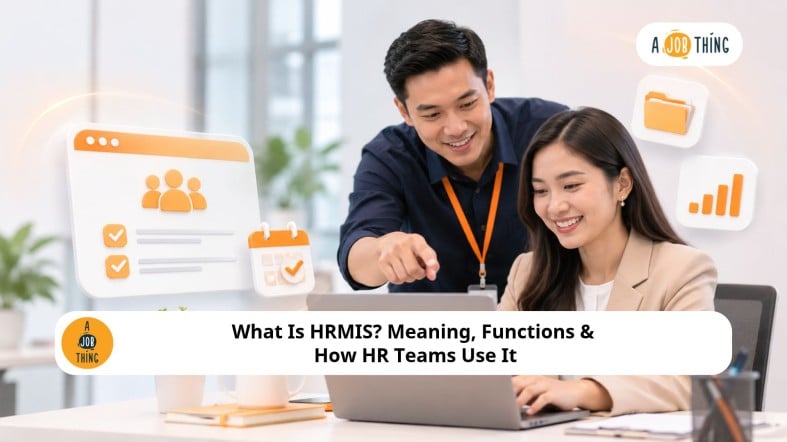
What is HRMIS? Meaning, Functions & How HR Teams Use It

Are You Hiring?
Find candidates in 72 Hours with 5+ million talents in Maukerja Malaysia & Ricebowl using Job Ads.
Hire Now
HRMIS, or Human Resource Management Information System, is software that keeps every employee record and HR process in one place, from the day a candidate accepts an offer to the day they leave. For HR teams in Malaysia, the term is closely linked to the Public Service Department's HRMIS for civil servants, but the same idea powers the HR systems that private employers rely on every day.
If your HR team still juggles spreadsheets for leave, payroll inputs from three different files, and paper forms for onboarding, an HR management system is usually the next step. The challenge is knowing which modules you actually need, which Malaysian compliance items the system must handle, and how to roll it out without disrupting payroll.
This guide explains what HRMIS means, how it differs from HRMS and HRIS, how the government HRMIS works, the core modules to look for, Malaysian compliance requirements, a selection checklist and an implementation roadmap for HR teams.
| QUICK ANSWER |
| HRMIS (Human Resource Management Information System) is software that centralises employee data and automates HR processes such as recruitment, onboarding, leave, payroll, performance and offboarding. In Malaysia, HRMIS also refers to the JPA system for civil servants. For private employers, a good HR system should handle EPF, SOCSO, EIS, PCB, HRD Corp levy and EA forms, follow Employment Act 1955 leave rules, protect data under the PDPA, and give employees self-service access to payslips and leave. |
What is HRMIS?
An HRMIS combines a database of employee information with workflows that HR, managers and employees use. Instead of storing records in separate files, everything from personal details and employment history to leave balances and appraisal results sits in one system, accessible according to each user's role.
The value is not just digital storage. A well-configured HRMIS removes duplicate data entry, applies policies consistently, creates an audit trail for every approval, and gives management reliable workforce data for planning.
HRMIS vs HRMS vs HRIS vs HCM
| Term | Meaning | Typical scope |
| HRIS | Human Resource Information System | Employee records, organisation structure, basic reporting |
| HRMS | Human Resource Management System | HRIS plus processes such as leave, payroll, attendance and performance |
| HRMIS | Human Resource Management Information System | Used interchangeably with HRMS. In Malaysia, also the name of the JPA public-sector system |
| HCM | Human Capital Management | Broad suite including talent management, learning, succession and workforce analytics |
In practice, vendors use these terms loosely. Focus on the modules and features you need rather than the label.
How HRMIS is used in Malaysia
The Malaysian public service has used HRMIS since around 2005. Managed by the Public Service Department (Jabatan Perkhidmatan Awam, JPA), it holds the service records of federal civil servants and handles processes such as personal records, leave, performance, training and retirement. Its newer version, HRMIS 2.0, comes with mobile apps for profile and leave management.
Private employers do not use the government HRMIS, but it matters in two ways:
- Hiring former civil servants: candidates may refer to their service records, grades and leave history from HRMIS. Ask for supporting documents such as service confirmation letters when verifying experience.
- A useful benchmark: the public-sector HRMIS shows the benefits of a single source of truth, employee self-service and role-based access, which are the same principles private employers should look for in their own systems.
Core modules of an HR management system
| Module | What it does | Why it matters |
| Recruitment and applicant tracking | Job requisitions, job ads, candidate screening and interview scheduling | Faster hiring and a clear record of hiring decisions |
| Onboarding | Offer letters, document collection, statutory registration and induction checklists | New hires are productive and compliant from day one |
| Employee records | Personal, family, education and employment history | One accurate source of data for every other module |
| Time, attendance and leave | Clock-in, shifts, overtime and leave applications | Correct leave balances and overtime pay |
| Payroll | Salary, allowances, statutory contributions and payslips | Accurate, on-time pay and statutory submissions |
| Claims and benefits | Medical, travel and other claims with approval workflows | Less paperwork and faster reimbursement |
| Performance management | Goal setting, KPIs, appraisals and feedback | Fair, documented decisions on increments and promotions |
| Learning and development | Training records, course registration and HRD Corp claims | Better use of training budgets and levy |
| Offboarding | Resignation workflows, final pay, asset return and exit interviews | Clean exits and accurate final settlements |
| Reports and analytics | Headcount, turnover, cost and compliance reports | Data-driven workforce planning |
Malaysian compliance your HR system must handle
A Malaysian HR system must handle local statutory requirements accurately and update quickly when rules change. Key items include:
| Requirement | What your system should handle |
| EPF (KWSP) | Employee and employer contributions, including different rates by age, citizenship and wage band, and the exclusion of items such as overtime |
| SOCSO (PERKESO) and EIS | Contributions based on the official schedules, with the insured wage ceiling of RM6,000 a month |
| Monthly tax deduction (PCB/MTD) | Calculation based on LHDN rules, including TP1 relief and TP3 declarations for new hires |
| HRD Corp levy | Levy calculation for registered employers and tracking of training grants |
| EA forms | Annual remuneration statements issued to employees by the end of February |
| Employment Act 1955 | Leave entitlements, 45-hour working week, overtime rates, 98-day maternity and 7-day paternity leave |
| Minimum wage | Alerts when pay falls below the minimum wage of RM1,700 a month, rising to RM2,000 from June 2027 as announced in Budget 2027 |
| PDPA 2010 | Role-based access, consent records, data retention rules and breach response, including the 2024 amendments |
| HR TIP |
| Ask vendors how quickly they update statutory tables after a Budget announcement or a change in contribution rates, and whether updates are included in your subscription. |
Benefits of an HRMIS for employers
| Benefit | Impact on HR operations |
| Single source of truth | Employee data is entered once and used across payroll, leave and reporting |
| Less manual work | Automated calculations and approval workflows free HR time for strategic work |
| Fewer payroll errors | Consistent rules for statutory deductions and allowances |
| Employee self-service | Staff view payslips, apply for leave and update details without emailing HR |
| Audit trail | Every approval and change is recorded, useful for disputes and audits |
| Better decisions | Live data on headcount, overtime, turnover and labour cost |
How to choose the right HR system
| HR SYSTEM SELECTION CHECKLIST |
| ☐ Covers the modules you need now, with room to add more later ☐ Malaysian statutory calculations are built in and updated promptly ☐ Supports your pay structures, shifts, allowances and leave policies ☐ Mobile self-service for employees and managers ☐ Role-based access, data encryption and PDPA-ready features ☐ Integrates with your accounting, attendance devices and banking ☐ Clear pricing per employee, implementation fees and support levels ☐ Local support team and references from Malaysian clients |
Request a demo using your own scenarios, for example a shift worker with overtime, a foreign worker and a new hire who joins mid-month, rather than the vendor's standard script.
Implementation roadmap for HR teams
| Phase | Key activities | Typical owner |
| 1. Define requirements | Map current processes, pain points, policies and must-have modules | HR lead with finance and management |
| 2. Select vendor | Shortlist, scenario-based demos, reference checks and contract review | HR, finance, IT |
| 3. Clean and migrate data | Validate employee records, leave balances, year-to-date payroll and statutory numbers | HR and payroll |
| 4. Configure | Set up company structure, policies, approval flows, pay items and user roles | HR with vendor |
| 5. Parallel run | Run payroll in old and new systems for at least one cycle and compare results | Payroll and finance |
| 6. Train and launch | Train HR, managers and employees, then switch over | HR |
| 7. Review | Collect feedback, fix gaps and plan the next modules | HR lead |
| TEMPLATE: EMPLOYEE ANNOUNCEMENT FOR A NEW HR SYSTEM |
| Subject: New HR System Launching on [date] Hi all, From [date], leave applications, claims and payslips will move to our new HR system, [system name]. You will be able to apply for leave, submit claims and download payslips from your phone. You will receive your login details by email on [date]. Please log in, check that your personal details and leave balance are correct, and update your bank and emergency contact information if needed. A short training session will be held on [date and time]. For any questions, contact [HR contact]. Thank you, [Name] Human Resources |
Common mistakes to avoid
| Mistake | How to avoid it |
| Migrating messy data | Clean employee records and leave balances before migration |
| Skipping the parallel payroll run | Run at least one cycle side by side and reconcile every difference |
| Over-customising | Adjust processes to standard features where possible to keep upgrades simple |
| Poor change management | Explain the benefits to managers and employees, and train them early |
| Unclear access rights | Define who can view salary and personal data before go-live |
| Ignoring hiring data | Connect recruitment and onboarding so candidate data flows into employee records |
Where hiring fits into your HR system
An HR system manages employees once they join, but data quality starts at hiring. Clear job postings, structured screening and consistent candidate records make onboarding faster and reduce errors later in payroll and compliance.
- Use a standard job requisition and approval flow before advertising.
- Write job ads with clear requirements, salary range and benefits. See how to create a job posting that attracts the right candidates.
- Choose hiring channels that match your roles and industry. See how to choose the right hiring platform in Malaysia.
- Collect candidate information in a consistent format so it can move straight into onboarding.
With AJobThing, you can reach jobseekers on Maukerja, Ricebowl and other channels from one place, chat directly with candidates and hire 2x faster, so your hiring pipeline stays organised before new hires enter your HR system.
FAQs about HRMIS
What does HRMIS stand for?
HRMIS stands for Human Resource Management Information System. It is software that stores employee data and runs HR processes such as recruitment, leave, payroll, performance and offboarding in one place.
Is HRMIS only for the government?
In Malaysia, "HRMIS" usually refers to the Public Service Department (JPA) system used by civil servants. Private companies use the same concept under names like HRMS, HRIS or HCM software.
What is the difference between HRMIS and payroll software?
Payroll software calculates salaries and statutory deductions. An HRMIS covers the wider employee lifecycle, including employee records, leave, performance, training and offboarding, and often includes or integrates with payroll.
Does a small business need an HRMIS?
Not necessarily a full suite. Many SMEs start with payroll and leave management, then add modules as headcount grows. Once you have 20 to 30 employees, manual spreadsheets usually become a compliance and time risk.
What Malaysian statutory items should an HR system calculate?
At minimum: EPF, SOCSO, EIS, monthly tax deduction (PCB/MTD), HRD Corp levy where applicable, and annual EA forms. It should also track leave entitlements under the Employment Act 1955.
How long does HRMIS implementation take?
A payroll and leave rollout for an SME can take a few weeks. A full suite for a larger organisation, including data migration and integrations, typically takes several months.
Is employee data in an HRMIS covered by the PDPA?
Yes. Employee records are personal data under the Personal Data Protection Act 2010. Since the 2024 amendments came into force, data controllers must appoint a data protection officer and notify the authorities of qualifying data breaches.
Related reading
- How to Create a Job Posting That Attracts the Right Candidates
- How to Choose the Right Hiring Platform in Malaysia
- Top 10 Job Posting Sites for Employers in Malaysia
Chat with Candidates and Hire 2x Faster
Good hiring starts with a clear job description and the right recruitment process. The next step is reaching good candidates before someone else does.
| WHY EMPLOYERS USE AJOBTHING |
| With the AJobThing Hire & Chat app, you can manage hiring straight from your phone: ✔ Chat directly with candidates instead of waiting on emails and missed calls ✔ Hire 2x faster by screening and scheduling interviews in the same conversation ✔ Reach active jobseekers on Maukerja, Ricebowl and more from one job post ✔ Get instant notifications when new candidates apply or reply |
Download the AJobThing Hire & Chat app on the App Store or Google Play to reply to candidates and manage hiring on the go.
This article is a general guide. Statutory rates, thresholds and system features change over time. Refer to EPF, PERKESO, LHDN, HRD Corp and the Department of Labour for official requirements.