


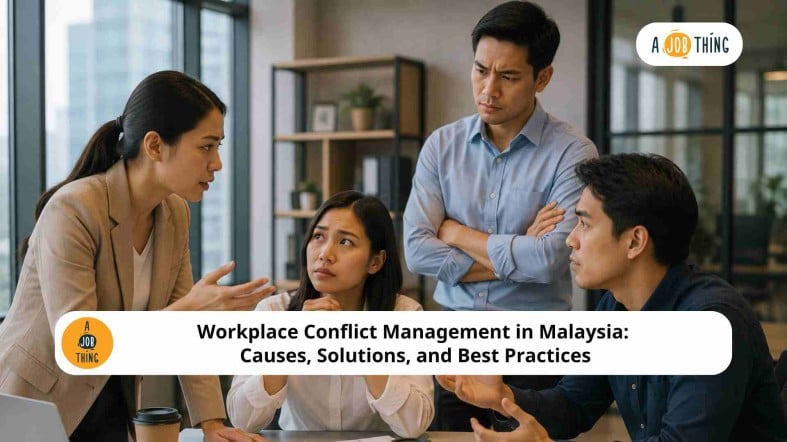
Workplace Conflict Management in Malaysia: Causes, Solutions, and Best Practices

Conflict can happen in any workplace. Employees may have different opinions or ways of working, which can sometimes lead to disagreements. If not managed properly, conflict can affect teamwork, productivity, and workplace morale.
This guide explains what conflict management is, why it is important, the common causes of workplace conflict, and how employers and HR professionals in Malaysia can handle it effectively.
What Is Conflict Management?
Conflict management is the process of handling workplace disagreements in a fair and respectful way. The goal is to resolve issues early, maintain good working relationships, and create a positive work environment.
When managed well, workplace conflict can improve communication, strengthen teamwork, and stop small issues from becoming bigger problems.
Conflict Management vs Conflict Resolution
Although these terms are often used interchangeably, they have different meanings.
|
Conflict Management |
Conflict Resolution |
|
Focuses on managing disagreements constructively. |
Focuses on finding a solution that resolves the conflict. |
|
Accepts that some differences may continue. |
Aims to eliminate or settle the issue completely. |
|
Emphasises communication and collaboration. |
Emphasises reaching an agreement. |
In many workplaces, HR professionals use both approaches depending on the situation.
Why Is Conflict Management Important?
When handled properly, workplace conflict can encourage innovation, improve communication, and strengthen relationships. However, unresolved conflict can reduce productivity, lower employee morale, and increase staff turnover.
Effective conflict management helps employers:
-
Improve teamwork and collaboration.
-
Increase employee engagement.
-
Protect the company's reputation.
-
Reduce the risk of legal disputes.
-
Build a positive workplace culture.
For growing businesses, creating a workplace where employees feel respected and heard is essential for long-term success.
Common Causes of Workplace Conflict
Understanding why conflict occurs allows employers and HR teams to address issues before they escalate.
Poor Communication
Misunderstandings are one of the leading causes of workplace conflict. Unclear instructions, inconsistent feedback, or lack of communication can lead to confusion and frustration.
Unclear Roles and Responsibilities
Employees may disagree when job responsibilities overlap or expectations are not clearly defined.
Clearly written job descriptions and regular communication can reduce this type of conflict.
Personality Differences
Every employee has a unique communication style, work preference, and personality.
Without mutual respect, these differences can lead to tension between colleagues.
Heavy Workloads
Unbalanced workloads or unrealistic deadlines may cause stress, resulting in disagreements among team members.
Managers should regularly review workloads to ensure responsibilities are distributed fairly.
Leadership Issues
Employees may become dissatisfied if they feel they are treated unfairly or receive inconsistent guidance from supervisors.
Transparent decision-making and regular feedback can help build trust.
Performance Issues
Conflict may arise when one employee consistently underperforms, causing additional work for others.
Addressing performance concerns promptly through coaching and constructive feedback helps maintain team morale.
Salary and Promotion Concerns
Perceived unfairness in salary increases, bonuses, promotions, or recognition can lead to dissatisfaction.
Employers should maintain clear and transparent performance evaluation processes.
Cultural and Generational Differences
Modern workplaces often include employees from different backgrounds and age groups.
Respecting diversity and encouraging inclusive communication helps reduce misunderstandings.
Types of Workplace Conflict
Different conflicts require different management approaches.
|
Type of Conflict |
Example |
|
Employee vs Employee |
Two colleagues disagree about project responsibilities. |
|
Employee vs Manager |
An employee disputes a performance review. |
|
Team Conflict |
Departments disagree over priorities or resources. |
|
Task Conflict |
Employees have different opinions on how work should be completed. |
|
Relationship Conflict |
Personality clashes affect collaboration. |
|
Value Conflict |
Employees have different beliefs, ethics, or working styles. |
Identifying the type of conflict helps HR choose the most appropriate solution.
Warning Signs of Workplace Conflict
Not every employee will openly report workplace conflict.
Employers and managers should watch for signs such as:
-
Frequent arguments between employees.
-
Poor communication within teams.
-
Declining productivity.
-
Increased absenteeism.
-
Missed deadlines.
-
Negative attitudes during meetings.
-
Increased complaints to HR.
-
Gossip and rumours.
-
Employees avoiding one another.
Addressing these warning signs early can prevent more serious employee relations issues.
The Impact of Unresolved Conflict
Ignoring workplace conflict can have serious consequences for an organisation.
These may include:
-
Lower employee morale
-
Reduced productivity
-
Higher recruitment and training expenses due to employee turnover
-
Increased absenteeism
-
Poor customer service
-
Damage to the company's employer brand
-
Greater risk of grievances, disciplinary issues, or legal disputes
Addressing workplace conflict early helps create a more positive work environment, strengthens working relationships, and reduces the risk of bigger issues in the future.
How Employers and HR Should Manage Workplace Conflict
Managing workplace conflict requires a fair, consistent, and professional approach. Taking action early can help prevent misunderstandings from escalating into more serious issues.
Below is a practical conflict management process that employers and HR professionals can follow.
Step 1: Identify the Root Cause
Before taking action, understand what is causing the conflict.
Ask questions such as:
-
What happened?
-
Who is involved?
-
When did the issue begin?
-
Is this a one-time disagreement or an ongoing problem?
-
How has it affected the team or business?
Avoid making assumptions before gathering all the facts.
Step 2: Listen to Everyone Involved
Allow each employee to explain their perspective without interruption.
During the discussion:
-
Remain neutral.
-
Listen actively.
-
Ask open-ended questions.
-
Focus on facts rather than emotions.
-
Take notes where appropriate.
Employees are more likely to cooperate when they feel they have been heard.
Step 3: Gather Relevant Evidence
Depending on the situation, HR may need to review:
-
Emails or written communications
-
Company policies
-
Attendance records
-
Performance reports
-
CCTV footage (where available and appropriate)
-
Statements from witnesses
Having objective evidence helps ensure decisions are based on facts rather than assumptions.
Step 4: Review Company Policies
Before deciding on any action, check your company's policies and procedures.
For example:
-
Employee handbook
-
Code of conduct
-
Disciplinary policy
-
Anti-harassment policy
-
Workplace bullying policy
-
Grievance procedure
Following established policies promotes consistency and reduces the risk of unfair treatment.
Step 5: Facilitate a Constructive Discussion
Where appropriate, arrange a meeting with the employees involved.
The goal is to:
-
Clarify misunderstandings.
-
Encourage respectful communication.
-
Identify common ground.
-
Explore possible solutions.
HR should act as a neutral facilitator rather than taking sides.
Step 6: Agree on an Action Plan
Once a solution has been identified, clearly document:
-
What each person has agreed to do.
-
Any behavioural expectations.
-
Deadlines or follow-up actions.
-
Support that will be provided.
Both parties should understand what is expected moving forward.
Step 7: Follow Up
Conflict management does not end after one meeting.
Managers and HR should check in with the employees after a reasonable period to ensure:
-
The issue has improved.
-
Agreements are being followed.
-
No new concerns have arisen.
Regular follow-up demonstrates the organisation's commitment to maintaining a respectful workplace.
Conflict Resolution Strategies
Different situations require different approaches. Choosing the right strategy depends on the nature of the conflict, the people involved, and the desired outcome.
Collaboration
Collaboration encourages both parties to work together to find a solution that benefits everyone.
This approach is often the most effective because it focuses on solving the problem rather than assigning blame.
Best for:
-
Long-term working relationships
-
Team conflicts
-
Project disagreements
Compromise
Both parties make concessions to reach a mutually acceptable outcome.
While neither side gets everything they want, compromise can resolve issues quickly.
Best for:
-
Minor disagreements
-
Time-sensitive situations
Mediation
A neutral third party, usually HR or a manager, facilitates a discussion between employees.
The mediator helps both parties communicate effectively without making decisions for them.
Best for:
-
Communication breakdowns
-
Relationship conflicts
-
Ongoing disagreements
Coaching
Sometimes conflict arises because an employee lacks communication or interpersonal skills.
Managers can provide coaching to help employees improve behaviours such as:
-
Communication
-
Emotional intelligence
-
Teamwork
-
Giving and receiving feedback
Formal Investigation
Serious allegations such as harassment, discrimination, violence, fraud, or serious misconduct may require a formal investigation.
Employers should follow internal procedures and ensure all parties are treated fairly throughout the process.
Best Practices for Preventing Workplace Conflict
Preventing conflict is often easier than resolving it.
Employers can reduce workplace disputes by adopting the following practices.
Communicate Clearly
Clearly communicate:
-
Job expectations
-
Performance goals
-
Company policies
-
Organisational changes
Employees are less likely to experience misunderstandings when expectations are clear.
Define Roles and Responsibilities
Provide employees with accurate job descriptions and regularly review responsibilities to minimise overlap and confusion.
Train Managers
Managers play an important role in identifying and addressing conflict early.
Training topics may include:
-
Active listening
-
Difficult conversations
-
Giving constructive feedback
-
Emotional intelligence
-
Leadership communication
Encourage Open Communication
Create a workplace where employees feel comfortable raising concerns before they become major problems.
Regular one-to-one meetings, team discussions, and employee surveys can help identify issues early.
Promote Respect and Inclusion
A respectful workplace values different backgrounds, perspectives, and ideas.
Employers should foster an inclusive culture where employees feel safe, respected, and supported.
Document Important Discussions
Maintain clear records of meetings, agreements, coaching sessions, and disciplinary actions where appropriate.
Good documentation supports consistency and helps protect both employees and the organisation.
Legal Considerations for Employers in Malaysia
Some workplace conflicts involve potential legal issues, particularly where allegations relate to misconduct, discrimination, harassment, or unfair treatment.
Employers should ensure that any action taken complies with:
-
The Employment Act 1955 (where applicable)
-
Company policies
-
Relevant industrial relations principles
For serious disciplinary matters, employers should follow a fair process, which may include conducting a domestic inquiry where appropriate before making disciplinary decisions.
As employment disputes can involve complex legal considerations, employers should seek professional legal advice when necessary.
Workplace Conflict Examples
Example 1: Conflict Between Team Members
Two employees disagree over project responsibilities and repeatedly argue during meetings.
HR Action
-
Meet each employee individually.
-
Clarify job responsibilities.
-
Facilitate a joint discussion.
-
Agree on responsibilities and communication expectations.
-
Schedule a follow-up meeting.
Outcome
The employees develop a better understanding of their roles, reducing future misunderstandings.
Example 2: Employee and Manager Disagreement
An employee believes their performance review was unfair.
HR Action
-
Review the performance evaluation.
-
Gather supporting evidence.
-
Meet with both parties.
-
Explain the evaluation process.
-
Identify development opportunities if appropriate.
Outcome
The employee gains a clearer understanding of the assessment and agrees on a development plan.
Example 3: Conflict Between Departments
The Sales and Operations teams disagree over delivery deadlines, causing project delays.
HR Action
-
Identify workflow issues.
-
Bring department leaders together.
-
Establish shared expectations.
-
Improve communication processes.
Outcome
Cross-functional collaboration improves and future projects run more smoothly.
Common Conflict Management Mistakes Employers Should Avoid
Even with good intentions, employers can make mistakes that cause workplace conflict to worsen. Avoiding these common pitfalls can help HR manage disputes more effectively.
Ignoring the Problem
Some managers hope conflicts will resolve themselves over time. Unfortunately, unresolved issues often become more serious, affecting employee morale, teamwork, and productivity.
Address concerns early before they escalate.
Taking Sides Too Quickly
Managers should avoid making decisions before hearing from everyone involved.
Instead:
-
Listen to all parties.
-
Gather relevant evidence.
-
Review company policies.
-
Make decisions based on facts rather than assumptions.
Maintaining neutrality helps build trust in the process.
Poor Communication
Misunderstandings often arise when expectations are unclear.
Employers should communicate:
-
Job responsibilities
-
Performance expectations
-
Company policies
-
Decisions made during conflict discussions
Clear communication reduces confusion and helps prevent future disagreements.
Failing to Document Discussions
Important conversations should be documented, particularly if they involve:
-
Employee complaints
-
Coaching sessions
-
Performance concerns
-
Disciplinary actions
-
Agreed action plans
Proper documentation provides a clear record and supports consistency if further action is required.
Applying Policies Inconsistently
Employees expect fair and consistent treatment.
Applying workplace rules differently to different employees may lead to complaints, grievances, or a loss of trust.
Ensure managers follow company policies consistently across the organisation.
A Simple Conflict Management Framework for HR
HR teams can use the following framework when handling workplace conflicts.
|
Step |
Action |
|
1 |
Identify the issue. |
|
2 |
Listen to everyone involved. |
|
3 |
Gather facts and supporting evidence. |
|
4 |
Review company policies and employment contracts. |
|
5 |
Facilitate a discussion or mediation. |
|
6 |
Agree on a practical solution. |
|
7 |
Document the outcome. |
|
8 |
Follow up to ensure the issue has been resolved. |
This structured approach helps ensure fairness, transparency, and consistency.
Building a Positive Workplace Culture
The best way to reduce workplace conflict is to create a positive workplace culture where employees feel respected, valued, and supported.
Employers can encourage a healthier work environment by:
-
Promoting respectful communication.
-
Setting clear expectations.
-
Recognising employee contributions.
-
Providing regular feedback.
-
Encouraging collaboration across teams.
-
Training managers in people management skills.
-
Addressing concerns promptly and fairly.
A positive workplace culture does not eliminate conflict entirely, but it makes conflicts easier to manage and less likely to escalate.
FAQs
What is conflict management?
Conflict management is the process of identifying, addressing, and managing disagreements in the workplace in a fair, respectful, and constructive manner.
What causes workplace conflict?
Common causes include poor communication, unclear responsibilities, personality differences, heavy workloads, leadership issues, performance concerns, and disagreements over pay or promotions.
What is the difference between conflict management and conflict resolution?
Conflict management focuses on handling disagreements effectively so employees can continue working together. Conflict resolution aims to settle or resolve the underlying issue completely.
What role does HR play in conflict management?
HR supports managers by investigating concerns, facilitating discussions, ensuring company policies are followed, documenting outcomes, and helping employees reach practical solutions.
When should employers investigate workplace conflict?
A formal investigation may be appropriate when allegations involve serious misconduct, harassment, discrimination, bullying, violence, fraud, or other issues that could result in disciplinary action.
Can workplace conflict lead to disciplinary action?
Yes. If an employee breaches company policies or commits misconduct, employers may take disciplinary action after following a fair and consistent process.
How can managers prevent workplace conflict?
Managers can reduce workplace conflict by communicating clearly, setting expectations, treating employees fairly, providing regular feedback, and addressing concerns before they become larger problems.
Looking to Build a Stronger Team?
%20copy.jpg)
Reduce workplace conflict by hiring employees who fit your role and company culture from the start.
With AJobThing, you can reach millions of job seekers across Malaysia, attract qualified candidates, and hire faster.
Post your job with AJobThing today and build a stronger team.
Read more:
-
Recruitment Process Outsourcing (RPO): What It Is, Benefits & How It Works in Malaysia
-
SME Hiring Guide: How to Plan, Hire, and Grow Your Team Successfully
-
Competency-Based Interviews: Improve Hiring Quality with a Consistent Interview Process
-
Leave Encashment Malaysia: How to Calculate Unused Annual Leave
-
Online Seller Requirements in Malaysia: 10 Business Details You Must Display
-
Performance Bonus in Malaysia: How It Works, Calculation & Employer Guide
-
Cost Per Hire Malaysia: Formula, Examples & How Employers Can Reduce Hiring Costs
-
Letter of Extension of Contract Malaysia: Free Template, Format & Sample
-
Promotion Letter in Malaysia: How to Write One (+ Free Template & Sample)
-
Probation Extension Letter Malaysia: Template, Sample, and What Employers Need to Know
-
Talent Pool: Benefits, Examples & How to Build One for Better Hiring
-
Sales Turnover: What It Is, Formula, Examples & Tips to Increase It
-
Overtime Rates in Malaysia: When Do 1.5x, 2x and 3x Pay Apply?
-
Prorated Salary in Malaysia: How to Calculate an Employee's First Salary
-
Remote Jobs in Malaysia: Most In-Demand Roles, Salaries & Hiring Guide (2026)
-
Effective Ways to Reduce Absenteeism in the Workplace for HR & Employers
-
Medical Benefits for Employees in Malaysia: Types, Legal Requirements & Best Practices
-
Fresh Graduate Salary in Malaysia (2026): How Much Should Employers Pay?
-
Salary Benchmarking in Malaysia: Are You Paying Enough to Attract Candidates?
-
e-Invoicing Malaysia Explained: What Every Employer and Business Needs to Know
-
EOR vs PEO: What's the Difference and Which Is Right for Your Business?
-
Remote Job Offer Letter: What Employers Should Include (+ Example)
-
Job Offer Letter vs. Employment Contract: What's the Difference? (+ Free Templates)
-
Constructive Dismissal Malaysia: Meaning, Examples & What To Do
-
Contract of Service vs Contract for Service Malaysia: How to Classify Workers Correctly
-
Job Offer Letter Templates: Examples, Formats & Best Practices for HR
-
Employee Retention in Malaysia: Meaning, Importance & How to Improve It
-
Employee Turnover in Malaysia: Causes, Warning Signs & How to Reduce It
-
Retrenchment in Malaysia: Meaning, Process & Employee Rights
-
Gmail Templates for HR: Faster Replies for Interviews, Offers & Rejections
-
7 Key Contract Employee Rights in Malaysia Every HR Should Know
-
GLC vs Private Company Malaysia: Salary, Culture & Hiring Differences
-
Types of Payroll Calculation in Malaysia: Adhoc, Prorated Salary & Final Settlement Explained
-
Types of Payroll Cycle in Malaysia: Which One Is Best for Your Business?
-
Types of Insurance in Malaysia and Their Impact on Employee Benefits
-
How to Create a Strong Candidate Shortlist for Better Hiring Decisions
-
How HR in Malaysia Can Offer a Job Over the Phone (with Script)
-
How Notice Period Really Works in Malaysia for Employers and HR
-
How to Create a Job Posting That Attracts the Right Candidates
-
How HR in Malaysia Can Improve Resume Screening and Candidate Shortlisting
-
How HR Can Reject a Candidate the Right Way (with Templates)
-
How to Conduct a Background Check for Employment in Malaysia
-
Onboarding Process Tips: What HR Needs to Know for Better Retention
-
Onboarding Checklist for New Hires (Free Downloadable Template)
-
Performance Evaluation: Description, Types, and How to Conduct
-
Cover Letter Examples Employers Should Know (With Tips to Spot the Best Ones)
-
Step-by-Step Guide to Writing a Great Job Description (Free Templates)