
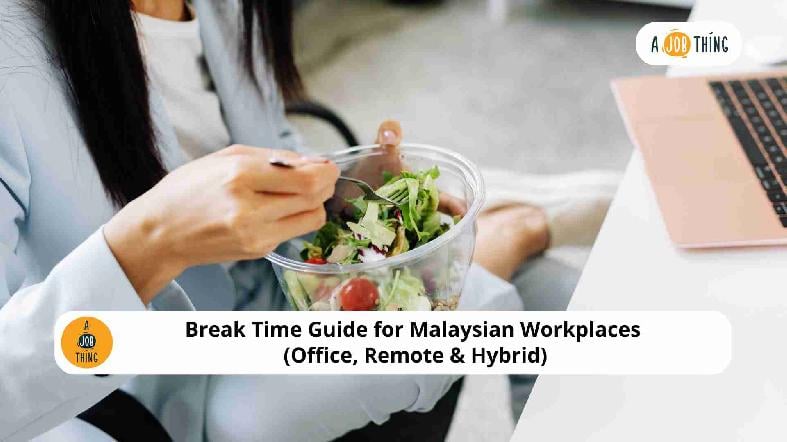
Break Time Guide for Malaysian Workplaces (Office, Remote & Hybrid)

Are You Hiring?
Find candidates in 72 Hours with 5+ million talents in Maukerja Malaysia & Ricebowl using Job Ads.
Hire Now
Breaks might seem like a small part of the workday, but they’re a big deal for employees' well-being and also for company compliance
How does break time differ from lunch hours? How does it apply in various work setups (including hybrid and shift environments)? Read the article below.
Break Time vs Lunch Hour: What Employers Need to Know
Many employers confuse break time with “lunch hour,” but legally, they are not the same.
Break time refers to any rest period given to employees during their working hours — it may or may not coincide with lunch.
Lunch hour is a specific meal break, usually around midday, where employees can eat or rest before continuing work.
Under the law, employees must not work more than five consecutive hours without a minimum 30-minute break.
Is Lunch Break Paid or Unpaid?
Lunch breaks in Malaysia are usually unpaid unless the employment contract states otherwise. For example:
-
Office workers typically get a 1-hour unpaid lunch break.
-
In shift-based or high-demand sectors (e.g., food service, call centres), employers may pay a portion of the lunch break if employees are expected to remain on standby or be available for call-back.
Clearly state in your employment contract whether lunch breaks are paid or unpaid to avoid disputes.
Types of Breaks & Scheduling
Different jobs require different types of breaks.
Meal Breaks (Lunch, Dinner)
Usually, the duration is 30-60 minutes, depending on company policy. It is required if employees work more than five consecutive hours. It may vary by shift (e.g., lunch for the day shift, dinner for the night shift).
Rest or Short Breaks
Commonly 10–15 minutes and used for coffee, stretching, or screen breaks. This break is not mandated by law but encouraged to maintain alertness and prevent fatigue.
Shift Workers and Staggered Breaks
In retail, hospitality, or manufacturing, breaks are often staggered so operations can continue smoothly. Example:
-
A retail store might give different lunch slots between 12:00 PM and 2:00 PM.
-
A factory could assign breaks in small groups to ensure machines are always supervised.
Example Schedules by Business Type
|
Business Type |
Typical Break Time |
Notes |
|
Office |
1-hour lunch (12-2 PM) + optional 15 min coffee break |
Common in most administrative roles |
|
Retail / F&B |
30-45 min meal break + short rest between shifts |
Breaks staggered for coverage |
|
Manufacturing |
30 min meal break + 10 min rest breaks |
Planned to avoid disrupting production |
Break Time & Remote / Hybrid Work Settings
In remote and hybrid setups, employees often lose track of time. They might skipping meals or working through breaks. Even though they’re not physically in the office, break time still applies.
Best Practices for Remote Teams:
-
Encourage employees to take scheduled breaks just like in-office workers.
-
Use team calendars or chat reminders to track break patterns.
-
Promote “offline time” to prevent burnout and overwork.
-
HR can include short breaks in work-from-home policies to reinforce healthy habits.
Example: A remote employee working from 9 AM-6 PM should still take at least one 30-minute lunch break and one or two short rest breaks during the day.
Breaks and Shift / 24-hour Operations
For businesses operating round-the-clock, such as hospitals, factories, or call centres, break time rules still apply but can be adjusted to suit shift patterns.
Employees must get a 30-minute break after five continuous working hours, even if their shift starts at night. Employers can implement split shifts or rotating meal breaks to ensure coverage while maintaining rest time.
Example:
-
A hospital nurse working 3 PM–11 PM can take dinner around 6:30 PM.
-
A call centre agent on a 10 PM–6 AM shift may take their meal break at 2:30 AM.
The key is communication and proper scheduling. So, every employee gets their legal rest without affecting operations.
Monitoring and Enforcing Break Compliance
Employers are responsible for ensuring employees actually take their breaks, not just that they are scheduled.
How to Monitor Breaks
-
Use attendance or clock-in systems to record when breaks start and end.
-
For remote teams, rely on digital time-tracking tools or self-reported breaks.
-
Managers should lead by example by encouraging staff to step away from workstations.
Interrupted Breaks: Does It Count as Work Time?
If an employee’s break is interrupted, for example, being called to handle a customer issue during lunch, that time counts as work. Employers should either:
-
Compensate the employee for the interrupted time, or
-
Allow them to extend their break accordingly.
FAQ
Is break time compulsory under Malaysian law?
Yes. Employees must not work more than five consecutive hours without at least a 30-minute break. This applies whether they work onsite, remote, hybrid, or shift-based.
Are lunch breaks considered paid working hours?
Usually no. Lunch breaks are typically unpaid unless stated otherwise in the employment contract or if employees are required to remain on standby.
Can employers combine short breaks into one long break?
Yes, as long as employees still receive the minimum 30-minute break after five continuous working hours. Additional short breaks are optional and based on company policy.
Do remote employees need to follow the same break rules?
Yes. Remote or hybrid workers should still take meal and rest breaks. HR should remind them to log breaks and avoid continuous screen time to prevent burnout.
Can an employee skip their break to finish work earlier?
Legally, no. Breaks are meant for rest and cannot be traded for early dismissal or extra working time.
If an employee is interrupted during their lunch break, does it count as working time?
Yes. Any interrupted break attending to calls, customers, or urgent tasks counts as work time. Employers should compensate or extend break time.
What happens if the workload is too high and employees can’t take breaks on time?
Employers must reschedule work or add manpower. Consistently denying breaks may violate labour laws and can lead to complaints or penalties.
Should break policies be written in the employment contract?
Yes. To avoid disputes, employers should clearly define:
-
Break duration & schedule
-
Whether it’s paid or unpaid
-
Rules for remote/hybrid staff
-
Procedures for interrupted breaks
Looking for Someone Who Really Fits Your Team?
We’ll help you find the right people who vibe with your goals and grow with you.
Post your job on Maukerja, Ricebowl, and Epicareer with AJobThing today.
Read More:
-
Differences Between Seasonal vs. Part-Time Positions in Malaysia
-
Do Part-Time Employees Qualify for Overtime Pay and Bonuses?
-
Differences Between Freelance and Part-Time Positions in Malaysia
-
Hiring Qualified Freelancers in Malaysia? Make Sure You Do It Right
-
Hiring Part-Time in Malaysia? Here's How to Find the Right People
- Warning Letter to Employee for Absence Without Leave
-
Leave Application Form Explained: Templates, Examples, and HR Best Practices
-
Part-Timers vs Casual Employees in Malaysia, Which Suits Your Company Best?
-
Guide to Leave Entitlements in Malaysia under Employment Act
-
Leave Management System for Malaysian Employers – Track Leave Easily (Free Template)
-
Best Hiring Platforms in Malaysia: Which One Suits Your Business?