
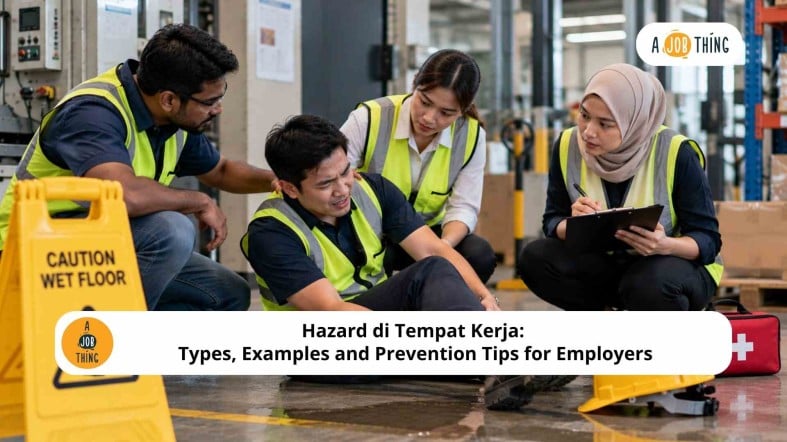
Hazard di Tempat Kerja: Types, Examples and Prevention Tips for Employers

Are You Hiring?
Find candidates in 72 Hours with 5+ million talents in Maukerja Malaysia & Ricebowl using Job Ads.
Hire Now
Workplace hazards can affect employees in any industry, from offices and restaurants to factories, warehouses and construction sites. If employers do not identify and manage these hazards, they can lead to workplace injuries, health problems, operational disruption and additional business costs.
Understanding hazard di tempat kerja, or workplace hazards, helps employers recognise potential dangers before they cause harm.
For Malaysian employers, business owners and HR teams, workplace safety involves more than providing personal protective equipment (PPE). It also requires proper risk assessments, safe working procedures, employee training and regular workplace inspections.
This guide explains the common types of workplace hazards, practical examples and ways employers can reduce risks and maintain a safer working environment.
What Does Hazard di Tempat Kerja Mean?
A workplace hazard is anything that has the potential to cause injury, illness, property damage or other harm.
Hazards can come from the workplace environment, chemicals, equipment, work activities or how employees are managed.
For example, a wet floor in a restaurant can cause an employee to slip, while repeated heavy lifting in a warehouse can lead to physical strain.
It is also important to understand the difference between a hazard and a risk.
| Term | Meaning | Workplace Example |
|---|---|---|
| Hazard | Something that could cause harm | A wet floor near an office entrance |
| Risk | The likelihood of harm occurring and the seriousness of its consequences | An employee slipping on the wet floor and suffering an injury |
Identifying a hazard is only the first step. Employers must also assess the risk and decide which control measures are needed to protect employees.
6 Types of Hazard di Tempat Kerja and Examples
Workplace hazards vary depending on the industry, work environment and tasks employees perform. The following six categories can help employers identify the hazards that may affect their businesses.
1. Physical Hazards
Physical hazards arise from environmental conditions that can affect employees' health and safety.
They are common in factories, construction sites, kitchens and other workplaces where employees are exposed to noise, heat, vibration or similar conditions.
Examples of physical hazards include:
-
Excessive noise: Loud machinery that may damage employees' hearing.
-
Extreme temperatures: Working near industrial furnaces or in very cold storage areas.
-
Vibration: Repeated exposure to vibrating power tools.
-
Poor lighting: Insufficient lighting that makes work difficult or uncomfortable.
-
Radiation: Exposure to harmful radiation in certain industrial, medical or laboratory settings.
How employers can prevent physical hazards: Assess the working environment and introduce suitable controls. These may include improving ventilation, reducing noise at its source, maintaining equipment and providing suitable lighting.
Where necessary, employers should also provide appropriate protective equipment and arrange exposure monitoring or health surveillance in line with applicable requirements.
2. Safety Hazards
Safety hazards are conditions or activities that may cause sudden injuries or accidents.
These hazards can occur in almost any workplace, including offices, retail outlets, warehouses, factories and construction sites.
Examples of safety hazards include:
-
Slippery floors and obstructed walkways.
-
Exposed electrical wires or damaged electrical equipment.
-
Unguarded machinery with moving parts.
-
Falling objects in storage areas.
-
Unsafe ladders or unprotected work at height.
-
Blocked emergency exits and fire hazards.
-
Vehicles or forklifts moving close to pedestrians.
How employers can prevent safety hazards: Keep walkways clear, repair damaged equipment, install suitable machine guards and separate pedestrian routes from vehicle movements.
Employers should also maintain clear emergency exits, provide appropriate fire safety arrangements and ensure employees receive training before operating equipment that requires specific skills.
For example, a warehouse manager can reduce collision risks by marking pedestrian walkways and separating them from forklift routes.
3. Chemical Hazards
Chemical hazards occur when employees are exposed to substances that can harm their health through inhalation, skin contact, eye contact or accidental ingestion.
These hazards may be present in manufacturing, cleaning services, laboratories, workshops and certain healthcare settings.
Examples of chemical hazards include:
-
Cleaning products that irritate the skin or eyes.
-
Paint fumes and industrial solvents.
-
Toxic gases released by faulty equipment or industrial processes.
-
Chemical spills caused by damaged containers.
-
Dust from wood or other industrial materials.
-
Improper storage of flammable or corrosive substances.
How employers can prevent chemical hazards: Identify the chemicals used at work and understand their hazards before deciding how to handle and store them.
Practical measures include proper labelling, suitable storage, effective ventilation and clear procedures for handling spills or accidental exposure. Employees should have access to relevant safety information and receive appropriate training.
PPE, such as chemical-resistant gloves, safety goggles or respirators, should be selected according to the substance and exposure risk.
4. Biological Hazards
Biological hazards involve organisms or biological materials that may cause infections, illnesses or allergic reactions.
They are particularly relevant in healthcare, food services, agriculture, waste management and workplaces where employees handle biological materials.
Examples of biological hazards include:
-
Bacteria and viruses in healthcare environments.
-
Contaminated food or water in restaurants.
-
Mould in damp buildings.
-
Contact with potentially infectious biological samples.
-
Exposure to pests, animal waste or contaminated materials.
How employers can prevent biological hazards: Maintain good workplace hygiene, provide suitable handwashing facilities and establish safe procedures for handling biological materials and waste.
Employers should also assess whether employees need specific protective equipment, training or occupational health measures based on their work activities.
For example, a restaurant should implement food hygiene practices, maintain clean preparation areas and ensure employees understand how to handle food safely.
5. Ergonomic Hazards
Ergonomic hazards occur when work tasks, equipment or workstation arrangements place excessive strain on the body.
These hazards affect office employees as well as workers who carry heavy items, perform repeated movements or stand for long periods.
Examples of ergonomic hazards include:
-
Working at a desk with an unsuitable chair or monitor height.
-
Repeated typing or mouse movements without suitable workstation arrangements.
-
Lifting heavy boxes without proper assistance.
-
Reaching or bending repeatedly during work.
-
Standing for extended periods without suitable work arrangements.
How employers can prevent ergonomic hazards: Review workstation design and work methods to reduce unnecessary strain.
In offices, this may involve adjusting chair height, positioning monitors properly and arranging frequently used items within easy reach.
In warehouses and factories, employers can consider lifting aids, suitable handling equipment and changes to task design.
Providing appropriate breaks and training employees on safe working methods can also help reduce ergonomic risks.
6. Psychosocial Hazards
Psychosocial hazards arise from how work is designed, organised and managed, as well as relationships and interactions in the workplace.
These hazards can affect employees' mental and physical health if they are not managed effectively.
Examples of psychosocial hazards include:
-
Excessive workloads and unrealistic deadlines.
-
Workplace bullying, harassment or discrimination.
-
Long working hours without adequate rest.
-
Unclear responsibilities and conflicting instructions.
-
Poor communication between managers and employees.
-
Lack of support when handling difficult work situations.
How employers can prevent psychosocial hazards: Review workloads, clarify job responsibilities and establish clear procedures for reporting bullying, harassment and other workplace concerns.
HR teams can support these efforts by helping managers communicate expectations, handling complaints fairly and identifying recurring workplace problems.
Managers should also review working arrangements and employee feedback to determine whether changes are needed.
Malaysia's Department of Occupational Safety and Health (DOSH) provides Guidelines on Psychosocial Risk Assessment and Management at the Workplace 2024, which employers can use as a reference.
How Employers Can Identify and Assess Workplace Hazards
Employers should not wait for an accident before reviewing workplace safety. A structured approach helps businesses identify hazards, assess their impact and take appropriate action.
Step 1: Inspect the Workplace
Conduct regular inspections of work areas, equipment, storage spaces, walkways and emergency exits.
The inspection should reflect the work being performed. For example, a factory inspection may focus on machinery guards and chemical storage, while an office inspection may examine electrical cables, workstation arrangements and emergency access.
Step 2: Involve Employees
Employees often know which tasks create difficulties or expose them to hazards because they perform the work every day.
Encourage employees to report unsafe conditions, damaged equipment, near misses and concerns about their working environment.
Managers should take these reports seriously and ensure appropriate follow-up action.
Step 3: Assess the Risk
After identifying a hazard, consider how likely it is to cause harm and how serious the consequences could be.
For example, a damaged electrical cable in a busy work area may present a serious risk because employees could come into contact with it.
Employers should prioritise risks that could cause severe harm and determine which controls are needed.
DOSH provides Guidelines for Hazard Identification, Risk Assessment and Risk Control (HIRARC), which explain a systematic approach to identifying hazards, assessing risks and applying appropriate controls.
Step 4: Implement Suitable Control Measures
Once the risks have been assessed, decide how to eliminate the hazard or reduce the risk.
For example, if employees repeatedly move heavy boxes manually, an employer could redesign the process or introduce suitable lifting equipment.
Assign responsibility for implementing the controls and ensure the people involved understand what needs to be done.
Step 5: Review the Results
Workplace safety requires ongoing attention. Review control measures after an incident, when work processes change, when new equipment is introduced or when an inspection identifies a new problem.
Employers should also check whether the measures are effective and introduce further improvements when necessary.
What Are the Best Ways to Control Workplace Hazards?
Employers should choose control measures based on the hazard and the level of risk. A useful approach is the hierarchy of controls, which prioritises removing hazards before relying on administrative procedures or PPE alone.
| Control Method | What It Means | Example |
|---|---|---|
| Elimination | Remove the hazard completely. | Remove an unnecessary task that exposes employees to a dangerous condition. |
| Substitution | Replace a hazardous item or process with a safer alternative. | Replace a hazardous chemical with a less hazardous product where suitable. |
| Engineering Controls | Isolate employees from the hazard through equipment or workplace design. | Install machine guards or improve local exhaust ventilation. |
| Administrative Controls | Change how work is organised or performed. | Introduce safe operating procedures, training and suitable work schedules. |
| Personal Protective Equipment (PPE) | Provide equipment to protect employees from specific hazards. | Supply appropriate gloves, safety goggles or hearing protection. |
For example, if a machine has exposed moving parts, installing suitable machine guards is generally a stronger control than relying only on workers to remember to keep their hands away.
PPE remains important where required, but employers should consider whether the hazard can first be removed or controlled more effectively.
What Are Employers' Responsibilities for Workplace Safety in Malaysia?
Employers play an important role in protecting employees and maintaining safe working conditions.
Malaysia's Occupational Safety and Health Act 1994 (Act 514), including amendments introduced through the Occupational Safety and Health (Amendment) Act 2022, provides the legal framework for occupational safety and health. The amendments came into force on 1 June 2024.
Under the Act, employers have duties relating to employees' safety, health and welfare, so far as is practicable. The specific requirements that apply depend on the workplace, activities and relevant legal provisions.
In practical terms, employers should:
-
Identify workplace hazards and assess the associated risks.
-
Provide and maintain appropriate safety measures.
-
Establish safe systems of work and suitable procedures.
-
Provide relevant safety information, instruction, training and supervision.
-
Maintain equipment and workplace facilities in safe condition.
-
Establish appropriate arrangements for reporting hazards and responding to emergencies.
-
Review risk controls when work activities or conditions change.
Employers can refer to the Department of Occupational Safety and Health Malaysia (DOSH) for official legislation, guidelines and occupational safety and health resources.
HR teams can support safety management by coordinating training, maintaining records, communicating policies and working with managers and safety personnel.
Business owners should ensure that responsibility for workplace safety is clearly assigned. Safety should be part of daily business operations rather than something addressed only after an accident.
FAQs
What are the most common workplace hazards?
Common hazards include physical, safety, chemical, biological, ergonomic and psychosocial hazards. The types of hazards present depend on the industry, work environment and tasks performed by employees.
What is the difference between a hazard and a risk?
A hazard can cause harm, while risk refers to the likelihood and severity of that harm. For example, a wet floor is a hazard, while slipping on it is a risk.
Who is responsible for managing workplace hazards?
Employers are responsible for workplace safety, while managers, HR teams and employees help identify hazards and follow safety procedures.
How often should employers conduct risk assessments?
Employers should review risk assessments when workplace conditions, equipment or work activities change, or when incidents occur.
What should employers do when a serious hazard is found?
Take immediate action to protect employees. This may include stopping work, restricting access and fixing the hazard. Follow emergency procedures when necessary.
Build a Safer Workplace
%20copy.jpg)
Managing workplace hazards requires proper risk assessments, effective controls and regular safety reviews to protect employees and prevent accidents.
Need to strengthen your team? Create and post job ads with AJobThing to reach more qualified candidates.
Read More:
-
Inclusive Hiring in Malaysia: A Practical Guide to Employing Persons with Disabilities
-
Elaun Tanggung Kerja: Meaning, Eligibility, Rate and How to Calculate
-
Malaysia Minimum Wage 2026: Proposed Hike, MSME Exemption & Budget 2027 Update
-
Annual Bonus in Malaysia: How Employers Can Calculate, Structure & Pay Bonuses
-
Employee Transfer Letter Malaysia: Sample for Department, Role & Branch Transfer
-
Public Holidays in Malaysia 2027: Full List by Date and State for Workplace Planning
-
Job Requisition: What It Is, What to Include & How HR Can Create One
-
Candidate Experience Survey: Questions, Examples & How to Improve Recruitment
-
Staff Immediate Resignation in Malaysia: Employer Rights & Responsibilities
-
How to Manage Underperforming Employees in Malaysia: Tips for Employers & HR
-
Warning Letter for Poor Performance in Malaysia: How to Write One (With Sample)
-
Can Employers Reject Annual Leave in Malaysia? Rights, Rules & Employee Entitlements
-
Payroll and Attendance Management in Malaysia: Process, Formula & Best Practices for Employers
-
Workplace Conflict Management in Malaysia: Causes, Solutions, and Best Practices
-
Recruitment Process Outsourcing (RPO): What It Is, Benefits & How It Works in Malaysia
-
Leave Encashment Malaysia: How to Calculate Unused Annual Leave
-
Performance Bonus in Malaysia: How It Works, Calculation & Employer Guide
-
Cost Per Hire Malaysia: Formula, Examples & How Employers Can Reduce Hiring Costs
-
Letter of Extension of Contract Malaysia: Free Template, Format & Sample
-
Promotion Letter in Malaysia: How to Write One (+ Free Template & Sample)
-
Talent Pool: Benefits, Examples & How to Build One for Better Hiring
-
Overtime Rates in Malaysia: When Do 1.5x, 2x and 3x Pay Apply?
-
Prorated Salary in Malaysia: How to Calculate an Employee's First Salary
-
Remote Jobs in Malaysia: Most In-Demand Roles, Salaries & Hiring Guide (2026)
-
Effective Ways to Reduce Absenteeism in the Workplace for HR & Employers
-
Medical Benefits for Employees in Malaysia: Types, Legal Requirements & Best Practices
-
EOR vs PEO: What's the Difference and Which Is Right for Your Business?
-
Constructive Dismissal Malaysia: Meaning, Examples & What To Do
-
Contract of Service vs Contract for Service Malaysia: How to Classify Workers Correctly
-
Employee Retention in Malaysia: Meaning, Importance & How to Improve It
-
Employee Turnover in Malaysia: Causes, Warning Signs & How to Reduce It
-
Retrenchment in Malaysia: Meaning, Process & Employee Rights
-
7 Key Contract Employee Rights in Malaysia Every HR Should Know
-
GLC vs Private Company Malaysia: Salary, Culture & Hiring Differences
-
Types of Payroll Calculation in Malaysia: Adhoc, Prorated Salary & Final Settlement Explained
-
Types of Payroll Cycle in Malaysia: Which One Is Best for Your Business?
-
Types of Insurance in Malaysia and Their Impact on Employee Benefits
-
How Notice Period Really Works in Malaysia for Employers and HR
-
Performance Evaluation: Description, Types, and How to Conduct