

How Notice Period Really Works in Malaysia for Employers and HR

Are You Hiring?
Find candidates in 72 Hours with 5+ million talents in Maukerja Malaysia & Ricebowl using Job Ads.
Hire Now
In Malaysia, notice period is one of the most common HR topics that leads to confusion, disagreements, and sometimes disputes.
Whether an employee resigns, is terminated, or leaves early, understanding how notice period works helps HR teams and employers manage exits fairly, legally, and professionally.
This guide explains what notice period means, how it works in Malaysia, and what HR and employers should know to stay compliant and avoid problems.
What Is a Notice Period?
A notice period is the amount of time an employee or employer must give before ending an employment contract.
During the notice period:
-
The employee is still employed
-
Salary and benefits continue
-
The employee is expected to work, unless agreed otherwise
The purpose of a notice period is to:
-
Give employers time to plan for replacement
-
Give employees time to prepare for transition
-
Ensure a smooth and fair exit for both sides
Is Notice Period Required in Malaysia?
Yes. In Malaysia, notice period is recognised under the Employment Act 1955 and is usually stated clearly in the employment contract.
If a notice period is written in the contract, both employer and employee must follow it.
Notice Period Under the Employment Act (If the Contract Doesn't Mention Notice Period)
If the employment contract does not mention notice period, the Employment Act provides minimum notice requirements based on length of service:
-
Less than 2 years of service: 4 weeks
-
2 to 5 years of service: 6 weeks
-
More than 5 years of service: 8 weeks
HR should always check the employment contract first. If a notice period is stated in the contract, that period applies.
Common Notice Periods Used by Employers in Malaysia
In practice, many Malaysian companies use fixed notice periods such as:
-
1 month notice (most common)
-
2 months notice
-
3 months notice (often for managers or senior roles)
Longer notice periods are usually applied to:
-
Senior employees
-
Roles with high responsibility
-
Positions that are difficult to replace
Notice Period for Resignation
When an employee resigns:
-
They must give notice according to the contract
-
Notice usually starts from the date the resignation is submitted
-
HR should acknowledge the resignation in writing
If the employee serves the full notice period:
-
Salary is paid as usual
-
EPF, SOCSO, EIS, and PCB still apply
-
Leave entitlement follows company policy
Not sure how much to contribute during the notice period? Use our EPF, SOCSO & EIS Calculator and PCB Calculator to quickly check the correct statutory contributions before processing final payroll.
Notice Period for Termination by Employer
When an employer terminates an employee:
-
The same notice period applies, unless the termination is due to misconduct
-
The employer must either:
-
Allow the employee to serve notice, or
-
Pay salary in lieu of notice
-
Termination should always be handled carefully to avoid:
-
Industrial disputes
-
Reputational issues
What Is Salary in Lieu of Notice?
Salary in lieu of notice means paying the employee instead of asking them to work during the notice period.
It is usually used when:
-
The employer wants an immediate exit, or
-
The employee cannot or does not want to serve notice
The amount is usually based on:
-
Basic salary
-
Fixed allowances (depending on contract wording)
HR should always check the employment contract before calculating payment in lieu.
Can Employees Leave Without Serving Notice?
Yes, but there are consequences.
If an employee leaves without serving notice:
-
The employer may deduct salary in lieu of notice
-
The deduction must match the notice period stated in the contract
-
The deduction must be clearly explained
HR should properly record:
-
Resignation date
-
Last working day
-
Outstanding notice amount
Can Employers Waive the Notice Period?
Yes.
Employers may:
-
Shorten the notice period
-
Waive the notice period fully
-
Allow early release
Any waiver should be:
-
Agreed by both parties
-
Confirmed in writing
-
Properly recorded for payroll and audit purposes
Notice Period and Annual Leave
During the notice period:
-
Employees may take annual leave if approved
-
Employers may allow annual leave to offset the notice period, depending on company policy
-
Unused annual leave may be encashed, based on contract terms
HR should apply leave rules consistently to avoid disputes.
Notice Period During Probation
Notice period during probation is usually:
-
Shorter than for confirmed employees
-
Clearly stated in the offer letter or contract
If not stated, the Employment Act minimum notice still applies.
HR should ensure probation notice terms are:
-
Written clearly
-
Explained during onboarding
Best Practices for HR and Employers
To manage notice period smoothly:
Clearly State Notice Period in Contracts
Write the notice period clearly in the employment contract to avoid confusion later.
Acknowledge Resignations in Writing
Confirm the resignation and last working day by email or letter.
Calculate Notice and Final Pay Accurately
Make sure salary, notice pay, and deductions are correct to avoid complaints.
Confirm Last Working Day Clearly
State the final working day clearly for payroll and statutory reporting.
Keep Proper Records
Keep resignation letters and payment records in case of audit or disputes.
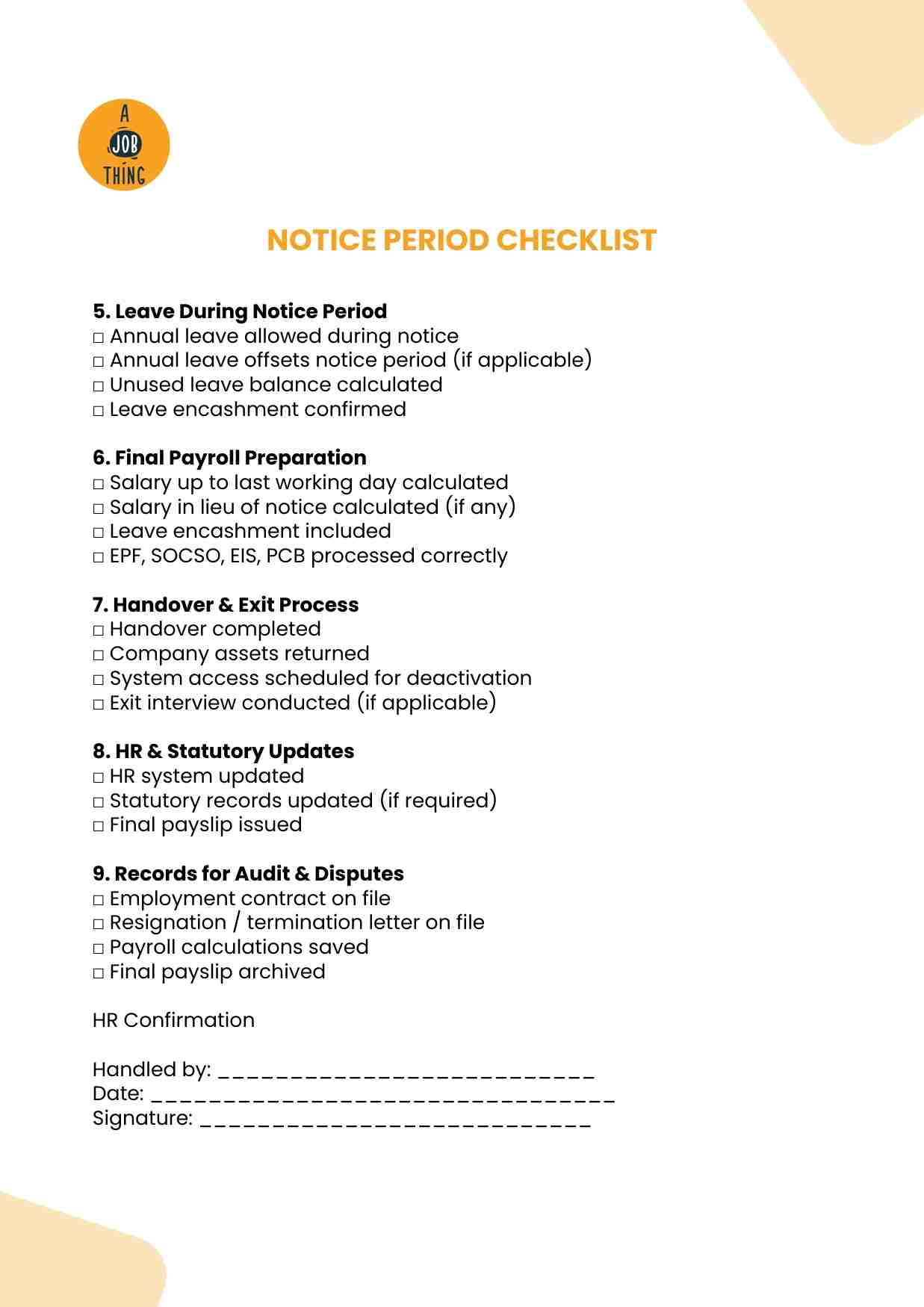
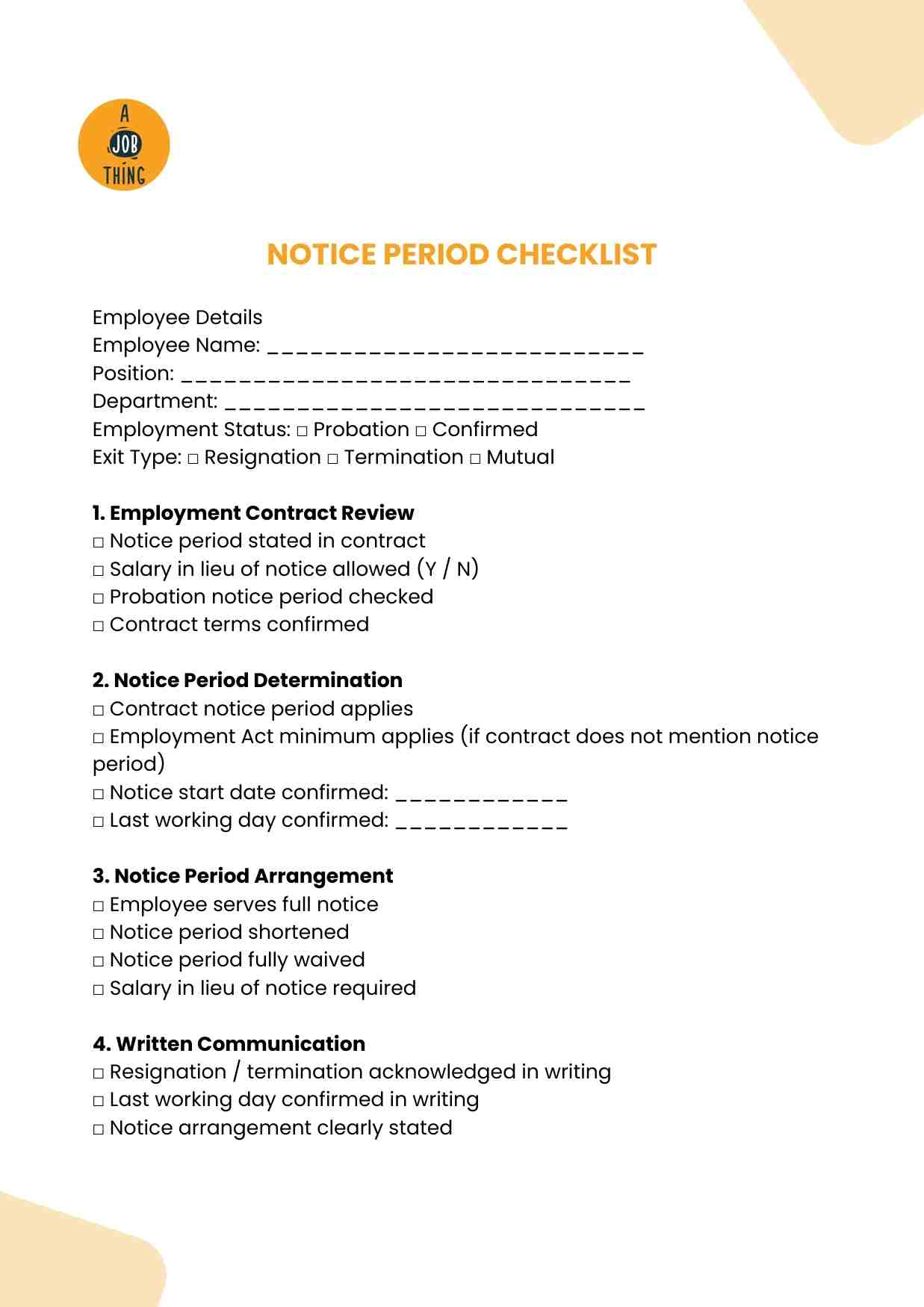
Notice Period Checklist for HR & Employers
FAQs
Is notice period compulsory in Malaysia?
In most cases, a notice period is required. It is usually written in the employment contract. If the contract does not mention it, the Employment Act sets the minimum notice period.
Can notice period be longer than one month?
Yes, many companies set notice periods of two or three months, especially for senior or important roles that take longer to replace.
Can salary be deducted if notice is not served?
If an employee leaves without serving notice, the employer can deduct salary in place of the notice period. The amount must follow what is stated in the contract.
Does notice period apply during probation?
Probation staff also need to give notice. The notice period is usually shorter and should be stated in the offer letter or contract.
Can employers terminate immediately without notice?
Immediate termination usually only happens in serious misconduct cases. Employers still need to follow proper steps to avoid disputes.
Looking for Qualified Candidates? We’re Here to Help!

With AJobThing, access a massive pool of jobseekers and hire the right talent faster than ever.
Get started today and fill your vacancies with ease!
Read More:
-
Why Employers Should Offer Health Insurance to Employees in Malaysia
-
Salary Increment Letter Malaysia: Samples, Format & HR Guide
-
How to Create a Job Posting That Attracts the Right Candidates
-
How Employers Should Handle Employee Misconduct in Malaysia Fairly
-
How HR in Malaysia Can Improve Resume Screening and Candidate Shortlisting
-
Preboarding in Malaysia: Why Employers Should Start Before Day One (Free Checklist Template)
-
How HR Can Reject a Candidate the Right Way (with Templates)
-
How to Conduct a Background Check for Employment in Malaysia
-
Onboarding Process Tips: What HR Needs to Know for Better Retention
-
Onboarding Checklist for New Hires (Free Downloadable Template)
-
Performance Evaluation: Description, Types, and How to Conduct
-
Cover Letter Examples Employers Should Know (With Tips to Spot the Best Ones)
-
Step-by-Step Guide to Writing a Great Job Description (Free Templates)