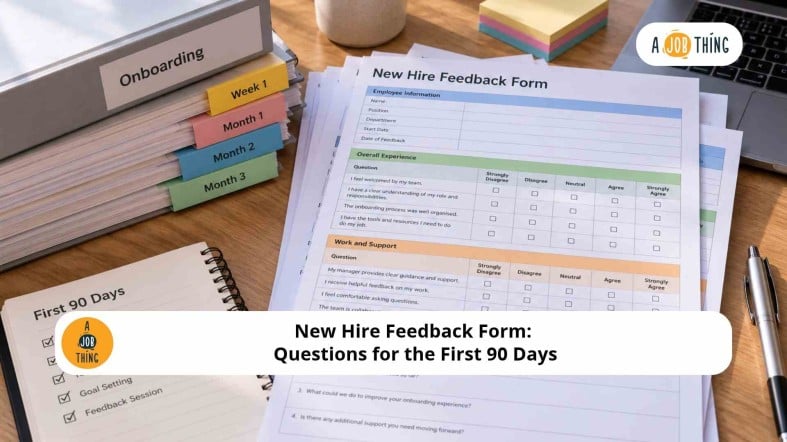
New Hire Feedback Form: Questions for the First 90 Days

Are You Hiring?
Find candidates in 72 Hours with 5+ million talents in Maukerja Malaysia & Ricebowl using Job Ads.
Hire Now
Hiring a new employee is only the beginning. HR teams and managers also need to understand how new hires are adjusting, whether they have enough support and what could make the onboarding process better.
A new hire feedback form helps employers collect feedback during the first 90 days, identify onboarding problems early and improve the employee experience. Regular check-ins can reveal issues with training, job expectations, communication or access to resources before they become bigger problems.
Download our free Excel template to collect feedback at key onboarding stages and track the actions needed to support new employees.
Download the Free New Hire Feedback Form Template

Use our free Excel template to organise employee feedback throughout the first three months.
Download the Free New Hire Feedback Form Excel Template
The workbook includes:
-
Day 7, 30, 60 and 90 questions: Review the employee's onboarding experience at different stages.
-
Rating scale: Use a consistent rating from 1 to 5, with an option for questions that do not apply.
-
Employee comments: Record feedback, concerns and suggestions.
-
Follow-up tracking: Assign an owner, due date and status to actions that need attention.
You can customise the questions for different job roles, departments and working arrangements.
What Is a New Hire Feedback Form?
A new hire feedback form is a questionnaire used to understand an employee's experience after joining a company. HR and managers use it to identify what is working well and what needs improvement during onboarding.
A typical form covers role clarity, training, system access, manager support, team integration, workload and opportunities for improvement.
Unlike a general employee engagement survey, a new hire feedback form focuses specifically on the experience of joining the company and adjusting to a new role.
New Hire Feedback Questions for the First 90 Days
Feedback should be collected at different stages because an employee's needs may change as they become more familiar with the role.
Day 7: First-Week Experience
The first check-in should focus on whether the employee feels welcomed and has the resources needed to get started.
Ask questions such as:
-
Did you feel welcomed by your team during your first week?
-
Do you understand the main responsibilities of your role?
-
Do you have the equipment, system access and resources needed to begin your work?
-
Do you know who to contact when you need help?
-
What has been confusing or difficult so far?
-
What support would make your next few weeks easier?
What HR should do: Address immediate issues such as missing system access, unclear instructions or incomplete introductions. These problems can often be resolved before they affect the employee's ability to work.
Day 30: Role Clarity and Training
By the end of the first month, employees should have a better understanding of their responsibilities and workplace processes.
Ask questions such as:
-
Do you understand what is expected of you in your role?
-
Has the onboarding process helped you settle into the company?
-
Have you received enough training for your assigned tasks?
-
Does your manager provide sufficient guidance and feedback?
-
Do you feel comfortable asking colleagues for help?
-
What could we improve about your onboarding experience?
What HR should do: Review training gaps and clarify expectations with the manager. If responsibilities remain unclear, update the relevant job instructions or provide additional guidance.
Day 60: Confidence and Workload
The second-month check-in should focus on confidence, workload, teamwork and progress with regular responsibilities.
Ask questions such as:
-
Do you feel confident completing your regular tasks?
-
Are your priorities and deadlines clear?
-
Is the feedback from your manager helping you improve?
-
Is your workload manageable?
-
Can you work effectively with your team and other departments?
-
What additional training or support would help you succeed?
What HR should do: Identify the specific barriers affecting progress. For example, an employee who understands their responsibilities but struggles with a particular system may benefit from targeted training rather than repeating the entire onboarding programme.
Day 90: Overall Experience and Next Steps
The final check-in should review the employee's onboarding experience and identify priorities for the next few months.
Ask questions such as:
-
Do you understand how your work contributes to the team's goals?
-
Do you have the knowledge and resources needed for your responsibilities?
-
Do you feel comfortable discussing concerns with your manager?
-
Do you feel like part of the team?
-
What should we change for future new hires?
-
What goals or support would help you over the next three months?
What HR should do: Review recurring feedback, agree on development priorities and document follow-up actions. This discussion should complement any formal probation review rather than replace it.
How HR Should Use Feedback From New Hires
Collecting feedback is only useful when the company acts on the findings.
Look for Recurring Issues: Review responses across new hires to identify patterns in training, communication, role clarity or management support.
Prioritise the Problems: Address immediate barriers first, such as missing system access, unclear responsibilities or insufficient training.
Assign an Action Owner: Decide whether HR, the manager, IT or another team should handle the issue.
Set a Deadline and Follow Up: Record the action, responsible person and due date. Check whether the issue has been resolved at the next review.
Improve the Onboarding Process: If several new employees report similar problems, review your onboarding materials, job descriptions or recruitment process.
For example, if new hires repeatedly report that their actual responsibilities differ from what they expected during recruitment, HR should review the job advertisement and interview communication as well as the onboarding process.
New Hire Feedback Form vs Onboarding Checklist vs Probation Review
These three HR tools support different parts of the onboarding process.
| Tool | Main Purpose |
|---|---|
| New hire feedback form | Understand the employee's experience, concerns and support needs |
| Onboarding checklist | Track the completion of onboarding tasks, training and documentation |
| Probation review | Assess role-related performance and progress under the company's probation process |
HR can use all three together. The checklist tracks what needs to be completed, the feedback form captures how the employee is experiencing the process, and the probation review evaluates performance against agreed expectations.
For related guidance, read AJobThing's onboarding checklist for new hires and probation performance review guide for Malaysian HR.
FAQs
What should a new hire feedback form include?
It should cover role clarity, training, system access, manager support, team integration, workload and areas for improvement. Include space for written comments and follow-up actions.
When should HR collect new hire feedback?
HR can collect feedback during the first week and around Days 30, 60 and 90. The schedule can be adjusted to suit the role and the company's onboarding process.
Should new hire feedback be anonymous?
Not necessarily. A named form makes it easier to provide individual support and follow up on concerns. If the company promises anonymity, it should avoid collecting identifying details or reporting responses in ways that could reveal individual employees.
How can HR use feedback to improve onboarding?
HR can identify recurring problems, assign action owners, set deadlines and review whether the improvements have helped. Feedback can also be used to update onboarding checklists and training materials.
Is a new hire feedback form the same as an employee engagement survey?
No. A new hire feedback form focuses on the onboarding experience, while an employee engagement survey examines broader topics such as motivation, workplace culture, leadership and employee commitment.
Ready to Build Your Team? Post a Job Ad With AJobThing

Finding the right candidate is the first step towards building a strong team. Providing clear expectations and a supportive onboarding process helps new employees adjust to their roles.
AJobThing helps Malaysian employers advertise vacancies and connect with jobseekers through its recruitment solutions.
Post a job ad with AJobThing to connect with candidates for your next vacancy.
Read More
-
HR Document Checklist Excel: Employee Records from Hiring to Offboarding
-
Onboarding Checklist for New Hires: Free Downloadable Template
-
Probation Performance Review in Malaysia: How HR Can Evaluate Employees
-
Employee Retention in Malaysia: Meaning, Importance and How to Improve It
-
Performance Evaluation: Description, Types and How to Conduct