


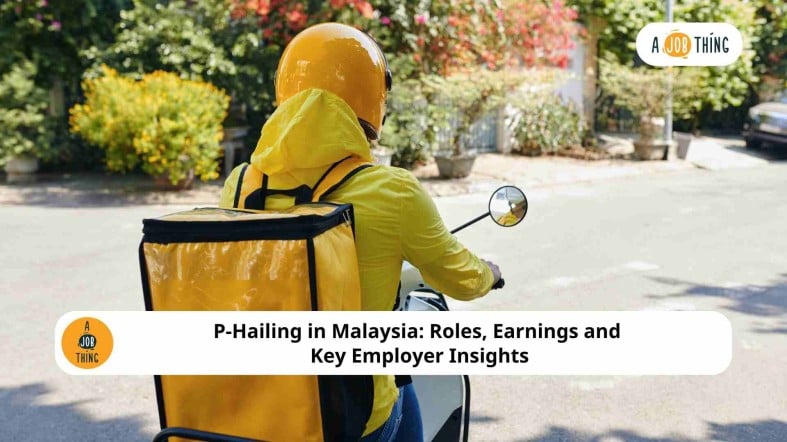
P-Hailing in Malaysia: Roles, Earnings and Key Employer Insights

Many people are familiar with food delivery services, but not everyone clearly understands how p-hailing riders work, especially from an employer’s perspective.
With the growth of platforms like GrabFood, p-hailing riders in Malaysia have become an important part of the gig economy. They earn income by delivering food, parcels, or goods using mobile apps, without a fixed salary or traditional employment structure.
This makes it important for employers and platform providers to understand how this workforce operates, from earnings and working hours to tax and contribution responsibilities.
What is a P-Hailing Rider?
A p-hailing rider is a delivery partner who uses a mobile app to deliver items such as food, groceries, or parcels to customers.
Customers place orders through apps, and riders:
-
Accept delivery requests
-
Pick up items from restaurants or stores
-
Deliver them to customers
In simple terms, p-hailing riders:
-
Deliver goods instead of transporting passengers
-
Earn income per delivery
-
Work independently with flexible schedules
How Much Do P-Hailing Riders Earn in Malaysia?
The income of p-hailing riders depends on how active they are. Part-time riders may earn around RM800 to RM2,000 per month, while full-time riders can earn RM2,500 to RM5,000 or more.
Earnings are influenced by:
-
Number of deliveries completed
-
Peak hours (meal times and weekends)
-
Location and demand
-
Incentives or bonuses from platforms
Because of this, income is not fixed and can vary monthly.
Working Hours
P-hailing riders enjoy flexible working hours and can choose when to work. Many riders focus on peak periods such as lunch and dinner times when demand is higher.
However, to earn more, riders often need to:
-
Work during peak hours
-
Stay active for longer periods
-
Accept more delivery jobs
This flexibility is attractive, but income is not guaranteed.
EPF, SOCSO, EIS and Tax (PCB)
P-hailing riders are self-employed, so contributions and tax are not handled like employees.
|
Item |
Applies to P-Hailing Riders? |
Explanation |
|
Not mandatory |
Riders can contribute voluntarily, such as through i-Saraan or i-Saraan Plus. |
|
|
Optional |
Riders can register under the Self-Employment Social Security Scheme (SKSPS) for protection. |
|
|
Not applicable |
Only applies to employees, not self-employed riders. |
|
|
Not automatic |
Riders must declare their own income and submit tax via e-Filing. |
This means p-hailing riders are responsible for managing their own financial planning and compliance.
Common Challenges P-Hailing Riders Face
From an employer’s perspective, it is important to understand the challenges riders face.
Some common issues include:
-
Unstable and fluctuating income
-
No automatic benefits like EPF
-
High fuel and vehicle maintenance costs
-
Weather conditions affecting work
These challenges can impact rider retention and performance.
Why This Matters for Employers
P-hailing riders play a key role in delivery operations. Without enough active riders, delivery times increase and customer satisfaction may drop.
Employers who understand rider needs can:
-
Improve retention
-
Build stronger trust with riders
Providing support such as financial awareness or incentive structures can help create a more stable workforce.
P-hailing riders are a key part of Malaysia’s on-demand economy, especially in food and delivery services. However, their working structure is different from traditional employees.
For employers, understanding areas like salary, working hours, and financial responsibilities is essential to building a reliable and sustainable rider network.
FAQs
Are p-hailing riders considered employees?
No, p-hailing riders are generally self-employed and do not receive standard employee benefits unless they contribute voluntarily.
Do p-hailing riders need to pay tax?
Yes, riders must declare their income and submit taxes through e-Filing, as there is no automatic deduction.
Can p-hailing riders contribute to EPF?
Yes, they can make voluntary contributions through schemes like i-Saraan or i-Saraan Plus.
Is SOCSO required for p-hailing riders?
SOCSO is optional, but riders are encouraged to register under the self-employed scheme for protection.
Why should employers support p-hailing riders?
Supporting riders helps improve retention, service quality, and overall business performance.
Looking to Hire More P-Hailing?
%20copy.jpg)
Post a Job Now with AJobThing and attract reliable p-hailing riders faster while building a more stable and efficient delivery workforce.
Read More:
-
E-Hailing Drivers in Malaysia: What They Do and What Employers Must Know
-
i-Saraan Plus: Employer Guide to EPF Incentives for E-Hailing & P-Hailing Drivers in Malaysia
-
KWSP Withdrawal at Age 55 & 60: Rules, Options & HR Guide for Employers in Malaysia
-
i-Suri KWSP 2026 Malaysia: Benefits, Eligibility & How It Works
-
Common HR Problems in SMEs Malaysia: Hiring, Payroll & Compliance Solutions
-
e-Filing 2026 Malaysia: Opening Date, Deadlines & Complete Guide
-
EPF Dividends Remain Tax-Free, Says LHDN Amid 2% Dividend Tax Confusion
-
Akaun Persaraan KWSP: How It Works & Why It’s Important for Retirement Savings
-
Akaun Sejahtera KWSP: What It Is, How It Works & What You Need to Know
-
EPF SOCSO EIS Contribution 2026: Latest Rates, Rules & Employer Guide in Malaysia
-
How EPF Withdrawal Works When an Employee Leaves Malaysia Permanently
-
Simpanan Shariah KWSP: What It Is, How It Works & What Employers Should Know
-
Penamaan KWSP in Malaysia: Legal Implications, Process, and HR’s Role
-
Penyata KWSP: How to Check, Download & Understand Your EPF Statement
-
i-Topup KWSP: Contribution Rules & Guide for Employers in Malaysia
-
i-Simpan EPF (KWSP): How It Works & How Employees Can Contribute
-
i-Sayang KWSP Guide: Requirements, Benefits & How to Register