
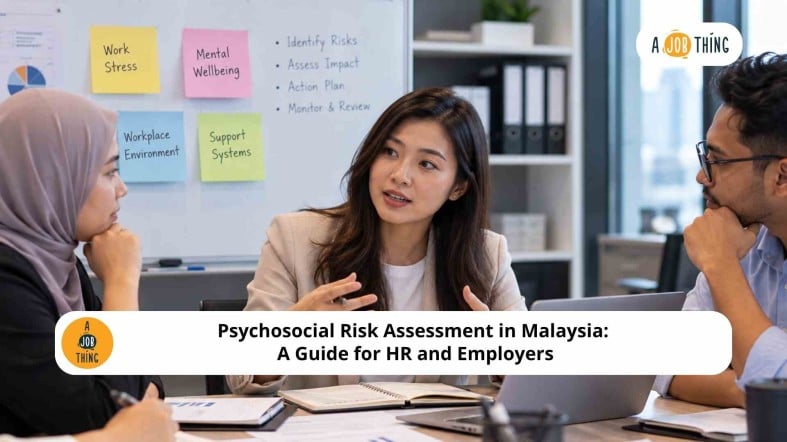
Psychosocial Risk Assessment in Malaysia: A Guide for HR and Employers

Are You Hiring?
Find candidates in 72 Hours with 5+ million talents in Maukerja Malaysia & Ricebowl using Job Ads.
Hire Now
Employees may experience stress at work due to heavy workloads, unrealistic deadlines, poor management support or conflicts with colleagues. If these problems are not addressed, they may affect employee wellbeing, productivity and staff retention.
For Malaysian HR teams and employers, a psychosocial risk assessment provides a structured way to identify these workplace issues and determine what can be done to reduce the risks.
The Department of Occupational Safety and Health (DOSH) provides guidance through its Guidelines on Psychosocial Risk Assessment and Management at the Workplace (PRisMA) 2024. This guide explains what psychosocial risk assessment means, why it matters and how HR can help manage workplace risks.
What Is Psychosocial Risk Assessment?
A psychosocial risk assessment is a process of identifying and assessing workplace conditions that may negatively affect employees' mental or physical health.
These risks can arise from how work is organised, how employees are managed and how people interact at work.
For example, employees may experience excessive workloads, unclear job responsibilities, workplace bullying or limited support from their managers. Over time, these conditions may contribute to work-related stress, burnout and employee dissatisfaction.
DOSH's PRisMA 2024 guidelines provide a framework to help employers identify, assess and manage these risks.
Unlike a general workplace hazard assessment, which may cover physical dangers such as unsafe equipment or slippery floors, a psychosocial risk assessment focuses on working conditions, job demands, workplace relationships and management practices.
The goal is to understand what may be causing the problem and take appropriate action, rather than expecting employees to manage workplace stress on their own.
Read the official DOSH PRisMA 2024 guidelines (PDF).
Why Is Psychosocial Risk Assessment Important for Employers?
Psychosocial risks can affect both employees and business operations. Identifying these risks helps HR and management understand where improvements may be needed.
Improve Employee Wellbeing
Identifying excessive workloads, unreasonable deadlines and poor working relationships can help employers address conditions that may contribute to prolonged stress or burnout.
Reduce Workplace Problems
Repeated complaints, frequent overtime and employee conflicts may indicate problems with workload distribution, management practices or communication.
Support Productivity and Retention
A supportive working environment can help employees perform their jobs effectively and feel more comfortable staying with the company.
For example, if one department experiences frequent resignations and excessive overtime, HR can investigate whether staffing levels, deadlines or management expectations contribute to the problem.
Employers can also refer to AJobThing's guide on supporting mental health in the Malaysian workplace for additional ideas on employee support and workplace wellbeing.
What Are the Common Psychosocial Hazards at Work?
Psychosocial hazards are workplace factors that may negatively affect employees' health and wellbeing. They can occur in offices, factories, retail businesses, restaurants and other working environments.
| Psychosocial Hazard | Workplace Example | What HR Can Review |
|---|---|---|
| Excessive workload | Employees regularly work overtime to meet unrealistic deadlines | Staffing levels, deadlines and task distribution |
| Unclear job responsibilities | Employees receive conflicting instructions from different managers | Job descriptions and reporting lines |
| Poor management support | Employees struggle to get help with work problems | Communication and management support |
| Bullying or harassment | Employees experience intimidation, humiliation or inappropriate behaviour | Reporting channels and complaint procedures |
| Poor work-life balance | Employees regularly work beyond normal working hours | Work schedules and overtime arrangements |
| Limited job control | Employees have little say in how they organise their work | Decision-making authority and reasonable flexibility |
| Limited career development | Employees have few opportunities to develop their skills | Training and career development opportunities |
Different departments may experience different risks. A customer service team may face pressure from high call volumes, while a finance team may experience heavy workloads during month-end closing.
HR should assess actual working conditions in each work unit instead of assuming that every employee faces the same risks.
For more guidance, see AJobThing's articles on workplace bullying and employer responsibilities and handling workplace harassment complaints.
Is Psychosocial Risk Assessment Required Under Malaysian Law?
Malaysia's Occupational Safety and Health Act 1994 (Act 514) establishes general workplace safety and health responsibilities.
Under Section 18B, employers, self-employed persons and principals must assess safety and health risks that may affect people at the workplace. Where the assessment identifies a need for risk controls, appropriate measures must be implemented.
DOSH's PRisMA 2024 guidelines help employers understand how to assess and manage psychosocial risks as part of workplace safety and health management.
The Act establishes the general risk assessment duty, while PRisMA provides guidance specifically for psychosocial risks.
Employers can refer to the official DOSH PRisMA guidelines to understand the recommended assessment process.
How HR Can Identify and Manage Psychosocial Risks
HR does not need to diagnose employees or make assumptions about their mental health. The focus is on understanding workplace conditions, identifying potential risks and helping management make appropriate improvements.
1. Identify Workplace Problems
Start by reviewing how work is organised and managed across the company.
Look for concerns such as excessive workloads, repeated overtime, unclear responsibilities, workplace conflicts or reports of bullying.
For example, if employees in one department regularly struggle to meet deadlines, HR can investigate whether the workload is reasonable and whether staffing levels are sufficient.
2. Gather Information
HR can gather information through employee feedback, workplace observations, discussions with managers, complaints and relevant company records.
Recurring concerns about workload, frequent overtime or repeated workplace conflicts may indicate areas that need further assessment.
Employee feedback should be handled sensitively. HR should protect confidentiality and avoid making assumptions about individuals based on incomplete information.
These initial observations help identify areas for attention, but they do not replace a formal psychosocial risk assessment.
3. Follow DOSH's PRisMA Guidelines
After identifying potential risks, employers should follow the assessment process outlined in DOSH's PRisMA guidelines.
The framework includes LEO26, a screening tool used to identify psychosocial risks, and EPC23, a checklist used to review existing employer practices when the assessment identifies a high-risk category.
An appropriately trained Psychosocial Trained Person (PTP) can assist with the formal assessment and help determine which risks need attention.
HR teams do not need to memorise the technical tools. Their role is to support the process, provide relevant workplace information and work with management to address the findings.
4. Take Action to Reduce the Risks
Once the risks have been assessed, HR and management should decide what changes are needed.
For example, the company may redistribute workloads, clarify job responsibilities, improve manager training or strengthen procedures for handling bullying and harassment complaints.
Each action should have a responsible person and a target completion date so that progress can be monitored.
5. Review the Results
After implementing the changes, employers should review whether the measures are helping to reduce the identified risks.
HR can examine employee feedback, working arrangements and relevant workplace records to identify areas that may need further attention.
Employers should follow the PRisMA guidelines for formal reassessment and recordkeeping. The assessment should not be treated as a one-time exercise if workplace conditions or risks change.
For the full assessment process, refer to the official DOSH PRisMA 2024 guidelines.
How Can Employers Create a Healthier Working Environment?
A psychosocial risk assessment is most useful when the findings lead to meaningful improvements in workplace conditions.
HR and management can take several practical steps based on the risks identified.
Review Workloads and Working Hours
Check whether staffing levels, deadlines and overtime arrangements are reasonable. AJobThing's guide to working hours and overtime in Malaysia explains relevant working-time requirements for employers.
Encourage Respectful Communication
Ensure employees know how to report bullying, harassment and other workplace concerns. Complaints should be handled fairly and consistently.
Improve Management Support
Help managers set clear expectations, recognise workload concerns and address workplace conflicts appropriately.
Consider Work-Life Balance
Review scheduling, task allocation and suitable flexible working arrangements where these could address identified risks. Employers can refer to AJobThing's guide on Flexible Work Arrangement guidelines in Malaysia.
Monitor Workplace Improvements
Review progress and reassess risks according to the PRisMA process, making further changes when existing measures are insufficient.
Employee assistance programmes and counselling support may also help employees. However, these initiatives should not replace action to address the underlying workplace conditions that contribute to psychosocial risks.
FAQs
What is PRisMA in Malaysia?
PRisMA stands for Psychosocial Risk Assessment and Management at the Workplace. DOSH published the 2024 guidelines to help employers identify, assess and manage psychosocial risks.
Who should conduct a psychosocial risk assessment?
DOSH's guidelines describe the role of a Psychosocial Trained Person (PTP), who receives appropriate training and assists the employer with the assessment process. Employers should follow the applicable procedures and official guidance.
Does psychosocial risk assessment apply to small companies?
Employers should not assume that having a small workforce removes their occupational safety and health risk assessment responsibilities. They should consider the applicable legal duties and the risks present in their workplace.
What should HR do if psychosocial risks are identified?
HR should work with management and the relevant trained personnel to understand the findings, agree on corrective actions, assign responsibilities and monitor progress.
Is an employee satisfaction survey enough?
No. A survey can help identify workplace concerns, but it does not replace the PRisMA assessment process. Employers should follow the relevant assessment procedures, review existing controls and take appropriate action.
Create a Safer and Healthier Workplace
Psychosocial risk assessment helps Malaysian employers understand how workplace conditions may affect employees and identify changes that could improve wellbeing.
By following DOSH's PRisMA guidelines, addressing the underlying causes of workplace risks and reviewing the results, HR teams can help create a safer, more supportive and productive working environment.
Official references:
Looking for New Staff? Post Your Job Ad Today

Ready to grow your team? Reach jobseekers and connect with potential candidates through AJobThing.
Post your job ad today and find the right talent for your business.
Read More
-
Workplace Hazards: Types, Examples and Prevention Tips for Employers
-
How Malaysian Employers Support Mental Health at the Workplace
-
Workplace Bullying: Types, Penalties, and What to Do for HRs
-
Workplace Conflict Management in Malaysia: Causes, Solutions, and Best Practices
-
Workplace Safety Policies in Malaysia: Definition and How to Implement