
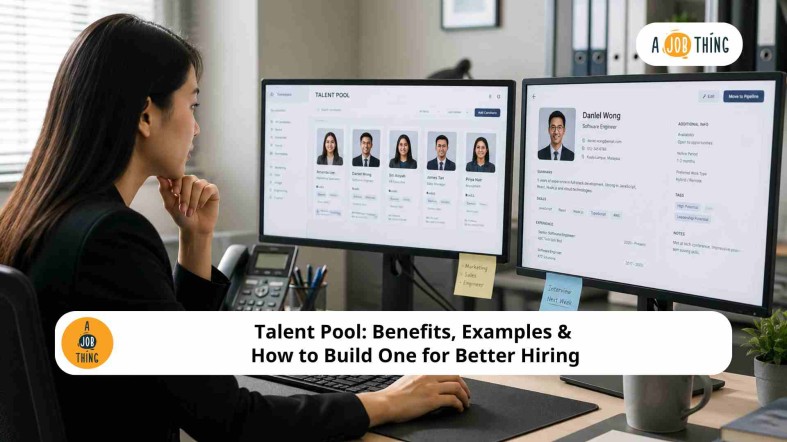
Talent Pool: Benefits, Examples & How to Build One for Better Hiring

Are You Hiring?
Find candidates in 72 Hours with 5+ million talents in Maukerja Malaysia & Ricebowl using Job Ads.
Hire Now
Hiring the right employee takes time. If you only start looking for candidates after a vacancy opens, you may spend weeks posting job ads, reviewing applications, and scheduling interviews.
That's why many employers build a talent pool.
A talent pool is a collection of qualified candidates who may be suitable for future job openings. Instead of starting your recruitment process from scratch every time, you already have a list of potential candidates ready to contact when a position becomes available.
In this guide, we'll explain what a talent pool is, why it's important, how to build one, and how AJobThing can support your hiring process.
What Is a Talent Pool?
A talent pool is a group of qualified candidates that an employer keeps for future hiring needs.
These candidates may not be hired immediately, but they have the skills, experience, or potential to fill future vacancies.
A talent pool can include:
-
Previous job applicants.
-
Candidates who performed well during interviews but were not selected.
-
Employee referrals.
-
Internship or graduate programme applicants.
-
Passive candidates interested in future opportunities.
-
Former employees who left on good terms.
Instead of searching for new candidates every time there's a vacancy, employers can first review their talent pool.
Why Is a Talent Pool Important?
A talent pool helps employers prepare for future hiring instead of waiting until a position becomes vacant.
Having a ready list of qualified candidates can make recruitment faster, more organised, and more cost-effective.
Whether you're hiring one employee or building a larger team, a talent pool can help improve your recruitment process.
Benefits of Building a Talent Pool
Building a talent pool offers several advantages for employers.
Hire Faster
When a vacancy opens, you already have qualified candidates to contact. This helps reduce the time needed to fill important positions.
Reduce Recruitment Costs
You may spend less on advertising and candidate sourcing because you've already identified suitable candidates.
Improve Hiring Quality
Candidates in your talent pool have usually been reviewed before, making it easier to identify people who fit your company and the role.
Better Workforce Planning
If your business is expanding or regularly hires for the same positions, a talent pool helps you plan ahead.
Improve Candidate Experience
Candidates appreciate employers who remember them and contact them for future opportunities instead of asking them to start the application process again.
Talent Pool vs Candidate Database
Although these terms are often used interchangeably, they are not the same.
|
Talent Pool |
Candidate Database |
|
Contains qualified and shortlisted candidates |
Stores all job applicants |
|
Used for future hiring |
Mainly used for record keeping |
|
Regularly reviewed and updated |
May include inactive or outdated profiles |
|
Helps employers hire faster |
May require more time to search for suitable candidates |
A talent pool focuses on quality, while a candidate database focuses on storing information.
Example of a Talent Pool
Imagine your company regularly hires Customer Service Executives.
You receive 200 applications for one vacancy. After interviews, you hire one candidate, but another 20 applicants also have the right skills and experience.
Instead of removing their applications, you keep their details in your talent pool.
Three months later, another Customer Service position becomes available.
Instead of starting a new recruitment campaign, you can contact those qualified candidates first. This helps reduce hiring time and recruitment costs.
Which Employers Should Build a Talent Pool?
A talent pool is useful for businesses of all sizes.
It is especially beneficial if you:
-
Hire throughout the year.
-
Frequently recruit for the same roles.
-
Have high employee turnover.
-
Need seasonal workers.
-
Are planning to expand your business.
-
Want to reduce time-to-hire.
Whether you're an SME or a large organisation, building a talent pool can make future hiring easier.
How to Build a Talent Pool
Save Qualified Candidates
Don't delete applications just because a candidate wasn't selected. Keep candidates who may be suitable for future vacancies.
Encourage Employee Referrals
Employees often know talented people who may be interested in joining your company.
Organise Candidate Information
Group candidates by:
-
Job role.
-
Skills.
-
Industry.
-
Years of experience.
-
Preferred work location.
This makes it easier to find suitable candidates when hiring.
Stay in Touch
Keep candidates engaged by letting them know about new job opportunities or recruitment updates.
Regular communication helps maintain their interest in your company.
Review Your Talent Pool Regularly
Update candidate information and remove profiles that are no longer relevant.
A well-maintained talent pool is much more valuable than a large list of outdated candidates.
Common Mistakes to Avoid
Avoid these common mistakes when building a talent pool:
-
Saving every applicant without reviewing their qualifications.
-
Keeping outdated candidate information.
-
Forgetting to update candidate records.
-
Not organising candidates by skills or job roles.
-
Losing contact with promising candidates for long periods.
A smaller, organised talent pool is usually more useful than a large database that is difficult to manage.
How AJobThing Helps You Build a Talent Pool
Building a talent pool manually can take time, especially if you're hiring regularly.
With AJobThing, employers can:
-
Reach millions of job seekers across Malaysia.
-
Receive applications from qualified candidates.
-
Keep promising candidates for future job openings.
-
Search and reconnect with suitable candidates when new vacancies become available.
-
Reduce hiring time by connecting with quality talent faster.
Whether you're hiring one employee or building a growing team, AJobThing makes recruitment simpler and more efficient.
Best Practices for Managing a Talent Pool
To keep your talent pool useful:
-
Review candidate profiles regularly.
-
Remove inactive or outdated records.
-
Add interview notes for future reference.
-
Organise candidates into different job categories.
-
Keep candidate information up to date.
-
Contact suitable candidates when relevant vacancies become available.
Regular maintenance helps ensure your talent pool remains useful whenever your company needs to hire.
FAQs
What is a talent pool?
A talent pool is a collection of qualified candidates that employers keep for future job opportunities.
Why is a talent pool important?
It helps employers hire faster, reduce recruitment costs, improve workforce planning, and maintain a better recruitment process.
What is the difference between a talent pool and a candidate database?
A talent pool contains qualified candidates who are suitable for future hiring, while a candidate database stores all applicants, including those who may not be suitable for future roles.
How often should employers update a talent pool?
It's a good idea to review and update your talent pool regularly to remove outdated profiles and keep candidate information accurate.
How can AJobThing help employers build a talent pool?
AJobThing helps employers reach millions of job seekers across Malaysia, making it easier to attract qualified candidates, build a strong talent pool, and hire faster.
Looking for New Staff?
%20copy.jpg)
Don't wait until a vacancy opens. Build your talent pool today and connect with qualified candidates faster.
With AJobThing, you can reach millions of job seekers across Malaysia and hire the right talent with ease.
Post your job on AJobThing today and find your next hire
Read more:
-
Government Confirms Umur Bersara Penjawat Awam Remains at 60
-
Sales Turnover: What It Is, Formula, Examples & Tips to Increase It
-
Overtime Rates in Malaysia: When Do 1.5x, 2x and 3x Pay Apply?
-
Prorated Salary in Malaysia: How to Calculate an Employee's First Salary
-
Remote Jobs in Malaysia: Most In-Demand Roles, Salaries & Hiring Guide (2026)
-
Effective Ways to Reduce Absenteeism in the Workplace for HR & Employers
-
Medical Benefits for Employees in Malaysia: Types, Legal Requirements & Best Practices
-
Fresh Graduate Salary in Malaysia (2026): How Much Should Employers Pay?
-
Salary Benchmarking in Malaysia: Are You Paying Enough to Attract Candidates?
-
e-Invoicing Malaysia Explained: What Every Employer and Business Needs to Know
-
EOR vs PEO: What's the Difference and Which Is Right for Your Business?
-
Remote Job Offer Letter: What Employers Should Include (+ Example)
-
Job Offer Letter vs. Employment Contract: What's the Difference? (+ Free Templates)
-
Constructive Dismissal Malaysia: Meaning, Examples & What To Do
-
Contract of Service vs Contract for Service Malaysia: How to Classify Workers Correctly
-
Job Offer Letter Templates: Examples, Formats & Best Practices for HR
-
Employee Retention in Malaysia: Meaning, Importance & How to Improve It
-
Employee Turnover in Malaysia: Causes, Warning Signs & How to Reduce It
-
Retrenchment in Malaysia: Meaning, Process & Employee Rights
-
Gmail Templates for HR: Faster Replies for Interviews, Offers & Rejections
-
7 Key Contract Employee Rights in Malaysia Every HR Should Know
-
GLC vs Private Company Malaysia: Salary, Culture & Hiring Differences
-
Types of Payroll Calculation in Malaysia: Adhoc, Prorated Salary & Final Settlement Explained
-
Types of Payroll Cycle in Malaysia: Which One Is Best for Your Business?
-
Types of Insurance in Malaysia and Their Impact on Employee Benefits
-
How to Create a Strong Candidate Shortlist for Better Hiring Decisions
-
How HR in Malaysia Can Offer a Job Over the Phone (with Script)
-
How Notice Period Really Works in Malaysia for Employers and HR
-
How to Create a Job Posting That Attracts the Right Candidates
-
How HR in Malaysia Can Improve Resume Screening and Candidate Shortlisting
-
How HR Can Reject a Candidate the Right Way (with Templates)
-
How to Conduct a Background Check for Employment in Malaysia
-
Onboarding Process Tips: What HR Needs to Know for Better Retention
-
Onboarding Checklist for New Hires (Free Downloadable Template)
-
Performance Evaluation: Description, Types, and How to Conduct
-
Cover Letter Examples Employers Should Know (With Tips to Spot the Best Ones)
-
Step-by-Step Guide to Writing a Great Job Description (Free Templates)