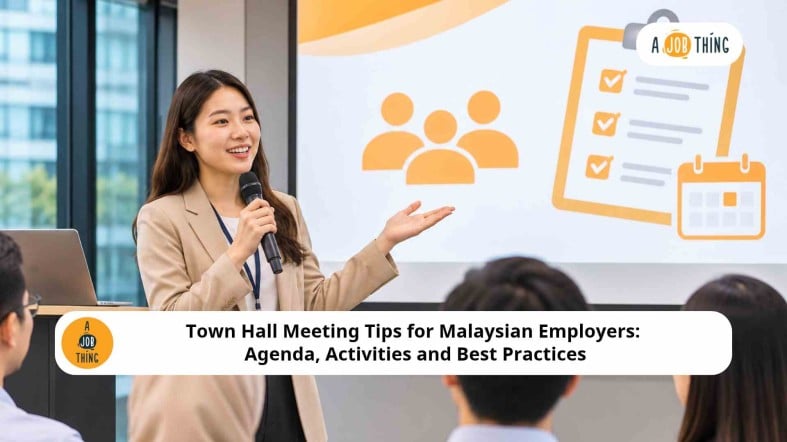
Town Hall Meeting Tips for Malaysian Employers: Agenda, Activities and Best Practices

Are You Hiring?
Find candidates in 72 Hours with 5+ million talents in Maukerja Malaysia & Ricebowl using Job Ads.
Hire Now
A town hall meeting gives employees and company leaders a chance to connect, share updates and discuss important matters together. For Malaysian employers, it is also a useful way to keep teams informed, build trust and make sure everyone understands the company's direction.
However, a town hall should be more than a presentation from management. A successful session encourages employees to participate, ask questions and share feedback. With the right planning, HR teams can make these meetings more meaningful and engaging.
| QUICK ANSWER |
| A town hall meeting is a company-wide gathering where leaders share business updates, discuss company goals, recognise employee achievements and answer questions. Malaysian employers can organise town halls monthly or quarterly, depending on their needs. An effective meeting should include a clear agenda, honest communication, employee participation and follow-up actions. |
What Is A Town Hall Meeting?
A town hall meeting is a company-wide gathering where employees meet with senior management or company leaders to discuss important business updates, company performance, goals and workplace matters.
Unlike a regular team meeting, a town hall usually involves employees from different departments and levels of the organisation. It gives everyone an opportunity to hear the same information directly from leadership and understand how their work contributes to the company's overall direction.
Town hall meetings can take place in person, online or through a hybrid format. Depending on the organisation, they may be led by the CEO, business owner, HR manager or another senior leader.
For example, a Malaysian company may use a quarterly town hall to share its business performance, introduce new company initiatives, announce upcoming changes and recognise employees who have contributed to the organisation.
What Is The Purpose Of A Town Hall Meeting?
The main purpose of a town hall meeting is to improve communication between company leaders and employees. It creates a shared space where management can provide updates while employees can ask questions and understand what is happening across the organisation.
Here are six key benefits of holding regular town hall meetings.
Improve Internal Communication
Town hall meetings help ensure employees receive important company updates from a central source. Instead of relying on messages passed between departments, everyone can hear the same information directly from management.
This is especially useful for companies with multiple branches, departments or remote teams. It reduces confusion and helps employees understand important announcements.
Build Trust Through Transparency
Employees are more likely to trust company leadership when communication is open and consistent. Town halls give leaders an opportunity to explain business decisions, share challenges and clarify what the company is working towards.
Employers do not need to share every confidential business detail. However, explaining the reasons behind important decisions can help employees feel more informed and respected.
Align Employees With Company Goals
Employees may understand their daily responsibilities without knowing how their work supports the company's wider objectives.
A town hall gives management an opportunity to explain business priorities, upcoming projects and performance targets. This helps employees see how different teams contribute to the same goals.
Improve Employee Engagement And Morale
Employees want to feel that their contributions matter. A town hall creates opportunities for leaders to recognise good work, celebrate milestones and appreciate team achievements.
It can also help employees feel more connected to the organisation, especially when they have opportunities to participate rather than simply listen.
Encourage Two-Way Communication
A town hall should not be a one-way presentation. Employees should have opportunities to raise concerns, ask questions and suggest improvements.
When management listens and responds to feedback, employees can feel more comfortable sharing their views. This may also help HR identify workplace issues that need attention.
Strengthen Company Culture
Bringing employees together helps create a stronger sense of belonging. Town halls can celebrate company values, welcome new employees and highlight examples of teamwork across departments.
For Malaysian workplaces with employees from different backgrounds, languages and cultures, these shared sessions can also help build better connections between teams.
Town Hall Meeting Vs Other Types Of Meetings
Town hall meetings are sometimes confused with all-hands meetings, staff meetings or regular team meetings. Although these meetings may share similar purposes, their audience and focus can be different.
| Meeting Type | Main Purpose | Typical Audience |
| Town hall meeting | Share company updates, encourage questions and improve transparency. | Employees across the organisation. |
| All-hands meeting | Bring the entire workforce together to discuss company priorities and progress. | All employees. |
| Staff meeting | Discuss operational updates, work matters and team priorities. | A department or specific group of employees. |
| Team meeting | Coordinate tasks, solve problems and review project progress. | A particular team or project group. |
In practice, the terms "town hall" and "all-hands" are sometimes used interchangeably. The important difference is the meeting's purpose, audience and level of employee participation.
How Often Should Companies Hold Town Hall Meetings?
There is no fixed schedule that every company must follow. The right frequency depends on company size, business changes, communication needs and how often employees need updates from leadership.
Here are three common approaches Malaysian employers can consider.
Monthly Town Hall Meetings
Monthly town halls are suitable for fast-growing businesses, startups or organisations that experience frequent operational changes.
They give leaders a regular opportunity to update employees on business performance, new initiatives, hiring plans and upcoming activities.
Quarterly Town Hall Meetings
Quarterly town halls are a practical option for many SMEs and established companies. They provide enough time for teams to complete projects and review business progress before sharing updates.
Companies can use these sessions to discuss quarterly results, upcoming priorities, employee achievements and changes to business plans.
Ad Hoc Town Hall Meetings
Ad hoc town halls are organised when important developments require timely communication. Examples include:
- Major company restructuring or organisational changes.
- New leadership appointments.
- Business expansion or changes in company direction.
- Important policy or operational announcements.
- Unexpected business challenges that affect employees.
Employers should avoid holding town halls simply to fill a calendar. Every session should have a clear purpose and provide useful information to employees.
How To Plan A Successful Town Hall Meeting
A well-planned town hall helps keep the discussion organised and makes better use of employees' time. HR teams should work with management to prepare the agenda, speakers, communication channels and follow-up process.
Here are eight steps to help plan an effective town hall meeting.
Set Clear Meeting Objectives
Start by deciding what the company wants to achieve from the session. The objective will guide the agenda, speakers and information that should be shared.
For example, the objective could be to:
- Update employees on the company's quarterly performance.
- Explain new business priorities or upcoming projects.
- Address common employee concerns.
- Introduce a new company policy or initiative.
- Recognise employee and team achievements.
Try to focus on a few important objectives instead of covering too many topics in one meeting.
Choose The Right Date And Frequency
Select a date and time that allows as many employees as possible to attend. Consider different work schedules, operational requirements, shift arrangements and employees who work from other locations.
For companies with frontline or shift-based employees, HR may need to arrange multiple sessions or share a recording and written summary afterwards.
Prepare A Clear Agenda
A meeting agenda helps everyone understand what will be discussed and how much time is allocated to each topic.
Share the agenda before the meeting so employees can prepare questions and understand which updates are relevant to them.
A typical agenda may include:
- Welcome and opening remarks.
- Leadership and business updates.
- Department achievements and upcoming priorities.
- Employee recognition.
- Questions and answers.
- Closing remarks and next steps.
Invite The Right Speakers
Choose speakers who can explain the topics clearly and answer employees' questions. Depending on the agenda, this may include the CEO, business owner, HR manager, department heads or project leaders.
Give each speaker a clear topic and time limit. This prevents overlapping presentations and helps the meeting stay on schedule.
Collect Employee Questions In Advance
Some employees may feel uncomfortable asking questions in front of senior management. Providing an anonymous question form before the meeting can encourage more honest participation.
HR can group similar questions, identify common concerns and share them with the relevant leaders before the session.
Employees should also have the option to ask questions during the meeting through a microphone, chat or live Q&A tool.
Choose The Right Meeting Format
Town halls can be conducted in person, online or through a hybrid format. Choose the option that best supports employee attendance and participation.
- In-person: Suitable for teams working at the same location and sessions that involve group activities or celebrations.
- Online: Suitable for remote teams, employees across different branches or organisations with flexible work arrangements.
- Hybrid: Suitable for companies with both office-based and remote employees, provided everyone has an equal opportunity to participate.
Prepare Presentation Materials And Equipment
Prepare slides, presentation notes, microphones, projectors and meeting links before the session. Keep presentation slides simple and use charts or visuals when explaining business performance.
For online meetings, test the internet connection, audio, screen sharing and recording settings in advance.
Assign A Moderator And Meeting Support Team
A moderator helps manage the session, introduce speakers, monitor questions and keep the meeting on schedule.
HR can also assign someone to record important questions, decisions and follow-up actions. This makes it easier to prepare a meeting summary afterwards.
Sample Town Hall Meeting Agenda
A town hall meeting can last between 45 and 60 minutes, depending on the number of topics and employees involved. The following example is a 60-minute agenda that HR teams can adapt to their organisation.
| Agenda Item | Duration | Person In Charge |
| Welcome and opening remarks | 5 minutes | HR or moderator |
| Leadership and business updates | 15 minutes | CEO or management |
| Department updates and achievements | 10 minutes | Department heads |
| Employee recognition and announcements | 5 minutes | HR or team leaders |
| Employee Q&A and feedback | 20 minutes | Management and moderator |
| Closing remarks and next steps | 5 minutes | HR or moderator |
| Total | 60 minutes | - |
The agenda can be adjusted based on the company's needs. For example, a smaller business may need less time for department updates, while a larger organisation may need a longer Q&A session.
Example Town Hall Opening Script
HR or the moderator can use a simple opening script to welcome employees and explain the purpose of the meeting.
Good morning, everyone. Thank you for joining our town hall meeting. Today, we will share updates on our recent progress, discuss our priorities for the coming months and recognise the contributions made by our teams. We also want to hear your questions and feedback, so please feel free to participate throughout the session.
Example Town Hall Closing Script
End the session by summarising the key messages and explaining what will happen after the meeting.
Thank you for your time and participation today. We appreciate the questions and feedback shared during this session. HR will share a summary of the key updates and follow-up actions after the meeting. Let's continue working together towards our company goals.
Town Hall Meeting Activities And Ideas
Long presentations can make employees lose interest, especially when they have little opportunity to participate. Adding simple activities can make a town hall more interactive without taking too much time away from important updates.
Here are eight ideas HR teams can use.
Live Question And Answer Session
Set aside time for employees to ask management questions directly. Questions can be submitted through a microphone, meeting chat or an online Q&A platform.
This gives employees a chance to clarify company announcements and understand management's decisions.
Anonymous Employee Questions
Use an anonymous question form to collect questions before or during the meeting. This is useful for sensitive topics that employees may not feel comfortable raising publicly.
HR should review the submissions and group similar questions before sharing them with the relevant speakers.
Employee Recognition Segment
Use part of the meeting to recognise employees and teams who have made meaningful contributions.
Recognition can include project achievements, excellent customer service, teamwork, innovation or employees who have demonstrated company values.
Live Polls And Quick Surveys
Ask employees to participate in short polls during the meeting. For example, management can ask which company initiative employees are most interested in or which workplace improvement should receive more attention.
Live polls can make employees feel involved and provide quick feedback to the organisation.
Department Sharing
Invite different departments to share their recent achievements, challenges and upcoming plans. This helps employees understand what other teams are working on and encourages cross-department collaboration.
Keep each department's presentation short and focused on the most important updates.
New Employee Introductions
Welcome new employees and give them a chance to introduce themselves. This can help new team members feel included and make it easier for employees from different departments to connect.
Company Milestone Celebrations
Celebrate important company milestones such as business anniversaries, successful projects, new partnerships or the completion of major targets.
Employers can also recognise team achievements and share how employees contributed to these results.
Employee Feedback And Suggestion Session
Ask employees what is working well and what could be improved. Questions can cover workplace communication, internal processes, collaboration or employee experience.
HR should record the feedback and share which suggestions will be reviewed or acted on after the meeting.
Best Practices For An Effective Town Hall Meeting
Having an agenda is important, but the way a town hall is conducted also affects its success. HR and management should focus on making the session clear, inclusive and useful for everyone.
Keep Presentations Short And Clear
Avoid filling the meeting with long presentations and too much information. Focus on key updates, important decisions and messages employees need to understand.
Use simple language and clear visuals. In Malaysian workplaces, consider whether English, Bahasa Malaysia or a combination of languages will help employees understand the discussion.
Encourage Participation From Different Employees
Do not rely only on senior employees or department heads to speak. Give employees from different teams and levels opportunities to ask questions and share feedback.
Anonymous questions, live polls and small group discussions can help quieter employees participate.
Be Honest When Discussing Difficult Topics
Not every company update will be positive. Management may need to discuss missed targets, operational challenges, restructuring or changes that affect employees.
Explain what is known, what is still being reviewed and when employees can expect further updates. Avoid making promises that the company cannot guarantee.
Make Remote And Hybrid Employees Feel Included
For hybrid meetings, make sure remote employees can hear the speakers, view presentation materials and participate in Q&A sessions.
Assign someone to monitor the online chat and invite remote employees to contribute. Do not allow the in-person audience to dominate the discussion.
Handle Sensitive Questions Professionally
Some questions may involve confidential employee matters, personal complaints or sensitive business information. These should not be discussed in detail in front of the entire company.
Management can acknowledge the question and explain that HR or the relevant department will follow up through the appropriate channel.
Share Meeting Summaries And Action Items
Employees should know what happens after the town hall. Share a summary containing the key announcements, decisions, questions answered and follow-up actions.
Where possible, include the person responsible and expected timeline for each action. This helps employees see that their feedback is being taken seriously.
Review Employee Feedback Before The Next Session
Use feedback from each town hall to improve future meetings. If employees say the sessions are too long or certain topics are unclear, adjust the format and agenda accordingly.
Consistent improvements can make town halls more useful over time.
How To Measure Town Hall Meeting Effectiveness
HR teams should review whether town hall meetings are achieving their objectives. Attendance alone does not show whether employees understood the updates or felt comfortable participating.
Consider tracking these key indicators:
| Metric | What It Measures |
| Attendance rate | The percentage of invited employees who attended the meeting. |
| Employee participation | The number of employees who asked questions, joined polls or shared feedback. |
| Employee satisfaction | How employees rated the meeting's usefulness, clarity and overall experience. |
| Questions answered | The number or percentage of submitted employee questions addressed during or after the meeting. |
| Action completion rate | The percentage of agreed follow-up actions completed within the expected timeline. |
| Employee engagement trends | Changes in employee feedback and engagement results over time. |
HR can compare these indicators across different town halls to identify improvements. For example, if attendance is high but employee participation is low, the company may need to introduce more interactive activities or improve its Q&A format.
For a broader view of employee performance and engagement, HR teams can also review their HR KPIs and measurement practices.
Town Hall Meeting Templates And Resources
HR teams can save time by preparing reusable documents for each town hall. The following examples can be adapted based on the company's size, meeting format and communication style.
Town Hall Meeting Preparation Checklist

Download our free Town Hall Meeting Preparation checklist to stay organised, keep discussions on track and make sure important follow-up actions are not missed.
Town Hall Meeting Invitation Email Template
HR can use the following email to invite employees to an upcoming town hall meeting.
Subject: Invitation: Company Town Hall Meeting
Hi everyone,
We would like to invite you to our upcoming company town hall meeting. This session will provide an opportunity to share important business updates, discuss our upcoming priorities and recognise recent team achievements.
Meeting details:
- Date: [Insert date]
- Time: [Insert time]
- Venue / Meeting link: [Insert location or link]
- Duration: [Insert duration]
We will also have a Q&A session where employees can raise questions and share feedback. If you would like to submit a question in advance, please use [Insert form link].
We look forward to seeing everyone there.
Thank you,
[HR Team / Management]
Employee Feedback Questions After A Town Hall
After the session, HR can send a short survey to understand whether the meeting was useful and what should be improved.
Suggested questions include:
- Was the purpose of the town hall meeting clear?
- Were the company updates easy to understand?
- Did the meeting provide enough time for employee questions?
- Did you feel comfortable sharing your feedback?
- Which part of the meeting was most useful to you?
- What topics would you like management to discuss in the next town hall?
- What suggestions do you have to improve future town hall meetings?
Use a combination of rating questions and open-ended questions to collect both measurable feedback and detailed suggestions.
Post-Meeting Follow-Up Checklist
Once the town hall ends, HR should make sure important discussions are not forgotten.
- Prepare and distribute the meeting summary.
- Share important announcements and presentation materials where appropriate.
- List questions that need further clarification.
- Assign an owner and deadline for each action item.
- Follow up with management on outstanding employee concerns.
- Review survey responses and identify improvements for the next session.
FAQs
What is the main purpose of a town hall meeting?
The main purpose of a town hall meeting is to improve communication between company leaders and employees. It allows management to share business updates, explain company goals, address concerns and encourage employees to ask questions or provide feedback.
How long should a town hall meeting last?
A typical town hall meeting lasts between 45 and 60 minutes. However, the duration depends on the number of topics, speakers and questions. HR should keep the agenda focused and avoid making the session longer than necessary.
Who should lead a town hall meeting?
A town hall meeting is usually led by the CEO, business owner or senior management. HR can organise the session, prepare the agenda, moderate the discussion and manage employee questions.
What should be included in a town hall meeting?
A town hall meeting should include a welcome, leadership updates, business performance, department highlights, employee recognition, a question-and-answer session and closing remarks. The agenda should reflect the company's current priorities.
How can HR make a town hall meeting more engaging?
HR can make town halls more engaging by including live polls, anonymous questions, employee recognition, department sharing and interactive Q&A sessions. Giving employees opportunities to participate can make the meeting more meaningful.
What is the difference between a town hall meeting and an all-hands meeting?
Both terms often refer to company-wide meetings involving employees and leadership. A town hall usually places more emphasis on open communication and employee questions, while an all-hands meeting may focus more on sharing company-wide updates and priorities. In many organisations, the terms are used interchangeably.
Should town hall meetings be held online or in person?
Both formats can work. In-person meetings can encourage face-to-face interaction, while online meetings are convenient for employees working remotely or across different locations. A hybrid format can support both groups if everyone has an equal opportunity to participate.
How can employers measure the success of a town hall meeting?
Employers can review attendance, employee participation, satisfaction scores, questions answered and completion of follow-up actions. Collecting feedback after each session can also help HR improve future meetings.
Chat with Candidates and Hire 2x Faster
Find the right talent faster with AJobThing. Chat with candidates directly and manage your hiring process in one app.
Download the AJobThing Hire & Chat app on the App Store or Google Play to connect with candidates and manage hiring on the go.