
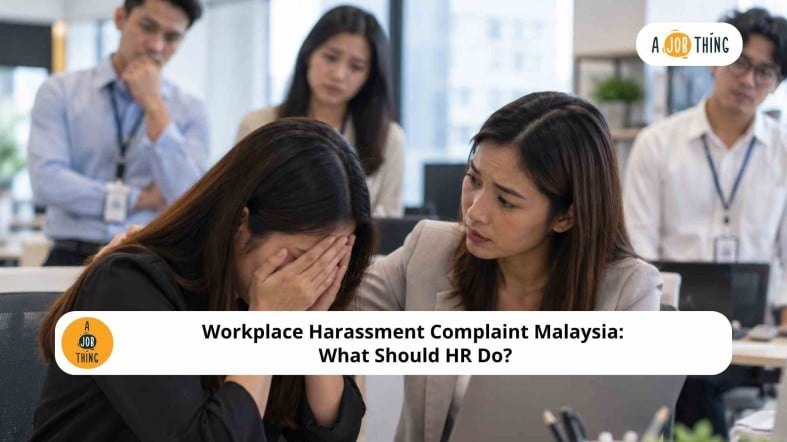
Workplace Harassment Complaint Malaysia: What Should HR Do?

Are You Hiring?
Find candidates in 72 Hours with 5+ million talents in Maukerja Malaysia & Ricebowl using Job Ads.
Hire Now
A workplace harassment complaint can be difficult for HR to handle, especially when the complaint involves a manager, coworker or someone in a position of authority.
When an employee raises a complaint, HR should not immediately decide who is right or wrong. Instead, HR should listen, record the details, review the facts and handle the matter through a fair and consistent process.
This guide explains what HR and employers should do after receiving a workplace harassment complaint, from the first report to investigation, action and follow-up.
What Is a Workplace Harassment Complaint?
A workplace harassment complaint is a report made by an employee about behaviour they believe is inappropriate, offensive, threatening, humiliating or harmful at work.
Depending on the situation, a complaint may involve:
-
Verbal abuse or insults
-
Threats or intimidation
-
Sexual harassment
-
Offensive comments or jokes
-
Unwanted physical contact
-
Repeated inappropriate messages
-
Inappropriate behaviour through WhatsApp, email or other work platforms
Not every disagreement between employees is harassment.
HR should look at the actual behaviour, surrounding circumstances, available evidence and company policies before deciding how to handle the complaint.
What Should HR Do After Receiving a Harassment Complaint?
HR should have a simple process to make sure complaints are handled consistently.
Acknowledge the Complaint
Start by acknowledging the employee's concern.
Thank the employee for raising the issue and let them know that HR will review the matter.
Avoid making an immediate judgment about what happened.
For example, instead of saying:
I'm sure it was only a joke.
HR can say:
Thank you for bringing this matter to our attention. We will review the information and discuss the next steps with you.
Record the Complaint
Document the basic facts provided by the employee.
HR can record:
-
What happened
-
When it happened
-
Where it happened
-
Who was involved
-
Any witnesses
-
Supporting evidence
-
Whether it happened once or repeatedly
-
Any immediate safety concern
Keep the record factual and professional.
Avoid personal comments such as:
The employee is overreacting.
Instead, record what the employee actually reported.
Assess Any Immediate Risk
HR should consider whether immediate action is needed.
For example, the company may temporarily change:
-
Reporting arrangements
-
Work schedules
-
Meeting arrangements
-
Work locations
-
Contact between the people involved
These should be treated as temporary measures while the matter is reviewed.
They should not automatically be treated as disciplinary action or proof that the complaint is true.
How Should HR Investigate a Workplace Harassment Complaint?
The investigation should be organised, fair and based on the available information.
Speak to the Employee Who Made the Complaint
Give the employee an opportunity to explain what happened.
HR can ask:
-
What happened?
-
When did it happen?
-
Where did it happen?
-
Who was involved?
-
Was anyone else present?
-
Is there any evidence?
-
Has this happened before?
HR should allow the employee to explain the situation without deciding the outcome during the first discussion.
Speak to the Person Complained About
The person accused should also have an appropriate opportunity to explain their side.
Ask them to describe what happened and provide any relevant evidence or information.
HR should not make a final decision based on only one person's account.
Speak to Relevant Witnesses
If other employees witnessed the incident or have relevant information, HR may need to speak with them.
The purpose is to establish the facts, not to ask employees to choose sides.
Review the Evidence
Relevant information may include:
-
Emails
-
WhatsApp messages
-
Screenshots
-
Work chat messages
-
CCTV footage
-
Documents
-
Meeting records
-
Witness accounts
Not every complaint will have written or digital evidence. HR should consider all relevant information that is reasonably available.
How Should HR Handle a Sexual Harassment Complaint?
Sexual harassment requires additional attention because the Employment Act 1955 contains specific provisions on sexual-harassment complaints.
Under Section 81B, when an employer receives a complaint of sexual harassment, the employer is required to inquire into the complaint in the manner prescribed by the Minister, subject to the Act. The law also sets out specific circumstances relating to a refusal to inquire.
For HR, the practical point is simple:
Do not ignore a sexual-harassment complaint.
The employer should follow the applicable process, document the complaint and inquiry, and handle the matter appropriately.
Should HR Keep the Complaint Confidential?
HR should handle the complaint on a need-to-know basis.
Information about the complaint should not be shared casually with other employees.
However, HR should avoid promising absolute confidentiality because information may need to be shared with people involved in the investigation or where disclosure is required.
A simple explanation is:
We will handle your information sensitively and only share it with people who need to review the matter.
Should HR Separate the Employees During an Investigation?
Sometimes temporary separation may be appropriate.
For example, HR may temporarily change reporting arrangements or work schedules if continued contact could create problems while the complaint is being investigated.
However, HR should be careful not to unnecessarily disadvantage the employee who made the complaint.
The purpose of the temporary arrangement should be to manage the situation while the facts are being reviewed.
What If the Complaint Involves a Manager?
A complaint involving a manager can be more sensitive because the manager may have authority over the employee.
HR should still follow the same basic process:
-
Record the complaint
-
Review relevant evidence
-
Speak to the employee
-
Give the manager an opportunity to respond
-
Speak to relevant witnesses
-
Document the findings
If the manager would normally handle the matter, the company may assign another appropriate person to manage the investigation to reduce potential conflict of interest.
What If There Is Not Enough Evidence?
Not every complaint will result in a finding that harassment occurred.
If there is not enough evidence to establish the allegation, HR should document the investigation and outcome.
Importantly:
Not substantiated does not automatically mean the complaint was false.
For example:
Not substantiated: There is not enough evidence to establish the allegation.
This is different from deliberately making a false complaint.
What If the Complaint Is Proven?
If the complaint is substantiated, HR should take appropriate action based on the company's policies, employment terms and applicable law.
Depending on the situation, the employer may consider:
-
A warning
-
Changes to work arrangements
-
Training or corrective action
-
Other action allowed under company policy
For sexual-harassment complaints covered by the Employment Act 1955, the Act contains specific provisions relating to findings of an employer's inquiry and disciplinary action.
What Should HR Say to an Employee Who Makes a Complaint?
HR's first response should be professional, neutral and clear.
Example HR Response
Hi [Employee Name],
Thank you for bringing this matter to our attention. We take workplace concerns seriously and will review the information you have provided.
We may need to speak with you and other relevant parties as part of the review. Please keep any messages, documents or other information related to the matter.
HR will contact you regarding the next steps.
Regards,
[HR Name]
This acknowledges the complaint without promising a particular outcome.
Can Workplace Harassment Happen Online?
Yes.
Workplace interactions can take place through digital channels, so inappropriate behaviour may also happen online.
Examples include:
-
Repeated inappropriate WhatsApp messages
-
Offensive comments in a work group chat
-
Threatening emails
-
Unwanted sexual messages
-
Humiliating comments during an online meeting
-
Sharing inappropriate content with coworkers
HR should preserve relevant digital evidence and review it where appropriate.
How Should HR Record the Investigation?
Good documentation should show what HR did without adding unnecessary personal opinions.
HR can record:
-
Date the complaint was received
-
Nature of the complaint
-
People involved
-
Evidence reviewed
-
People interviewed
-
Findings
-
Action taken
-
Follow-up steps
For example:
15 September 2026: Complaint received regarding inappropriate comments during a team meeting.
This is more useful than:
15 September 2026: Employee caused a big problem again.
Objective records are easier for HR to review later.
What Should Employers Do After Closing the Complaint?
HR should consider whether any follow-up action is needed.
This could include:
-
Checking in with the affected employee
-
Monitoring the workplace situation
-
Providing additional training
-
Reviewing workplace policies
-
Improving reporting channels
-
Addressing wider team concerns
Closing a complaint should not always mean the employer stops paying attention to the workplace environment.
How Can Employers Prevent Workplace Harassment?
HR should not wait until a serious complaint happens before addressing workplace behaviour.
Create a Clear Workplace Policy
Employees should know what behaviour is unacceptable and how they can report concerns.
Provide a Clear Reporting Channel
Tell employees who they can approach, such as HR or another designated person.
Train Managers
Managers should know how to respond when an employee raises a workplace concern.
Set Clear Workplace Expectations
Regular communication can help employees understand expected workplace behaviour.
Encourage Early Reporting
A clear reporting process can make it easier for employees to raise concerns before problems become more serious.
DOSH's Guidelines on Psychosocial Risk Assessment and Management at the Workplace 2024 also provide guidance for employers on assessing and managing psychosocial risks at work, including identifying risks and taking measures to control them.
Malaysia Legal Note for Employers
For most HR situations, the practical focus should be on having a clear internal complaint and investigation process.
However, employers should be aware that sexual harassment has specific requirements under the Employment Act 1955. Employers should follow the applicable procedure when a sexual-harassment complaint is received.
Malaysia also has the Tribunal for Anti-Sexual Harassment (TAGS) under the Anti-Sexual Harassment Act 2022. TAGS provides a separate avenue for sexual-harassment complaints occurring in Malaysia on or after 8 March 2024.
For HR, this means an internal complaint should still be taken seriously and handled properly even where the employee may also have access to an external avenue.
When Should HR Get Professional Advice?
HR should consider getting professional advice when a complaint involves:
-
Serious allegations
-
Possible criminal conduct
-
A senior manager or company director
-
A major dispute about the facts
-
Possible disciplinary or termination action
-
Significant changes to the employee's employment
-
A complex sexual-harassment complaint
Getting advice early can help the employer choose an appropriate process.
FAQs
What should HR do after receiving a harassment complaint?
HR should acknowledge the complaint, record the facts, assess any immediate risk and investigate fairly.
Should HR investigate every complaint?
HR should take every complaint seriously and determine the appropriate process based on its nature.
Can HR keep a harassment complaint confidential?
Information should be kept on a need-to-know basis, but absolute confidentiality should not be promised.
What if there is not enough evidence?
HR should document the investigation and record that the complaint could not be substantiated based on the available evidence.
Can workplace harassment happen online?
Yes. Harassment can also happen through WhatsApp, email, work chats and online meetings.
Need to Hire?
%20copy.jpg)
A healthy workplace starts with the right people and a clear hiring process.
AJobThing helps Malaysian employers post jobs and reach candidates for their hiring needs.
Post a Job with AJobThing and keep your hiring process moving.
Read More:
-
Employee Transfer Letter Malaysia: Sample for Department, Role & Branch Transfer
-
15 Things Employers Should Avoid Saying During a Job Interview
-
Public Holidays in Malaysia 2027: Full List by Date and State for Workplace Planning
-
Interview Debrief: How HR Should Review Candidates After an Interview
-
15 Interview Questions Employers Should Avoid Asking Candidates
-
What to Do When a Candidate Reschedules an Interview Multiple Times
-
Probation Performance Review in Malaysia: How HR Can Evaluate Employees
-
Final Interview Tips for HR: How to Assess Candidates Effectively
-
Candidate Withdrawal During the Hiring Process: How HR Can Reduce Drop-Off
-
How to Keep Candidates Interested During a Long Hiring Process
-
Candidates Stop Responding After an Interview? What HR Should Do
-
Job Requisition: What It Is, What to Include & How HR Can Create One
-
Interview-to-Hire Ratio: How to Calculate, Benchmark & Improve It
-
Candidate Experience Survey: Questions, Examples & How to Improve Recruitment
-
Staff Immediate Resignation in Malaysia: Employer Rights & Responsibilities
-
Internship vs Apprenticeship in Malaysia: Key Differences for Employers & HR
-
How to Manage Underperforming Employees in Malaysia: Tips for Employers & HR
-
Warning Letter for Poor Performance in Malaysia: How to Write One (With Sample)
-
Can Employers Reject Annual Leave in Malaysia? Rights, Rules & Employee Entitlements
-
Payroll and Attendance Management in Malaysia: Process, Formula & Best Practices for Employers
-
Workplace Conflict Management in Malaysia: Causes, Solutions, and Best Practices
-
Recruitment Process Outsourcing (RPO): What It Is, Benefits & How It Works in Malaysia
-
Leave Encashment Malaysia: How to Calculate Unused Annual Leave
-
Performance Bonus in Malaysia: How It Works, Calculation & Employer Guide
-
Cost Per Hire Malaysia: Formula, Examples & How Employers Can Reduce Hiring Costs
-
Letter of Extension of Contract Malaysia: Free Template, Format & Sample
-
Promotion Letter in Malaysia: How to Write One (+ Free Template & Sample)
-
Probation Extension Letter Malaysia: Template, Sample, and What Employers Need to Know
-
Talent Pool: Benefits, Examples & How to Build One for Better Hiring
-
Overtime Rates in Malaysia: When Do 1.5x, 2x and 3x Pay Apply?
-
Prorated Salary in Malaysia: How to Calculate an Employee's First Salary
-
Remote Jobs in Malaysia: Most In-Demand Roles, Salaries & Hiring Guide (2026)
-
Effective Ways to Reduce Absenteeism in the Workplace for HR & Employers
-
Medical Benefits for Employees in Malaysia: Types, Legal Requirements & Best Practices
-
e-Invoicing Malaysia Explained: What Every Employer and Business Needs to Know
-
EOR vs PEO: What's the Difference and Which Is Right for Your Business?
-
Remote Job Offer Letter: What Employers Should Include (+ Example)
-
Job Offer Letter vs. Employment Contract: What's the Difference? (+ Free Templates)
-
Constructive Dismissal Malaysia: Meaning, Examples & What To Do
-
Contract of Service vs Contract for Service Malaysia: How to Classify Workers Correctly
-
Employee Retention in Malaysia: Meaning, Importance & How to Improve It
-
Employee Turnover in Malaysia: Causes, Warning Signs & How to Reduce It
-
Retrenchment in Malaysia: Meaning, Process & Employee Rights
-
7 Key Contract Employee Rights in Malaysia Every HR Should Know
-
GLC vs Private Company Malaysia: Salary, Culture & Hiring Differences
-
Types of Payroll Calculation in Malaysia: Adhoc, Prorated Salary & Final Settlement Explained
-
Types of Payroll Cycle in Malaysia: Which One Is Best for Your Business?
-
Types of Insurance in Malaysia and Their Impact on Employee Benefits
-
How to Create a Strong Candidate Shortlist for Better Hiring Decisions
-
How Notice Period Really Works in Malaysia for Employers and HR
-
Performance Evaluation: Description, Types, and How to Conduct