


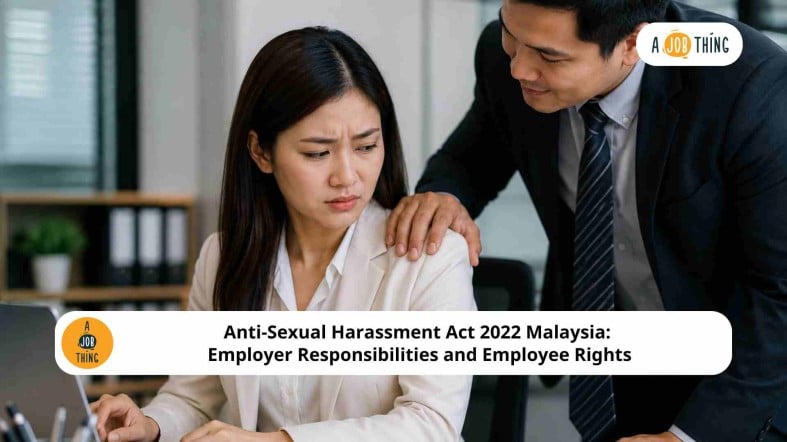
Anti-Sexual Harassment Act 2022 Malaysia: Employer Responsibilities and Employee Rights

Sexual harassment is no longer just an employee relations issue. It is now a significant legal, compliance, and workplace culture concern for employers across Malaysia.
Since the Anti-Sexual Harassment Act 2022 (Act 840) came into force, individuals have gained access to a dedicated Tribunal for sexual harassment claims. Together with employer obligations under the Employment Act 1955, organisations are expected to take complaints seriously, investigate them promptly, and maintain a safe working environment.
Failure to do so can expose businesses to legal disputes, financial costs, reputational damage, and employee turnover.
This guide explains the Anti-Sexual Harassment Act, employer responsibilities, employee rights, and the practical steps HR teams should take to remain compliant in 2026.
What Is the Anti-Sexual Harassment Act 2022?
The Anti-Sexual Harassment Act 2022 (Act 840) is Malaysia's first standalone law specifically addressing sexual harassment.
The Act established the Anti-Sexual Harassment Tribunal, providing individuals with a more accessible avenue to seek remedies for sexual harassment without necessarily going through lengthy court proceedings.
The law applies broadly and is not limited to workplace relationships. However, employers should pay particular attention to the workplace implications, as organisations have legal responsibilities when harassment complaints arise.
What Counts as Sexual Harassment?
Sexual harassment refers to any unwanted conduct of a sexual nature that may be offensive, humiliating, intimidating, or threatening to another person.
Sexual harassment can occur between:
-
Managers and employees
-
Colleagues
-
Clients and employees
-
Vendors and employees
-
Job applicants and interviewers
Verbal Sexual Harassment
Examples include:
-
Sexual jokes or remarks
-
Inappropriate comments about a person's appearance
-
Repeated requests for dates after rejection
-
Suggestive comments or questions
Non-Verbal Sexual Harassment
Examples include:
-
Sending inappropriate messages
-
Sharing sexual images or videos
-
Displaying offensive materials
-
Making sexually suggestive gestures
Physical Sexual Harassment
Examples include:
-
Unwanted touching
-
Physical advances
-
Inappropriate physical contact
-
Blocking someone's movement
Online Sexual Harassment
Examples include:
-
Inappropriate WhatsApp messages
-
Harassing emails
-
Unwanted social media messages
-
Sexual comments through workplace communication platforms
A single serious incident may be sufficient to constitute sexual harassment.
Who Can File a Sexual Harassment Claim?
Under the Anti-Sexual Harassment Act 2022, any person who experiences sexual harassment may file a claim with the Tribunal.
Key points include:
-
Claims can be filed directly with the Tribunal
-
Internal workplace procedures do not necessarily have to be exhausted first
-
Claims generally must be filed within two years from the last incident of harassment
-
Both employees and non-employees may bring claims depending on the circumstances
This provides victims with an additional avenue to seek redress beyond workplace grievance procedures.
Understanding the Anti-Sexual Harassment Tribunal
The Anti-Sexual Harassment Tribunal was established to hear and determine sexual harassment claims.
The Tribunal provides a more accessible dispute resolution mechanism compared to traditional court proceedings.
The process may include:
-
Filing of a claim
-
Notification to the respondent
-
Mediation opportunities where appropriate
-
Tribunal hearing
-
Issuance of a decision and remedies
The Tribunal may order various remedies depending on the circumstances of the case.
Employer Responsibilities Under Malaysian Law
Employers have a legal responsibility to provide a workplace that is safe, respectful, and free from harassment.
Several provisions under the Employment Act 1955 impose obligations on employers when handling sexual harassment complaints.
Investigate Complaints Promptly
When an employee reports sexual harassment, employers should conduct a fair and timely inquiry into the complaint.
Ignoring complaints or delaying investigations can create legal and organisational risks.
Protect Employees From Retaliation
Employees who raise complaints should not face discrimination, victimisation, intimidation, or adverse treatment because they reported misconduct.
Maintain Confidentiality
Information relating to complaints should be restricted to individuals directly involved in handling the matter.
Confidentiality helps protect all parties involved and supports a fair investigation process.
Take Appropriate Action
Where misconduct is substantiated, employers should implement disciplinary measures that are proportionate to the seriousness of the offence.
Promote Awareness
Employers should educate employees on acceptable workplace behaviour and reporting procedures through regular training and communication.
Can Employers Be Held Liable?
Employers may face legal exposure if they fail to take reasonable steps to prevent or address workplace harassment.
Potential risks include:
-
Employment disputes
-
Tribunal proceedings
-
Reputational damage
-
Reduced workplace morale
Employers that maintain clear policies, conduct proper investigations, and provide regular training are generally in a stronger position to demonstrate compliance and due diligence.
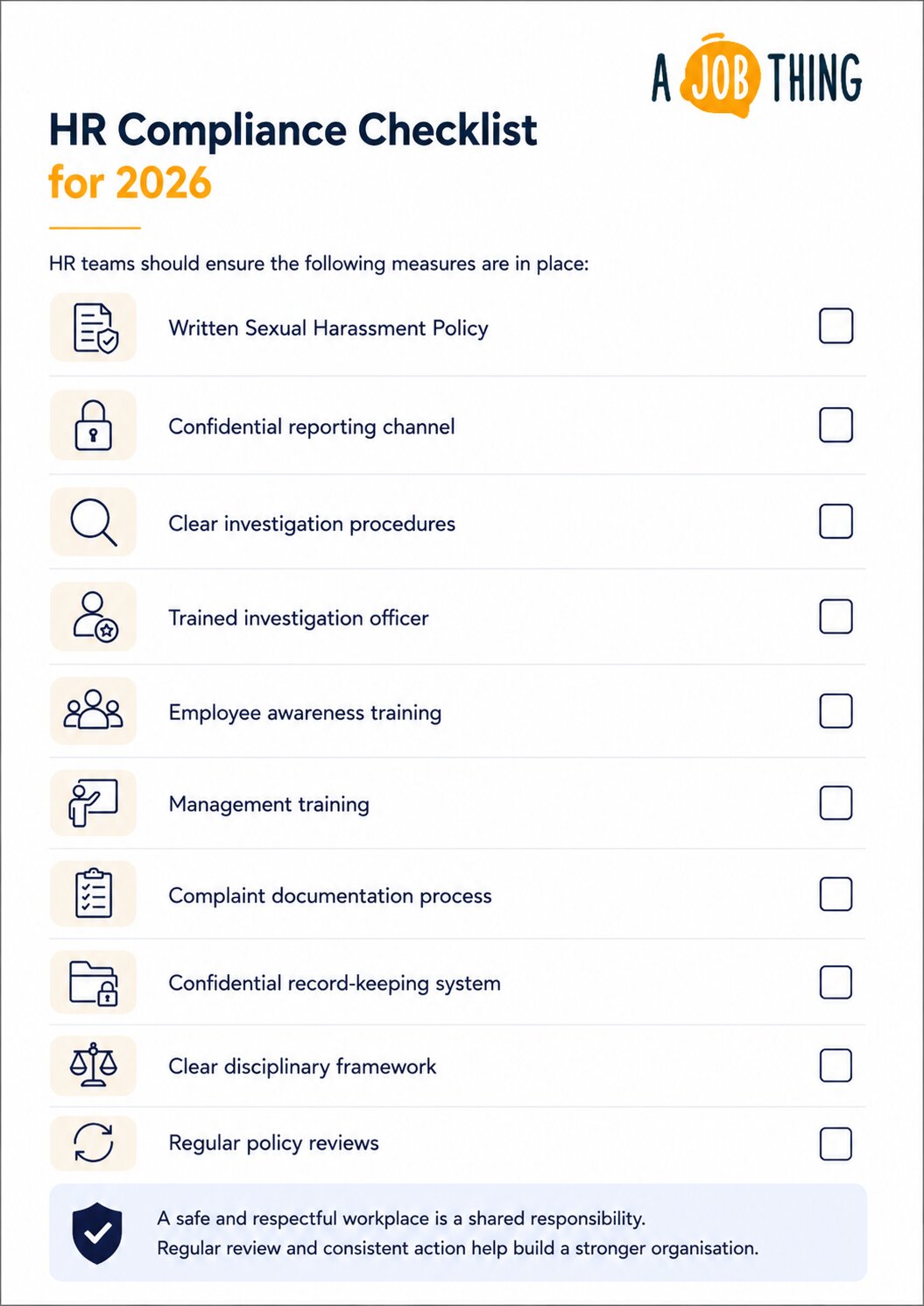
HR Compliance Checklist
HR teams should ensure the following measures are in place:
Conducting an annual review can help organisations identify gaps before complaints arise.
How HR Should Respond to a Complaint
Consider the following scenario.
An employee reports receiving inappropriate WhatsApp messages from a supervisor after working hours.
A proper HR response would include:
Step 1: Acknowledge the Complaint
Respond promptly and assure the employee that the matter will be handled professionally.
Step 2: Preserve Evidence
Collect relevant messages, emails, screenshots, and supporting documentation.
Step 3: Conduct an Investigation
Interview the complainant, respondent, and any witnesses.
Step 4: Maintain Confidentiality
Limit information sharing to those directly involved in the investigation.
Step 5: Document Findings
Record the investigation process, evidence reviewed, and conclusions reached.
Step 6: Take Appropriate Action
If misconduct is established, implement appropriate disciplinary measures according to company policy.
A failure to investigate may increase legal and organisational risks.
Best Practices for Employers
Employers should move beyond minimum compliance requirements and focus on prevention.
Recommended practices include:
Establish a Standalone Policy
A dedicated Sexual Harassment Policy demonstrates organisational commitment and provides employees with clear guidance.
Provide Multiple Reporting Channels
Employees may feel more comfortable reporting concerns through different channels, such as HR, management, or anonymous reporting systems.
Train Managers
Managers are often the first point of contact when issues arise and should understand how to respond appropriately.
Conduct Annual Training
Regular training reinforces expectations and helps employees recognise inappropriate behaviour.
Review Workplace Culture
Employers should periodically assess whether employees feel comfortable reporting concerns without fear of retaliation.
What Employees Should Do if They Experience Sexual Harassment
Employees who experience sexual harassment should consider:
Keeping Records
Document dates, times, locations, witnesses, and details of incidents.
Reporting Internally
Notify HR, a manager, or the designated reporting officer according to company policy.
Seeking Support
Employees may seek support from trusted colleagues, employee assistance programmes, or legal advisers.
Understanding Available Options
Depending on the circumstances, individuals may have access to internal grievance procedures, Tribunal claims, or other legal avenues.
Why Prevention Matters
Beyond legal compliance, preventing sexual harassment creates a healthier and more productive workplace.
Organisations that foster respectful workplace cultures often experience:
-
Higher employee engagement
-
Better retention rates
-
Improved productivity
-
Reduced legal and reputational risks
Creating a safe workplace benefits both employees and employers.
FAQs
What is the Anti-Sexual Harassment Act 2022?
The Anti-Sexual Harassment Act 2022 (Act 840) is Malaysia's standalone legislation addressing sexual harassment and establishing the Anti-Sexual Harassment Tribunal.
Who can file a claim with the Tribunal?
Any person who experiences sexual harassment may be eligible to file a claim, subject to the provisions of the Act.
What should employers do when a complaint is received?
Employers should investigate the complaint promptly, maintain confidentiality, document findings, and take appropriate action where necessary.
Is workplace training mandatory?
While specific requirements may vary, regular training is considered a best practice and demonstrates an employer's commitment to prevention.
What are examples of sexual harassment?
Examples include unwanted touching, inappropriate messages, sexual jokes, offensive comments, and sharing explicit content without consent.
Build a Better Workplace With the Right People
%20copy.jpg)
Creating a safe and respectful workplace starts with hiring the right talent and establishing clear workplace policies.
AJobThing helps employers across Malaysia attract qualified candidates, streamline recruitment, and build stronger teams.
Post a job today and reach qualified candidates faster through Malaysia's leading recruitment platforms.
Read More:
-
How to Reset Your i-Akaun (Member) Password Via The KWSP i-Akaun App
-
Gig Workers Act 2025 Malaysia: What Employers Need to Know in 2026
-
EOR vs PEO: What's the Difference and Which Is Right for Your Business?
-
Remote Job Offer Letter: What Employers Should Include (+ Example)
-
Job Offer Letter vs. Employment Contract: What's the Difference? (+ Free Templates)
-
Constructive Dismissal Malaysia: Meaning, Examples & What To Do
-
Contract of Service vs Contract for Service Malaysia: How to Classify Workers Correctly
-
Job Offer Letter Templates: Examples, Formats & Best Practices for HR
-
Employee Retention in Malaysia: Meaning, Importance & How to Improve It
-
Employee Turnover in Malaysia: Causes, Warning Signs & How to Reduce It
-
Retrenchment in Malaysia: Meaning, Process & Employee Rights
-
Gmail Templates for HR: Faster Replies for Interviews, Offers & Rejections
-
7 Key Contract Employee Rights in Malaysia Every HR Should Know
-
GLC vs Private Company Malaysia: Salary, Culture & Hiring Differences
-
Types of Payroll Calculation in Malaysia: Adhoc, Prorated Salary & Final Settlement Explained
-
Types of Payroll Cycle in Malaysia: Which One Is Best for Your Business?
-
Types of Insurance in Malaysia and Their Impact on Employee Benefits
-
How to Create a Strong Candidate Shortlist for Better Hiring Decisions
-
How HR in Malaysia Can Offer a Job Over the Phone (with Script)
-
How Notice Period Really Works in Malaysia for Employers and HR
-
How to Create a Job Posting That Attracts the Right Candidates
-
How HR in Malaysia Can Improve Resume Screening and Candidate Shortlisting
-
How HR Can Reject a Candidate the Right Way (with Templates)
-
How to Conduct a Background Check for Employment in Malaysia
-
Onboarding Process Tips: What HR Needs to Know for Better Retention
-
Onboarding Checklist for New Hires (Free Downloadable Template)
-
Performance Evaluation: Description, Types, and How to Conduct
-
Cover Letter Examples Employers Should Know (With Tips to Spot the Best Ones)
-
Step-by-Step Guide to Writing a Great Job Description (Free Templates)