
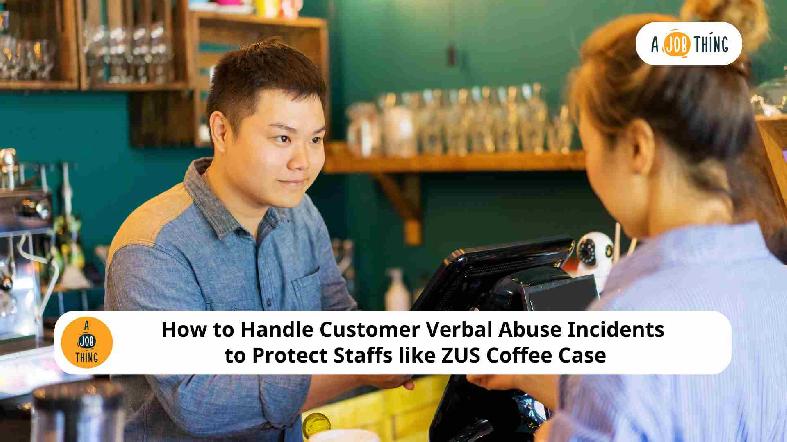
How to Handle Customer Verbal Abuse Incidents to Protect Staff like ZUS Coffee Case

Are You Hiring?
Find candidates in 72 Hours with 5+ million talents in Maukerja Malaysia & Ricebowl using Job Ads.
Hire Now
The viral ZUS Coffee incident, where a customer verbally abused and splashed coffee on a barista, reminded Malaysians that front-line staff often face difficult and even abusive customers.
ZUS Coffee’s quick response, giving paid leave to the affected staff, launching an investigation, and filing a police report, showed how employers can protect their employees while maintaining professionalism.
In this article, we’ll explore what Malaysian employers and HR teams can learn from this case, including legal rights, HR responsibilities, and best practices for handling customer verbal abuse at work.
Respond Immediately and Support the Employee
The first step is to act quickly. When an employee is verbally abused or assaulted, HR must step in to ensure their safety and well-being.
What HR should do:
-
Make sure the employee is safe from the situation.
-
Offer paid leave for recovery (especially if the employee is traumatised).
-
Check for injuries or emotional distress.
-
Provide counselling or Employee Assistance Programme (EAP) support.
ZUS Coffee gave their barista on paid leave, showing immediate care for staff well-being.
Conduct an Internal Investigation
Document every detail as part of a transparent internal investigation. This ensures fairness and legal protection for both employee and employer.
Steps to follow:
-
Collect witness statements and CCTV evidence.
-
Record the date, time, and customer details.
-
Review if staff followed SOPs during the incident.
-
Escalate serious cases (e.g. physical assault) to authorities.
ZUS Coffee confirmed that they “launched a thorough investigation” — a step every company should take in similar incidents.
Check the Laws That Protect Employees in Malaysia
Malaysian law recognises the employer’s duty to provide a safe working environment, both physically and psychologically.
HR and employers should check on:
Employment Act 1955 (Section 60A & 60F)
Employers must ensure safe and fair working conditions. If a customer threatens, harasses, or harms a staff member, failing to act could be seen as negligence of duty of care.
Every employee has the right to work in a safe environment free from harassment, discrimination, or violence, including from customers.
Occupational Safety and Health Act 1994 (OSHA 1994)
This law clearly states that:
“Every employer shall ensure, so far as is practicable, the safety, health and welfare at work of all his employees.” (Section 15)
This includes psychological safety, protecting workers from verbal abuse, bullying, and public humiliation.
If HR ignores such incidents, DOSH (Department of Occupational Safety and Health) could take action under OSHA for failing to prevent workplace hazards, even emotional ones.
Penal Code (Act 574)
Verbal abuse that includes threats, insults, or physical harm can fall under:
-
Section 352: Punishment for assault (even without severe injury).
-
Section 509: Insulting the modesty of a person.
-
Section 506: Criminal intimidation (verbal threats).
In cases like ZUS Coffee’s, employers have the right and responsibility to file a police report on behalf of the employee.
Anti-Sexual Harassment Act 2022
Even if the abuse is not physical, verbal comments with sexual intent or gender-based insults are covered under this Act. Employers are legally obliged to investigate and take appropriate action.
Protect Staff Safety and Privacy
In incidents that go viral, like ZUS Coffee’s case, privacy protection is essential.
What employers should do:
-
Refrain from releasing personal details of the employee.
-
Ask the public or media not to share identifiable images.
-
If needed, relocate or adjust the staff member’s work temporarily.
Remember, the law supports employers who protect their staff, but could penalise those who ignore abuse.
Review and Strengthen Company Policy
After any incident, review your internal policies on customer behaviour and staff safety.
What to include:
-
A “Zero Tolerance for Abuse” policy, clearly displayed in outlets.
-
Guidelines for when employees can refuse service.
-
Escalation steps (supervisor, HR, security, or police).
-
Reporting procedures for verbal or physical abuse.
ZUS Coffee stated that this incident was a “learning opportunity” to improve training and support systems, a good model for all Malaysian employers.
Communicate Transparently, Internally and Externally
Internal Communication
-
Inform your team that management is handling the situation.
-
Encourage reporting of any similar incidents.
-
Assure all staff that management will protect them.
External Communication
-
Release a calm, factual statement.
-
Show empathy and support for the employee.
-
Clarify that investigation is ongoing.
-
Avoid blaming the employee or customer publicly.
ZUS Coffee’s public response, “We stand with our Zurista” sent a strong, supportive message that boosted both morale and brand image.

Post-Incident Review and Continuous Improvement
Every incident should lead to improvement. HR checklist after the case:
-
Review staff training on handling difficult customers.
-
Update outlet security measures.
-
Conduct refresher training on emotional resilience.
-
Check if EAP or mental health support is adequate.
ZUS Coffee’s follow-up actions, reviewing SOPs and reinforcing staff protection demonstrate how every employer can learn from such experiences.
The ZUS Coffee case became a national reminder that respect and safety at work matter. For Malaysian HR and employers, it’s more than just a viral headline, it’s a lesson in compliance, compassion, and culture.
By acting quickly, following the law, taking firm action against abusive customers, and protecting your people, you build a stronger, safer, and more respected workplace.
FAQs
Can the company ban a rude customer?
Yes. The company can refuse service or ban any customer who shouts, insults, or threatens staff. Just make sure it’s done politely and recorded properly.
What if the customer posts something bad online?
The company can respond officially to explain what really happened, without revealing staff details. If it’s false or damaging, legal action can be considered.
Must employers take action when staff are abused?
Yes. Under the Occupational Safety and Health Act 1994, employers must keep the workplace safe. Ignoring abuse can lead to legal problems.
Can staff make a police report if the company doesn’t help?
Yes, they can. Every employee has the right to report to the police if they feel threatened or harassed.
How can HR prevent this from happening again?
Train staff to handle rude customers, have a clear policy for customer behaviour, and make sure a supervisor is always around to help.
Looking for Qualified Candidates? We’re Here to Help!
Reach the best candidates in Malaysia by posting on Maukerja, Ricebowl, and Epicareer through AJobThing.
Read More:
-
Differences Between Seasonal vs. Part-Time Positions in Malaysia
-
Do Part-Time Employees Qualify for Overtime Pay and Bonuses?
-
Differences Between Freelance and Part-Time Positions in Malaysia
-
Hiring Qualified Freelancers in Malaysia? Make Sure You Do It Right
-
Hiring Part-Time in Malaysia? Here's How to Find the Right People
- Warning Letter to Employee for Absence Without Leave
-
Leave Application Form Explained: Templates, Examples, and HR Best Practices
-
Part-Timers vs Casual Employees in Malaysia, Which Suits Your Company Best?
-
Guide to Leave Entitlements in Malaysia under Employment Act
-
Leave Management System for Malaysian Employers – Track Leave Easily (Free Template)
-
Best Hiring Platforms in Malaysia: Which One Suits Your Business?