
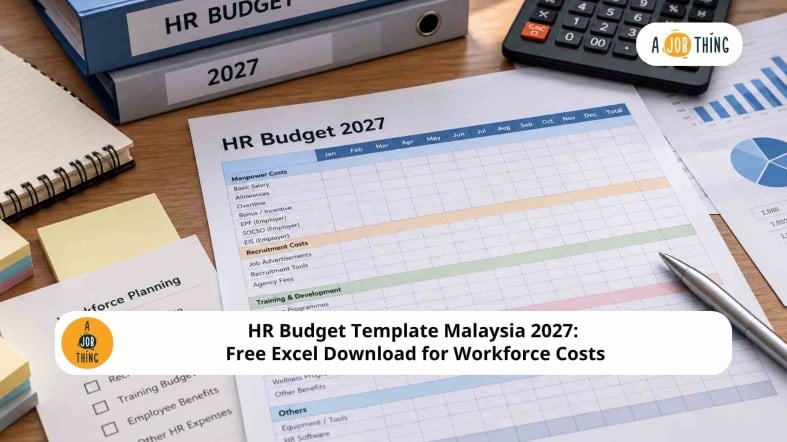
HR Budget Template Malaysia 2027: Free Excel Download for Workforce Costs

Are You Hiring?
Find candidates in 72 Hours with 5+ million talents in Maukerja Malaysia & Ricebowl using Job Ads.
Hire Now
Preparing an annual HR budget helps Malaysian employers estimate salary expenses, plan new hires and manage workforce costs before the new financial year begins. However, the actual cost of employing people includes more than basic salaries.
Employers also need to consider salary increments, employer contributions, overtime, recruitment, employee benefits and training when planning their annual spending.
To make the process easier, we have prepared a free HR Budget Template Malaysia 2027 in Excel format. It helps HR teams, finance teams and business owners organise their projected employee costs and prepare a workforce budget for 2027.

Download the Free HR Budget Template Malaysia 2027 (Excel)
What Does the HR Budget Template Include?
The Excel template helps employers organise several categories of employee-related expenses in one workbook.
| Budget Category | What to Include |
|---|---|
| Salary and payroll | Basic salaries, planned increments and bonuses |
| Employer contributions | EPF, SOCSO and EIS contributions, where applicable |
| Recruitment | Job advertisements, agency fees and hiring expenses |
| Overtime and benefits | Overtime payments, allowances, medical coverage and insurance |
| Training | Courses, certifications and employee development |
| Workforce changes | Existing headcount, planned new hires and expected hiring dates |
These categories give employers a clearer view of their expected workforce expenditure instead of relying on monthly payroll figures alone.
How to Calculate Your HR Budget for 2027
A workforce budget should reflect how many employees the company expects to have, when new hires will start and what it costs to employ them.
1. Calculate Salary and Headcount Costs
Start with the existing workforce and estimate the salary costs for the full year. Then add planned salary increments, promotions and new positions.
A basic formula is:
Annual Salary Budget = Monthly Basic Salary × Budgeted Months × Number of Employees
For example, a company plans to hire three employees at RM3,500 per month, starting in July 2027.
If all three employees work from July to December, the estimated basic salary cost would be:
RM3,500 × 6 months × 3 employees = RM63,000
This amount covers basic salaries only. Employer contributions, recruitment fees, allowances and other employment costs should be added separately.
2. Estimate Employer EPF, SOCSO and EIS Contributions
Employers should include their applicable statutory contributions when calculating the full cost of employing staff.
Under the published EPF schedule for standard Malaysian employees and permanent residents below age 60, the employer contribution rate is generally 13% for monthly wages of RM5,000 and below, and 12% for wages above RM5,000.
However, actual EPF contributions must follow the applicable contribution schedule, including employee category and wage rules. Refer to the official KWSP employer contribution guide for the relevant rates and requirements.
SOCSO and EIS should also be included for eligible employees. PERKESO applies contribution schedules rather than one flat percentage to every employee. Its published wage ceiling for these schemes is RM6,000 per month.
Employers can check the official PERKESO contribution rates when preparing their estimates.
These published rates are useful planning references, but employers should verify the rules applicable to their workforce before finalising the 2027 budget.
3. Include Recruitment and Employee Benefits
Hiring employees can create additional costs before and after their first working day.
Depending on the company, these expenses may include job advertisement packages, recruitment agency fees, candidate assessments, onboarding equipment and medical examinations.
Employers can estimate recruitment spending using this formula:
Recruitment Budget = Planned New Hires × Average Recruitment Cost per Hire
For example, hiring five employees at an estimated recruitment cost of RM2,000 per hire would require a recruitment budget of RM10,000.
Also include overtime, fixed allowances, medical benefits, insurance and other company-provided benefits. Keeping these costs separate helps HR understand which expenses contribute most to the total budget.
4. Plan Training and HRD Corp Levy Costs
Training expenses should be included when the company plans to improve employee skills, provide professional certifications or prepare staff for new responsibilities.
A simple formula is:
Training Budget = Planned Training Participants × Average Training Cost per Employee
For example, training 20 employees at RM500 per person would require an estimated budget of RM10,000.
Employers covered by HRD Corp levy requirements should also include the applicable levy in their forecast. Under the current registration requirements, covered employers with at least 10 Malaysian employees generally fall under compulsory registration with a 1% levy, while eligible employers with five to nine Malaysian employees may register voluntarily at 0.5%.
Eligibility depends on the employer's applicable industry and requirements. Check the official HRD Corp registration guidance before including the levy in your budget.
What Is the Total Cost of Employing Staff?
Once the individual expenses have been estimated, HR can calculate the projected annual workforce budget.
Total HR Budget = Salaries + Employer Contributions + Bonuses and Allowances + Overtime + Benefits + Recruitment + Training + Applicable Levies + Other Workforce Costs
For example, if a company expects its salary expenses to increase after hiring new staff, the total budget should reflect both their basic pay and the additional costs associated with those positions.
The same calculation can be used to compare different hiring scenarios. An employer could estimate the cost of filling three positions in January against filling the same positions in July. This shows how hiring dates affect annual salary expenditure and the total workforce budget.
The Excel template helps organise these figures so HR and finance teams can review projected costs before management approves the annual budget.
How Can HR Improve Workforce Cost Planning?
An HR budget is more useful when it supports ongoing business decisions, not just annual financial planning.
HR teams should compare actual expenses against the approved budget regularly. If hiring takes longer than expected, overtime increases or salaries change, update the forecast to reflect the latest situation.
It is also useful to prepare different budget scenarios. For example, a company can compare its planned headcount with a higher-growth scenario that includes additional recruitment. This helps management understand the financial impact before approving more positions.
For a broader guide to forecasting staffing requirements and aligning workforce plans with business needs, read our Manpower Planning and Budgeting Guide for Malaysian Employers.
FAQs
What is an HR budget template?
An HR budget template is a spreadsheet used to estimate and organise employee-related expenses, including salaries, employer contributions, recruitment, overtime, training and benefits.
How do you calculate an HR budget in Malaysia?
Add the projected annual costs of salaries, employer contributions, bonuses, overtime, recruitment, training, benefits and any applicable levies. Adjust the forecast for planned hiring dates and salary changes.
Does the HR budget include employee EPF, SOCSO, EIS and PCB deductions?
The employer budget should include applicable employer contributions to EPF, SOCSO and EIS. Employee contributions and PCB deducted from salaries are generally withheld from gross pay, so they should not be counted as additional employer costs on top of salary. Any employer-funded benefits or tax gross-ups should be budgeted separately.
How often should HR review the annual budget?
Monthly reviews are useful for companies with changing headcount or active recruitment. Other employers may review monthly or quarterly, comparing actual expenditure with the approved budget and updating forecasts when business requirements change.
Planning Your 2027 Hiring Budget?

Make your recruitment budget count with AJobThing. Connect with potential candidates, promote job vacancies and plan your hiring needs with recruitment solutions designed for Malaysian employers.
Read More
-
Manpower Planning & Budgeting in Malaysia: Employer’s Complete Guide
-
Cost Per Hire Malaysia: Formula, Examples & How Employers Can Reduce Hiring Costs
-
EPF, SOCSO & EIS Contribution 2026: Latest Rates, Rules & Employer Guide
-
Salary Calculator for Employers in Malaysia: Free Excel Template
-
Recruitment Agencies in Malaysia: Top 10 Choices, Fees & Best Alternatives
-
Overtime Rates in Malaysia: When Do 1.5x, 2x and 3x Pay Apply?